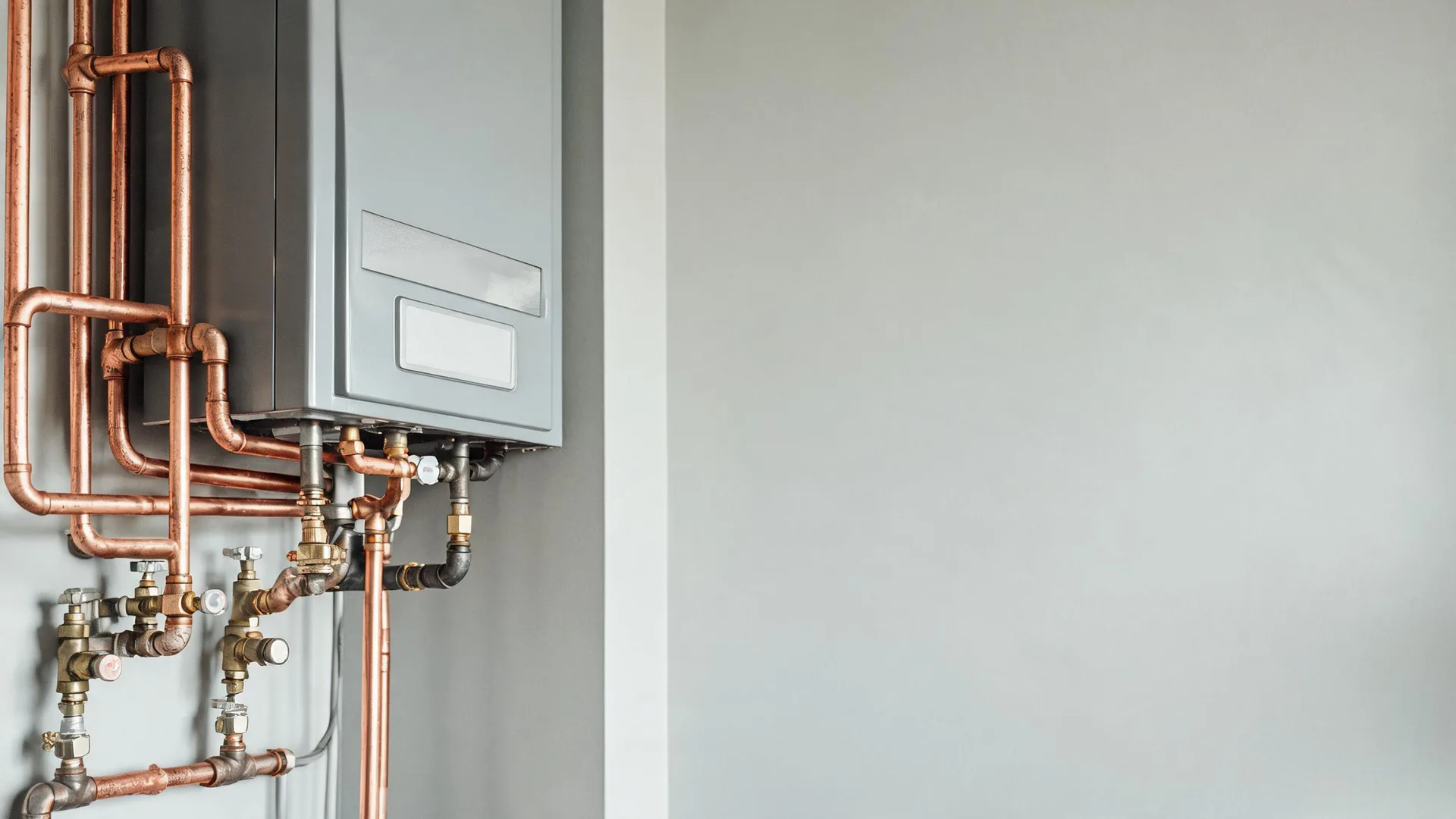
Oil runs $24.23 per million Btu here
New Hampshire homes paid that rate for fuel oil in 2024. A boiler burning oil at that price runs up a real bill over a winter, and that number is the same whether the boiler is old and tired or new and tight.
Takes about a minute. No obligation.
New Hampshire homes paid that rate for fuel oil in 2024. A boiler burning oil at that price runs up a real bill over a winter, and that number is the same whether the boiler is old and tired or new and tight.
Two boilers burning the same oil at the same price don't cost the same to run. One wastes heat up the flue, one doesn't. At installation, this is the choice in front of you, and it's the one that keeps paying or costing you after the contractor leaves.
Fuel oil or kerosene heats 42.1% of homes in Carroll County, more than any other fuel.
A boiler built to burn oil is the straightforward replacement for most homes here.




Heat starts in September here, so August is the month to have the new boiler already in. Installing before the first cold night means the contractor has time to size it to the house, set up the venting, and bleed the system before any of it gets tested by real cold. Wait too long and that same work happens on a night the house is already cold, with whatever units are in stock and whoever can get there fastest. A boiler going in now runs nine months straight once it starts, September through May. That's a long stretch to find out something was rushed.
Carroll County falls under zone 6A, the cold end of the 2021 energy code, and any gas-fired hot water boiler built since January 2021 has to hit 84 percent AFUE to be installed here. That's the minimum, not a target to aim for. A federal tax credit is available for qualifying high-efficiency equipment, which narrows the field further if you want to claim it. Between the two, the boiler that fits this house is a shorter list than you'd think.
Find a contractor
A boiler that's done is scrap. The contractor drains it, disconnects the gas or oil line, and cuts it loose from the venting and the near-boiler piping. None of that gets passed on to the next system, because a new boiler needs its own piping sized and arranged for how it fires, not retrofitted onto what was there before.
An old boiler that vented up a masonry chimney doesn't mean the new one will. Higher efficiency boilers run cooler exhaust, and that exhaust has to leave through venting rated for it, usually a sidewall vent through PVC rather than the old chimney. If that chimney isn't getting used anymore, it has to be capped or lined for anything else still venting through it, like a water heater.
Boilers can carry the same efficiency rating on paper and still fit a house differently. Ask what size each one is rated for and how that number was reached. Sizing off the old boiler's nameplate is often wrong, because the old one may have been oversized to begin with. The right way is a heat loss calculation on the house itself, room by room. A boiler that's too big short cycles, kicking on and off, wearing out its own ignition and never settling into a steady burn. One that's sized right runs longer stretches at a lower fire, which is easier on every part in it. Ask too what the boiler needs for clearance and combustion air, because that can rule out a spot in a tight mechanical room before you've gotten anywhere near price.
Installation day starts with removal, not the new unit. The old boiler gets drained, cut loose from its piping, and hauled out, and that's most of a morning before anything new goes in. The new boiler gets set in place and leveled, then piped into the near-boiler area. That piping gets sized and arranged for this model, not left over from the last one. Venting comes next, run wherever code and clearance call for, which can mean a new wall penetration instead of the old chimney. Once it's piped and vented, the system gets filled slowly and bled at every radiator or zone to clear the air pockets, because trapped air means cold spots or noise later. Only after it's filled and purged does the contractor fire it and check the burn, and that first firing is what shows whether everything before it was done right.