Profile view of a bearded man wearing a black baseball cap and a dark gray T-shirt against a plain light background.

Is it time to replace an oil boiler in New Hampshire

New system or replacementBoilerNew Hampshire
Step 1 of 2

What ZIP code is the job in?

A boiler that is 15 to 20 years old and struggling to keep up is usually worth replacing rather than repairing again. Most homes in New Hampshire heat with oil, so when the boiler starts running longer to hit the same temperature, or you're calling for a repair more than once a season, that's wear catching up with it, not a one-time glitch. Oil boilers lose efficiency as the heat exchanger scales and the burner wears, which shows up as higher fuel bills through a New Hampshire winter. If yours is leaking, short cycling, or needs a part that's hard to find, those are signs the system is near the end, not something to patch again. A newer boiler burns less oil to produce the same heat, which matters here since oil is the fuel most houses run on through the cold months. If your boiler is original to the house, that age alone is worth checking against the signs you're seeing.

A gray boiler on a concrete pad in a basement with painted concrete block walls, copper piping, a metal flue, and electrical control boxes.
Before you get your boiler installation
A gray boiler with a metal flue pipe stands in a basement against concrete and concrete-block walls, connected to copper piping, a circulator pump, and two gray expansion tanks.
After you get your boiler installation

What age does to a boiler

An oil boiler loses efficiency as its heat exchanger scales and its burner wears, and that shows up as longer run times for the same heat. Past 15 years, parts get harder to source and a contractor may be matching new components to an old design instead of a straightforward fix. At that point a repair buys you a season, maybe less, while the next failure is already forming somewhere else in the system. New Hampshire winters don't leave much room for a boiler that's guessing at its job.

Oil use tells you the real story

Check your oil bills against last year's. If you're filling the tank more often for the same stretch of cold, the boiler is burning more fuel to produce the same heat, and that gap tends to widen each winter rather than hold steady. Electric rates in New Hampshire are high enough that switching fuels rarely pencils out, so the comparison that matters is oil against oil, this year against last. A boiler that's losing ground on its own fuel use is telling you plainly where it's headed.

A woman with long gray hair wrapped in a checked blanket sits on a sofa by a window with yellow autumn foliage outside, with a lamp, framed picture and plant in the background.
An older woman in a cream knit sweater sits on a sofa by a window, looking out at sunlit trees with yellow and orange autumn leaves, with a bookshelf and lamp behind her.
A woman with gray shoulder-length hair in a dark knit sweater sits on a cushioned seat by a window, looking out at yellow autumn foliage, with a living room, armchair, houseplant and framed picture behind her.
An older woman with gray hair in a bun, wearing a cream knit sweater, sits on a sofa with a gray blanket and looks out a large window toward yellow-green autumn trees, with a lit table lamp and dark armchair behind her.

You're planning around a boiler that's deciding when to quit, probably on the coldest night of the year, and you already know a New Hampshire winter doesn't give you a good time to be without heat.

Get the installation done on your schedule, this fall, and you take that decision away from the boiler. Send the form and someone reaches out to work out the timing with you.

A woman in a cream knit sweater sits in an armchair with her eyes closed and a slight smile, beside an open window showing orange autumn foliage, with a mug, books and a lit candle on a small side table.
An older man with gray hair and a beard leans back on a beige sofa with his eyes closed, in a sunlit room with potted plants, a wicker chair and large windows behind him.
A gray boiler on a black base in a basement with concrete walls, connected to copper piping, a circulator pump, a gray expansion tank, and white and metal flue vent pipes.

The right pro for this job

Send the form and the search for an installer is over.

A local pro who knows boilers gets your details and gets in touch.

Get a boiler pro

There's no charge for the request.

Repair the Boiler or Replace It

Keep Repairing

  • Another repair makes sense if the boiler is under 15 years old and the problem is a single part, like a circulator pump or a failed aquastat.
  • You're not locked into oil prices for a new unit yet, and a repair bill is smaller than an installation bill no matter what.
  • If this is the first breakdown in years, the rest of the boiler may still have plenty of life in it.
  • A repair buys time if you're mid-decision on whether to stay with oil or switch fuel types down the road.
  • You avoid the disruption of an installation during a stretch of cold weather if the fix is quick and the part is in stock.

Time to Replace

  • Once a boiler is past 15 to 20 years old, it's scaled inside and losing efficiency even when it's running correctly.
  • Repeated service calls over a year or two usually cost more combined than one installation would.
  • A contractor matching parts to an older boiler may be sourcing discontinued components, which stretches out repair time you don't have in January.
  • Since most homes in New Hampshire run on oil, a less efficient old boiler is burning more fuel at a price that's already high.
  • Replacing before a full breakdown means you pick the timing, not the coldest night of the year.
  • A new boiler recovers some of the efficiency the old one lost to age, which shows up in how long it runs to hit the same temperature.
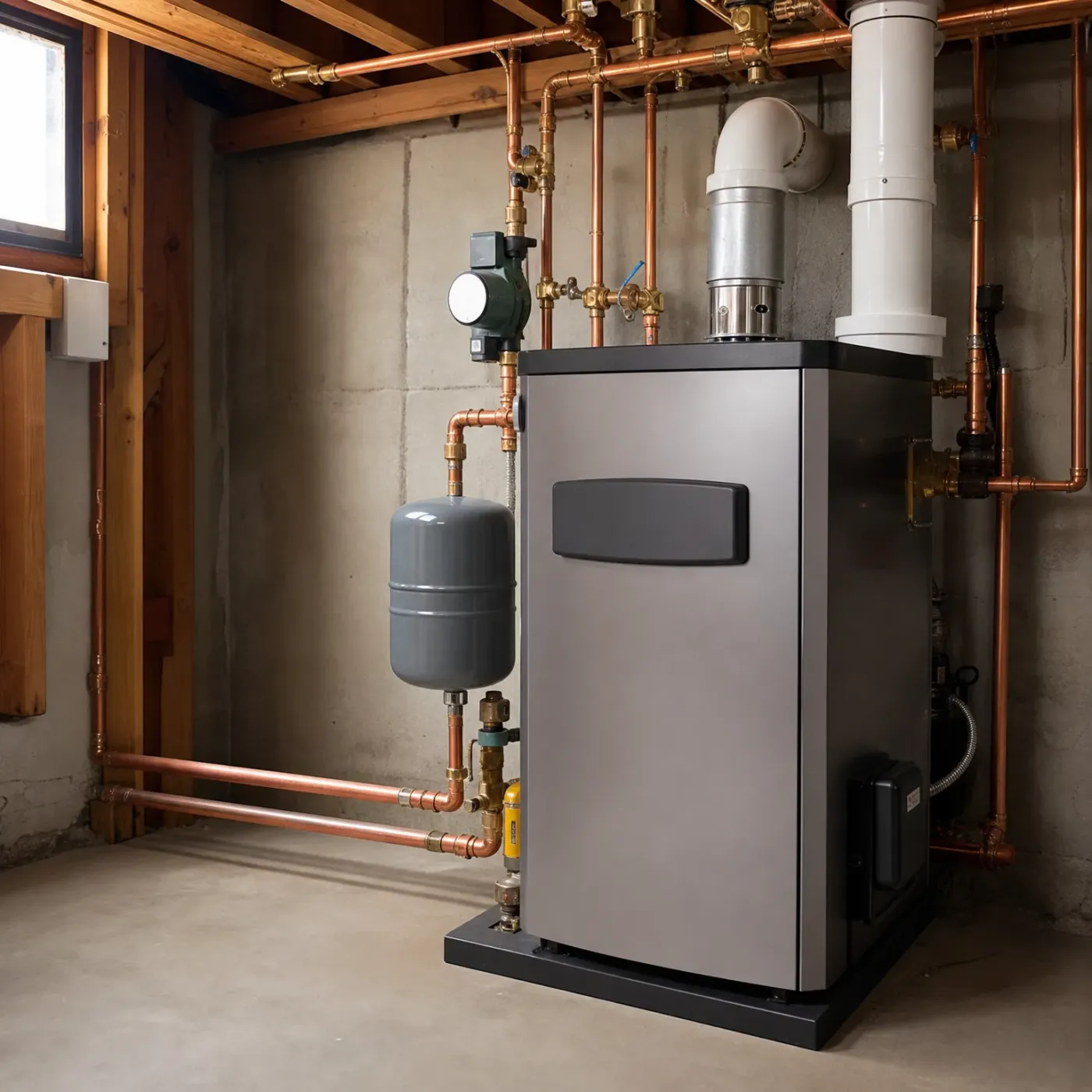
A gray boiler unit on a concrete pad in a basement corner, connected to copper piping, valves and a metal flue against painted concrete block walls.

Running Right

This is what a boiler should look like: clean pipe work, a sound expansion tank, a flue drawing properly. It hits temperature and shuts off. A system like this still has years in it, and a repair makes more sense than replacing it.

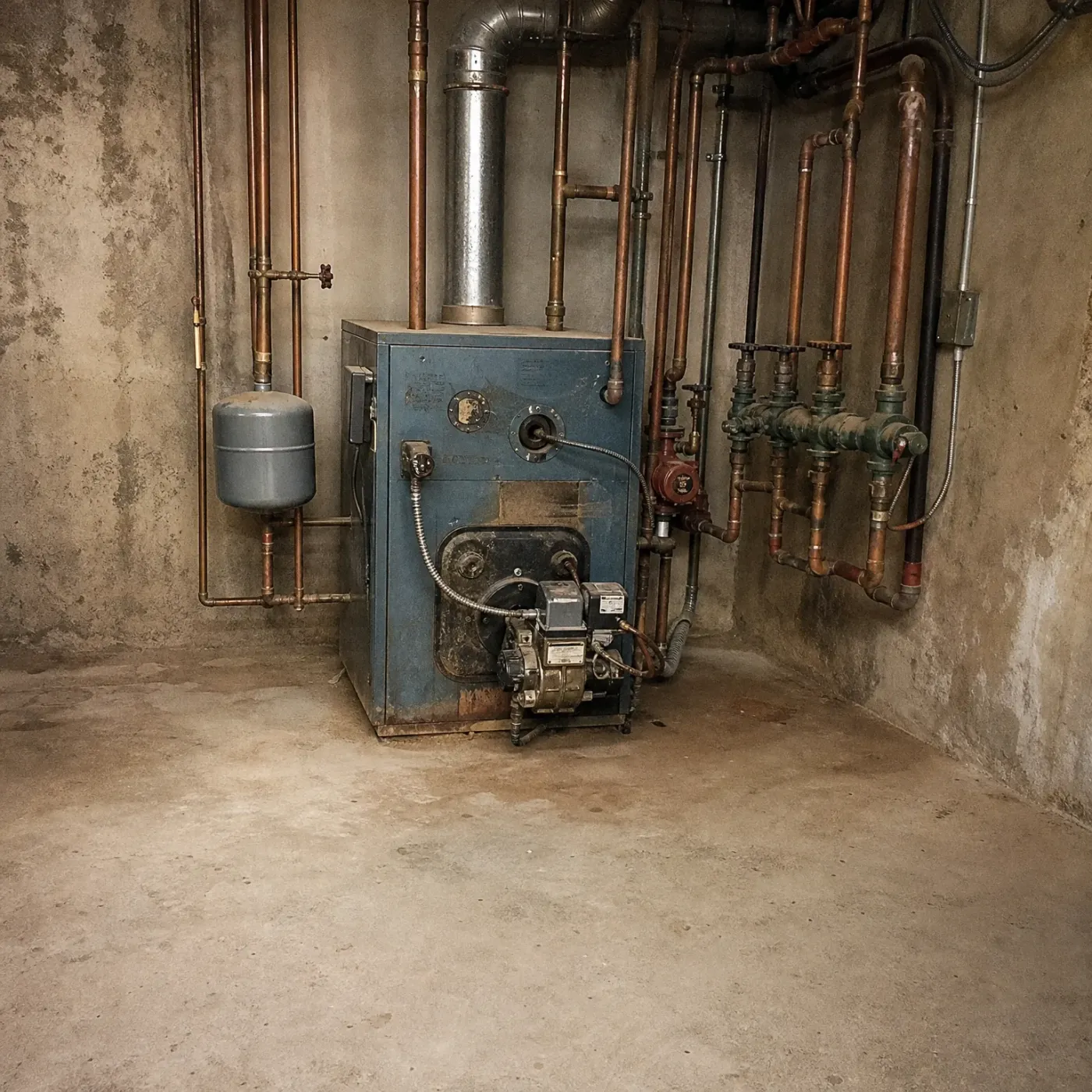
A blue oil-fired boiler with a burner unit sits on a concrete pad in a basement corner, with copper piping, valves and a gray expansion tank overhead against concrete block walls.

On Borrowed Time

Old paint on an older unit, fittings showing their age next to pipe that's been added to over the years. A boiler like this is the one that picks a cold night to quit. If yours looks like this, plan the replacement before it plans it for you.

Winter nights average 15°F statewide

That 15°F average is a nightly low, not a cold snap. Your boiler is built to recover from that night after night, all winter. An old one that's lost efficiency has to run longer to do it, which is where the strain and the oil bill show up first.

NOAA nClimDiv 1991-2020 county normals weighted by homes
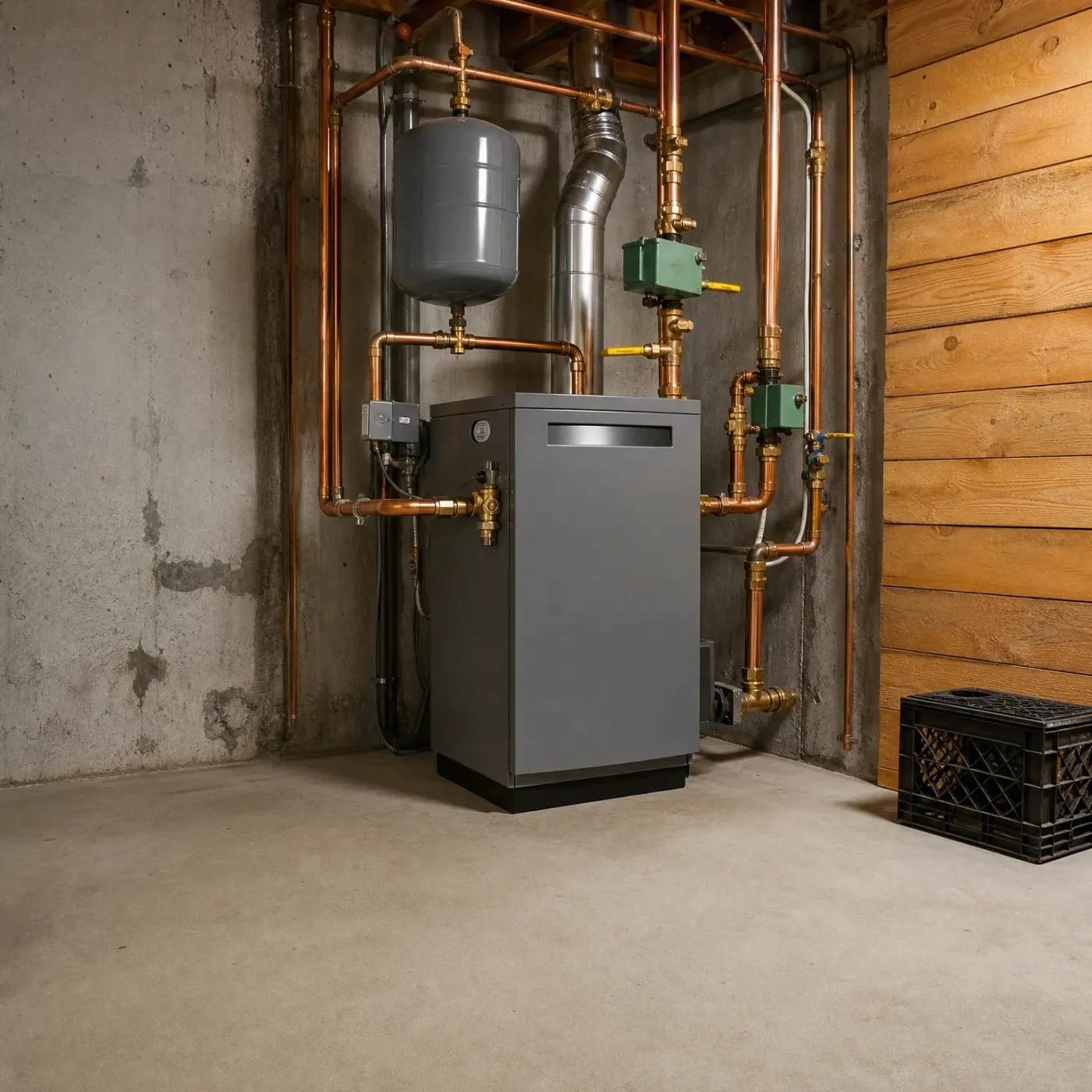
A gray boiler unit in a basement corner with copper piping, brass valves, a gray expansion tank, a metal flue duct, concrete walls and a wood-paneled wall, with a black plastic crate on the floor at right.
The copper runs are clean, the zone valves are labeled, and the flue vents straight up without a patch job.
An older blue boiler with a burner unit stands in a concrete basement corner, connected to copper and steel piping, valves and a gray expansion tank on the wall.
A setup like this is doing its job. The question is only how much longer that lasts.
  1. A contractor drains the old boiler and shuts off the oil line

  2. The old unit and its flue connection come out

  3. The new boiler sets on the existing pad or a new one

  4. Supply and return lines connect to the existing zone piping

A smiling man in a denim shirt and white t-shirt stands in an open dark doorway of a stucco house, facing a woman with long brown hair and a green jacket seen from behind in the foreground.

So is it time

If your boiler is past 15 years and running longer to hit the same temperature, replacing it makes more sense than paying for another repair. If it's younger than that and the problem is one part, a repair is the right call and you can wait on the bigger decision. Either way, you're not guessing anymore.

Getting matched with a contractor means someone who installs oil boilers in New Hampshire looks at your specific setup, your piping, your flue, your zones, and tells you what it actually needs. You send the details once. From there, finding the right person for the job is off your plate, and you can get back to deciding when the work happens instead of whether you'll find someone to do it.


A gray upholstered sofa with a matching cushion sits beside a potted plant and a wooden table holding a small green plant in a stone pot, near a curtained window.
Corner of a house with light horizontal lap siding, a white gutter and downspout, and a window, beside a mulched bed with small shrubs, a lawn, wooden fence and trees in the background.
Close-up of a white gutter along an asphalt-shingle roof edge with dry brown leaves collected in it, a downspout and lap siding below, and blurred autumn trees in the background.
Exterior corner of a house with horizontal lap siding above a stone veneer base and a dark-framed window, with ornamental grasses and shrubs in the foreground and trees in low sunlight behind.
A white horizontal-siding house with a steep gray shingled gable roof, fronted by trimmed shrubs, a brick walkway, and a lawn scattered with fallen autumn leaves.
Corner of a house with cream horizontal lap siding, a black-framed window, asphalt shingle roof with dark fascia, white hydrangea blooms and green shrubs below, and a leafy tree and wood fence to the right.

Matched to your boiler job

Send the form and stop researching installers for the new boiler.

Connect with a pro

You only hire the pro if you want to.