Describe your boiler job, and a local pro who handles it gets in touch.
You've got an oil boiler, and you're wondering if a heat pump makes more sense now. That's a fair question to sit with, because the two heat your house in completely different ways, and what works well in New Hampshire isn't always obvious from the outside.
Oil has kept most houses here warm for a long time, and your boiler doesn't care how cold it gets outside. A heat pump works differently. It moves heat instead of burning fuel, and it also handles your summer cooling, which matters less here than it would somewhere muggier, but it still counts for something on the hot stretches.
The tricky part is that New Hampshire has some of the highest electric rates in the country, and that changes the math on running a heat pump compared to other states. Whether it still makes sense for your house depends on things like how your home is set up to deliver heat, what your oil use looks like now, and whether a full switch or a system that works alongside your boiler fits your situation better.
That's not something to guess at from a chart online. It depends on your house, your boiler, and how you actually use heat through a New Hampshire winter. A contractor who installs these systems regularly in this state can look at your specific setup and tell you what actually applies to you, not what applies in general.
If you want that answer, the next step is simple. Tell us a bit about your home, and you'll be matched with a contractor who installs heating systems in your area. They'll reach out to you directly to go over your situation and what your options actually look like. From there, finding the right answer stops being something you have to figure out alone.
Most homes here keep the oil boiler and skip the full switch to a heat pump, because New Hampshire winters push outdoor temperatures low enough that a heat pump alone struggles to keep up, and oil still carries the coldest stretches more reliably on its own. What a lot of homeowners do instead is add a heat pump alongside the boiler. The heat pump handles the milder months, spring and fall and the shoulder parts of winter, running on electricity instead of oil. The boiler kicks in once temperatures drop into the range where the heat pump's output falls off. Since summers here are mild, that same heat pump also covers cooling, so you're not running a separate AC system. Whether that pairing makes sense for your house depends on your ductwork or lack of it, your oil usage now, and what your electric rates would do to the math. That's worth a real look at your specific setup before deciding either way.
One request ends the search for a boiler installer.
It costs nothing to send, and you don't have to hire anyone.
1
A contractor checks your home's heat loss and your boiler's output.
2
Your home gets sized for a heat pump to pair with the boiler.
3
An outdoor compressor unit and indoor air handlers get installed.
4
A control is set to switch systems at a chosen outdoor temperature.
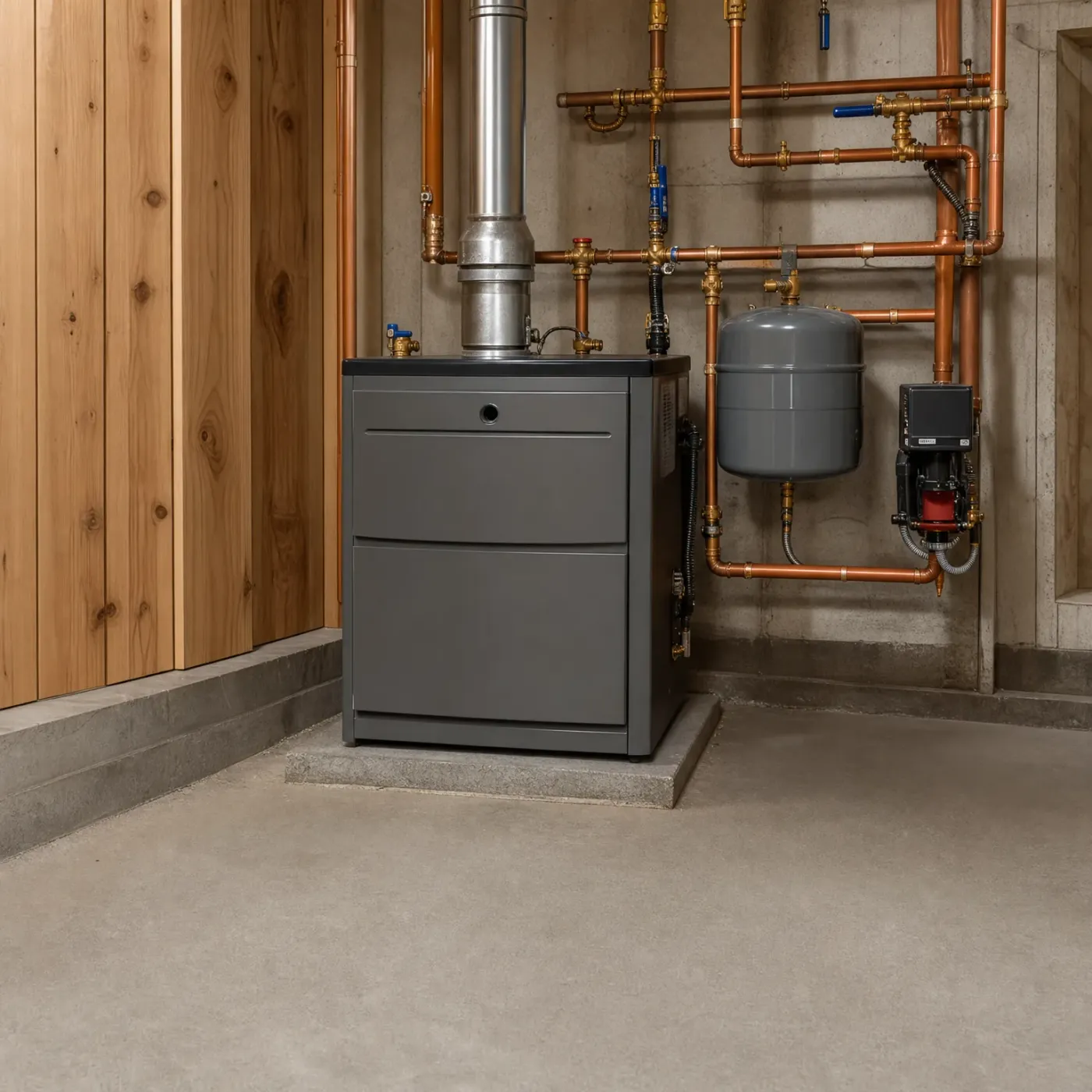
The boiler running on its own
This is what most New Hampshire basements look like now. The boiler carries the whole house, the pipes stay warm, and the circulator pump keeps water moving to every radiator. Nothing else has to switch on for the house to hold heat.
The boiler paired with a heat pump
Add a heat pump and the boiler stops doing every bit of the work. The outdoor compressor and indoor units take over down to a set temperature, and the boiler steps in once it drops below that, the same valves and flue staying in place.
Winter nights average 15°F statewide
That 15°F average covers whole nights in December and January, not just the coldest snap. Your boiler is built for that kind of cold and holds steady through it. A heat pump alone would be working hardest exactly when it's least efficient.
NOAA nClimDiv 1991-2020 county normals weighted by homes
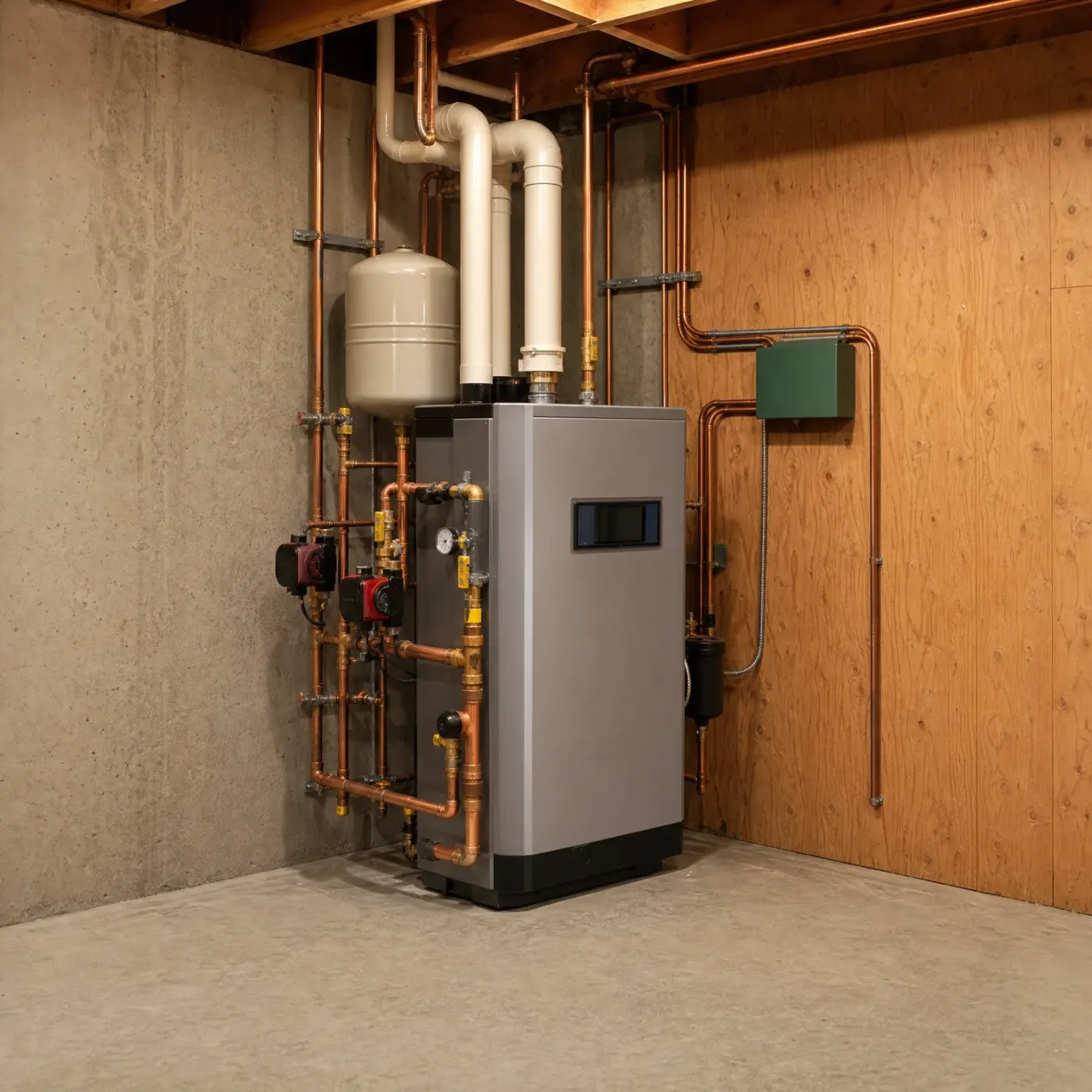
Boiler kept in good shape
This is a boiler someone's stayed on top of. The pipes are clean, the pressure gauge reads where it should, and the expansion tank is doing its job. A setup like this can run alongside a heat pump without either system fighting the other for the house.
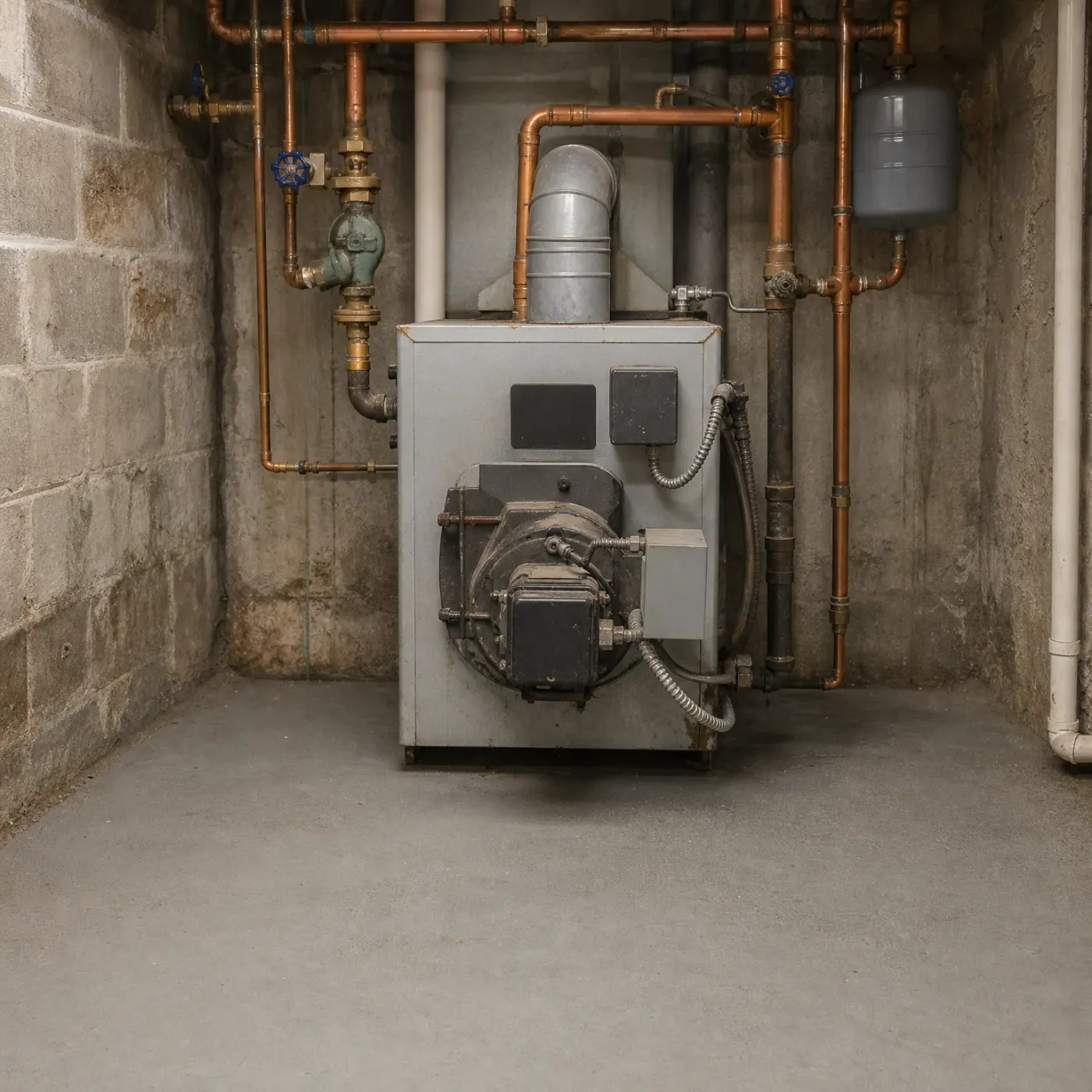
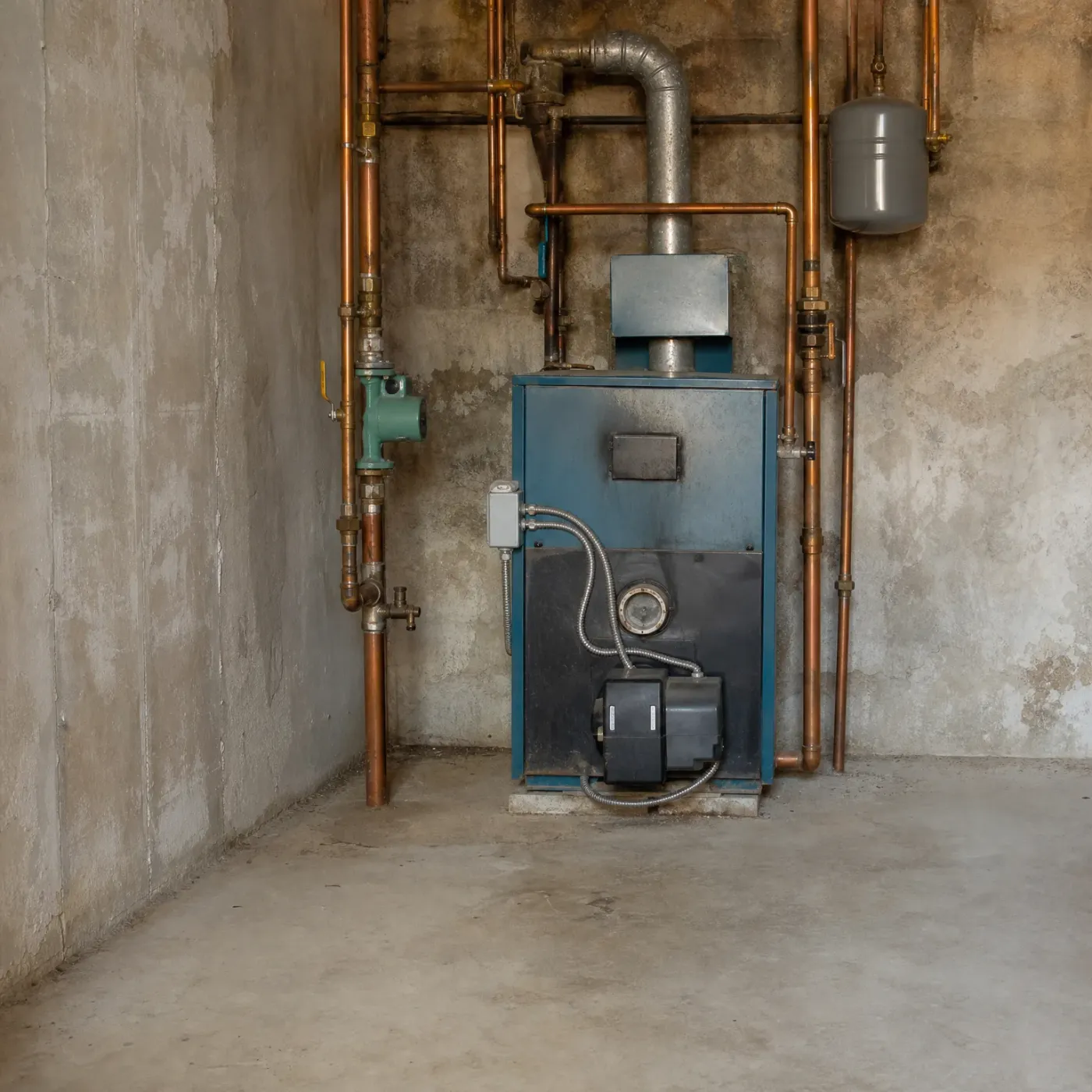
Boiler showing its age
Bare concrete, a galvanized flue, an older blue housing. Nothing here says it's about to fail, but a boiler at this stage is the one worth having looked at before you decide what pairs with it. Adding a heat pump to a unit already struggling doesn't fix the struggle.
Keep the boiler, add what it can't do well
Your oil boiler is suited to January in New Hampshire, and nothing about that changes. What changes is the rest of the year, when that same boiler is doing a job better suited to a heat pump, and burning oil to do it. Pairing the two means each one runs where it works best, and the other sits idle until it's needed.
If you've read this far, you already know where you stand: keep the boiler for the cold months, let a heat pump take the shoulder seasons and the cooling, and stop paying for oil to do a heat pump's job. What's left is matching your house to the right equipment and the right setup, which is specific to your home, not a general answer. A contractor who installs these systems in New Hampshire homes can look at your boiler and your layout and tell you what that looks like for you.
Boiler Installation
A local pro for your boiler installation
A local pro who knows boilers gets your details and gets in touch.
Get in touch with a local installer about a new boiler.
Send the form and the search for an installer is over.
Send the request and finding a pro stops being your problem.
Skip the round of in-home estimates for a new boiler.
Describe the project once instead of to every installer.
One installer gets your project, so there's no bidding war over it.