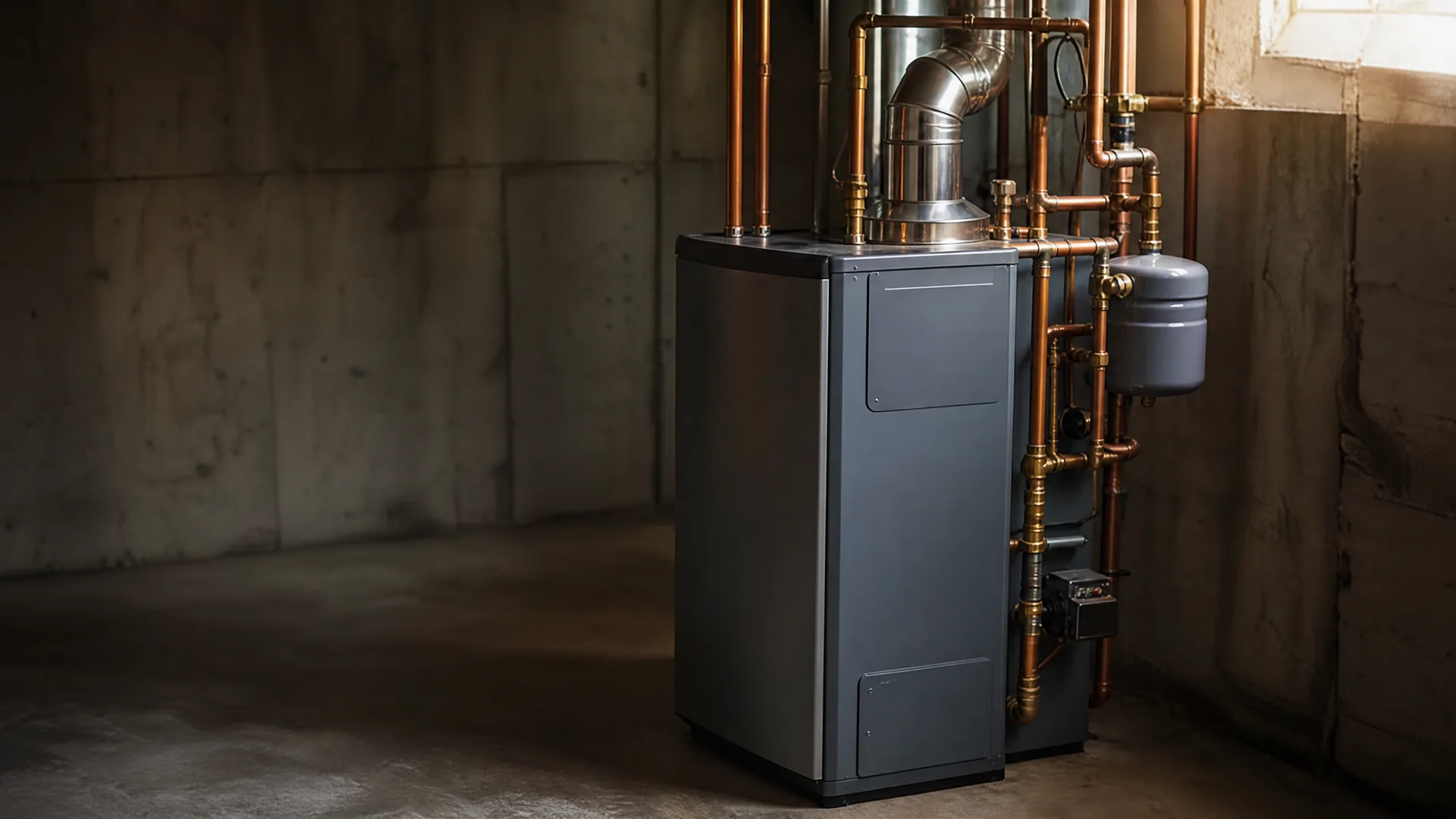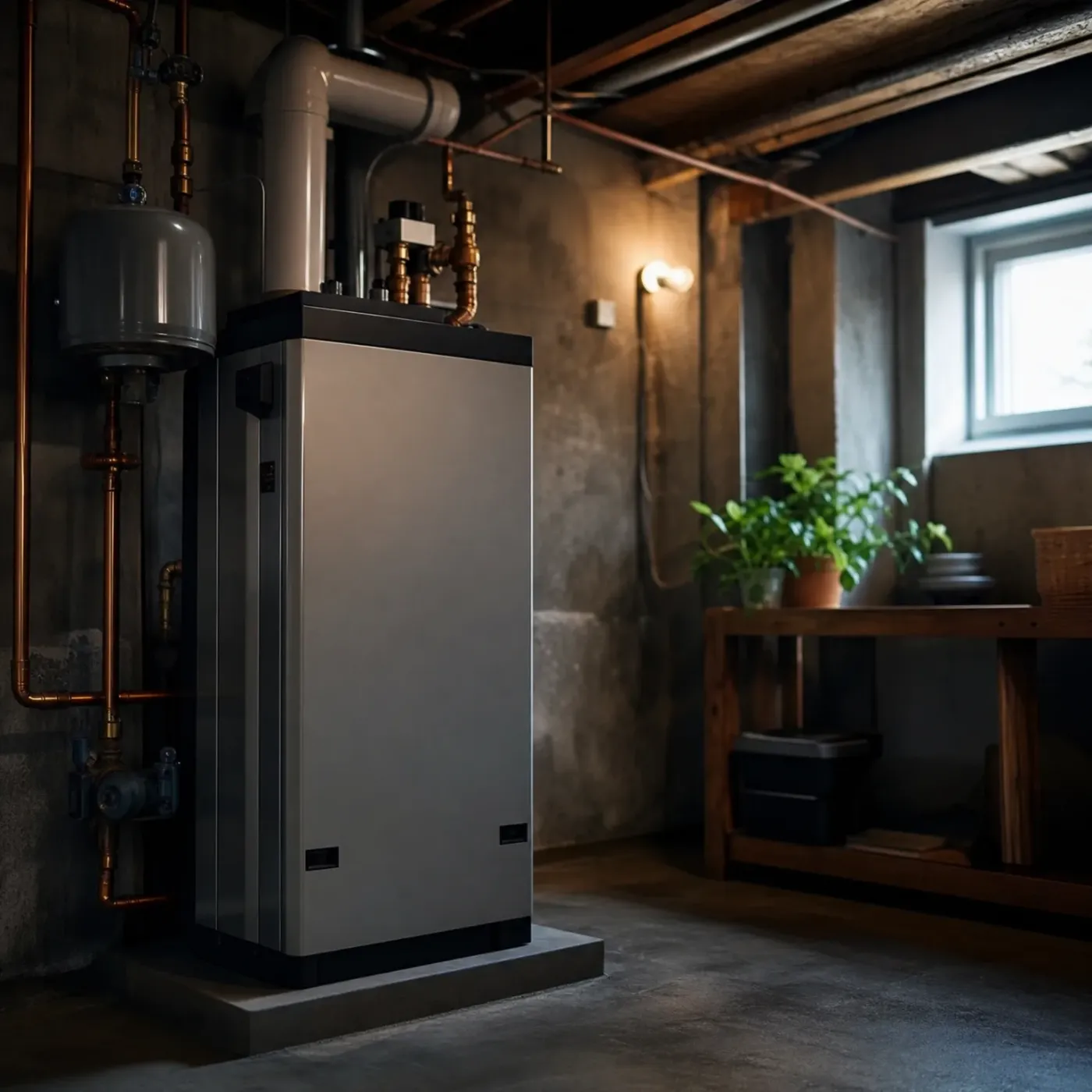




A floor-standing gray boiler unit on a concrete plinth in a basement, with copper pipes, an expansion tank, and a flue pipe above, a wall light, a small potted plant on a wooden shelf, and a window in the background.

Stop chasing a boiler pro

Why your baseboard heat isn't working in New Hampshire

Cold baseboards in one room, a boiler that won't fire, water that never gets hot enough to climb the pipes. Most of the time it comes down to the circulator, a zone valve stuck shut, or air trapped in the lines, and which one it is changes what happens next. Send over what you're seeing and a local contractor who works on New Hampshire boilers all winter takes it from there.

Hand it off

Baseboard heat runs on hot water moving from your boiler through pipes to the fins in each room, and when it stops, something along that path has failed. A circulator pump that's died won't push water anywhere, so the boiler fires but nothing upstairs gets warm. A zone valve stuck closed will cut off one room or one floor while the rest of the house heats fine. Air trapped in the lines collects at high points and blocks water from reaching the baseboard, which is why bleeding a unit sometimes gets a few minutes of heat back before it goes cold again. On a system burning oil, a thermostat set properly and a tank that isn't empty can still leave you cold if the problem is mechanical, not fuel. With a New Hampshire winter ahead, a boiler that's only heating part of the house needs a look before the room without heat becomes several.

A gray-haired man in a dark sweater sits on a light gray sofa in a living room, looking toward a sunlit window with trees outside.
A gray-haired man in a dark blue sweater sits on a light gray sofa in a sunlit living room, looking off to the side, with a potted plant, shelving unit, and large glass doors behind him.
A bearded man with graying hair in a dark green sweater sits on a sofa in a living room, looking off to the side, with a sliding glass door and a dim kitchen doorway behind him.
A gray-haired man in a dark knit sweater sits on a light gray sofa in a living room, looking toward a sunlit window, with houseplants, a lamp, and framed art in the background.

One Zone or the Whole House

Cold Room, Rest Fine

  • One zone stays cold while the others heat normally, which usually points to a stuck zone valve or a bad zone circulator rather than the boiler.
  • Check the zone valve motor for a faint hum or heat when the thermostat calls, since a valve that won't open stops water from reaching that loop alone.
  • Bleeding the air from just that zone's baseboard often restores heat if nothing else in the house lost flow.
  • A contractor can isolate the one zone and test its valve and circulator without touching the boiler or the other loops.
  • If the baseboard fins themselves are coated in dust or pet hair, that room runs cooler even with water flowing through fine.

Whole House Cold

  • If every baseboard in the house is cold, the problem is upstream at the boiler or the main circulator, not any single zone.
  • A boiler that won't fire at all points to the igniter, the thermocouple, or the oil burner's ignition rather than anything in the piping.
  • No pressure on the boiler's gauge, or a pressure that keeps dropping, means water isn't staying in the system and needs a look before anything else.
  • A circulator that's seized or burned out won't push water to any zone, so the boiler can run hot while the pipes stay cold.
  • Oil furnaces and boilers need fuel in the tank and a burner that's actually igniting it, so an empty tank can look like a mechanical failure.
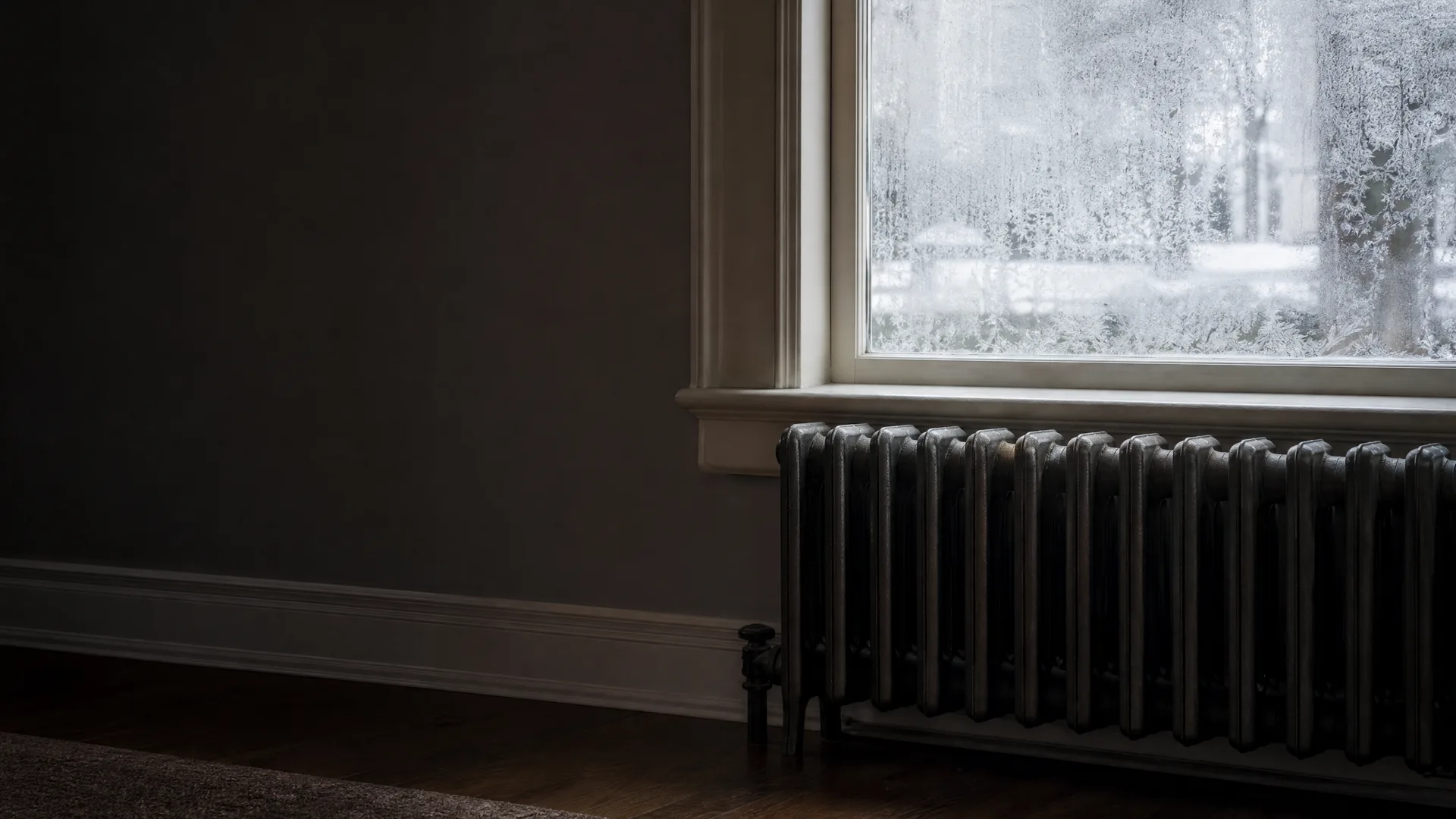
A cast iron column radiator with a valve stands beneath a window with a frosted pane showing snowy trees outside, in a dim room with dark walls and wood flooring.

The thermostat reads 68 but the air in the room says otherwise. Ice has crept up the inside of the window glass overnight, a thin white feather across the lower pane, and the radiator under it is cold to the touch, cold as the sill. Outside it's still dark, the kind of January morning that doesn't lighten until past seven. You press a palm flat against the cast iron, waiting for the tick and warmth that usually comes within a minute of the thermostat clicking on. Nothing. Down in the basement the boiler is running, you can hear it, but whatever it's heating isn't reaching this room. You pull a sweater on over what you slept in and go looking for the panel with the zone switches.

How does water actually get from the boiler to the baseboard?

You want to know what's actually supposed to happen inside those pipes, because if you understand the path the water takes, you can tell someone what you're seeing instead of just saying "it's cold." That matters when a room stays cold while the rest of the house is fine, or when the whole system seems to be running but nothing upstairs gets warm.

The circulator pushes water in a loop, boiler to baseboard and back

The boiler heats water, but it doesn't move on its own. A circulator pump, usually mounted on the pipe near the boiler, pushes it out through the supply line and into whichever zone the thermostat has called for. The water runs through the fin-tube element inside each baseboard unit, gives off heat as it passes, and comes back to the boiler through the return line to get reheated. Each zone has its own circulator or its own zone valve controlling the flow, which is why one room can lose heat while the rest of the house stays fine. If the circulator for a zone fails, or its valve won't open, water never reaches that loop, no matter how hard the boiler is working.

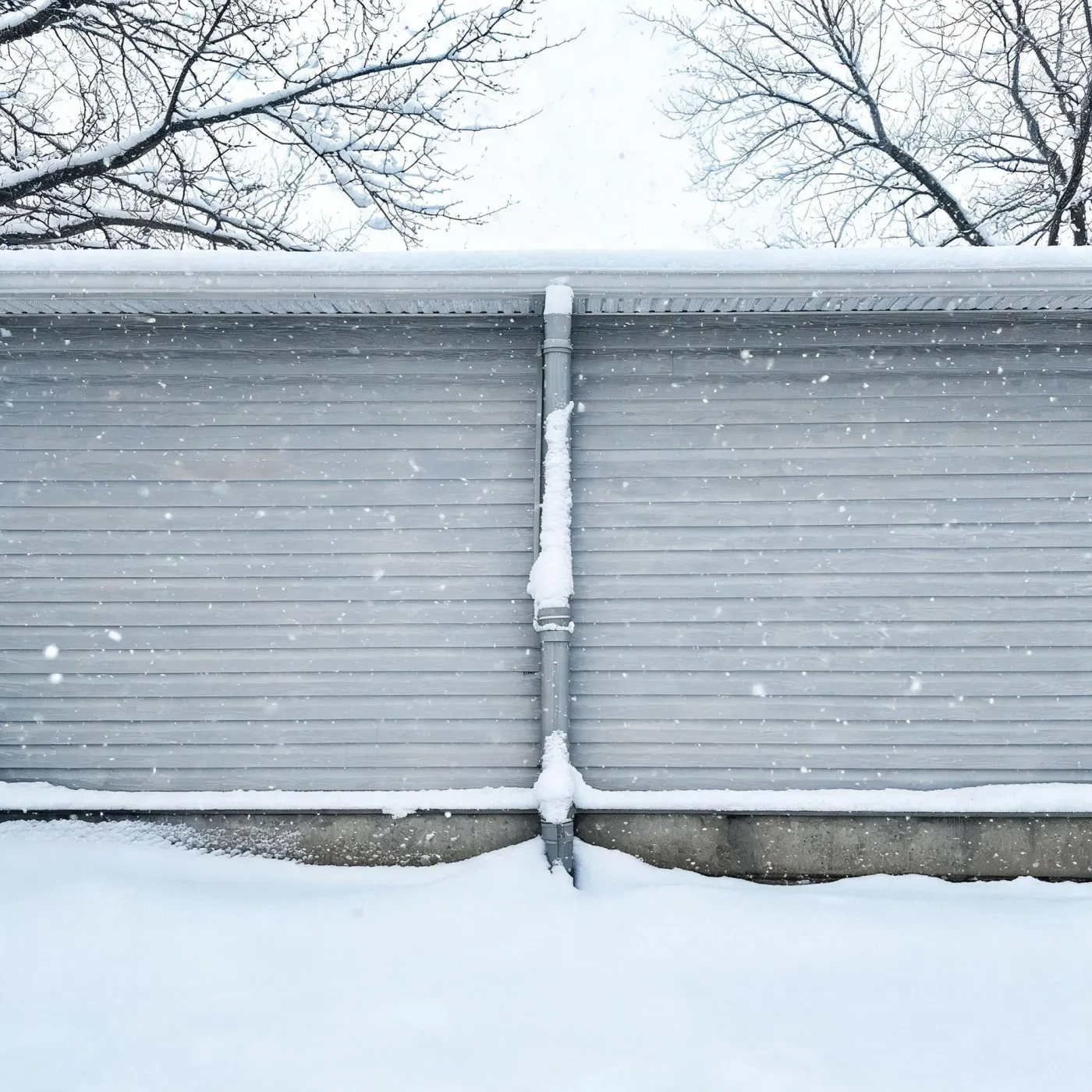
Exterior of a gray horizontal-lap-sided building with a snow-covered roof edge and a central downspout, seen during falling snow with deep snow on the ground and bare tree branches above.

Winter nights average 15°F across New Hampshire, according to NOAA climate normals, and that's the kind of cold that finds every weak point in a hot water system fast. A boiler working against that keeps running longer to push water through the loop, so a circulator that's starting to fail or a zone valve that's half stuck shows up right away as a cold room instead of a slow one. At 15°F there's no coasting on a bad pump or trapped air in the lines. Once you send in what's going on, you're not the one tracking down who can look at it. That part is off your plate, and someone who works on these boilers all winter in New Hampshire takes it from there.

NOAA nClimDiv 1991-2020 county normals weighted by homes

Hand off the boiler problem

A cold baseboard loop doesn't fix itself, and in a New Hampshire winter it doesn't wait either. Oil heat means the boiler has to work to recover once it's cold, and with power costs here among the highest in the country, a circulator running wrong or a zone valve stuck open adds up fast on top of what the oil burner is already using. The part that's failing is usually one that someone who services boilers in this area sees every winter, in homes running the same baseboard setup as yours. That's who gets your request, not a handful of companies competing for the job. Sending it off means you stop being the one who has to figure out which part it is. You just wait for the room to heat again.

Why air in the lines matters

Hot water baseboard systems need to stay full and free of air to move heat the way they're built to. Air that gets into the loop rises to the highest points and collects there, usually in a baseboard run on an upper floor or the far end of a zone. Once it collects, it blocks water from reaching that stretch of fin, so the pipe runs hot right up to the air pocket and cold past it. A boiler can be firing correctly and a circulator can be running fine and you'll still get a cold room, because the problem isn't heat production, it's water not reaching where it needs to go.

What a stuck zone valve does

Each zone on a multi-zone system has its own valve that opens when that thermostat calls for heat. The valve is run by a small motor, and when that motor fails, the valve can stay shut even though the boiler and circulator are both doing their job. Water keeps moving through the zones that work and bypasses the one that doesn't, so one part of the house stays cold while the rest heats on schedule. This is different from a dead circulator, which would leave an entire zone, not just one room, without heat. The pattern of what's warm and what's not is usually the clearest sign of which part failed.

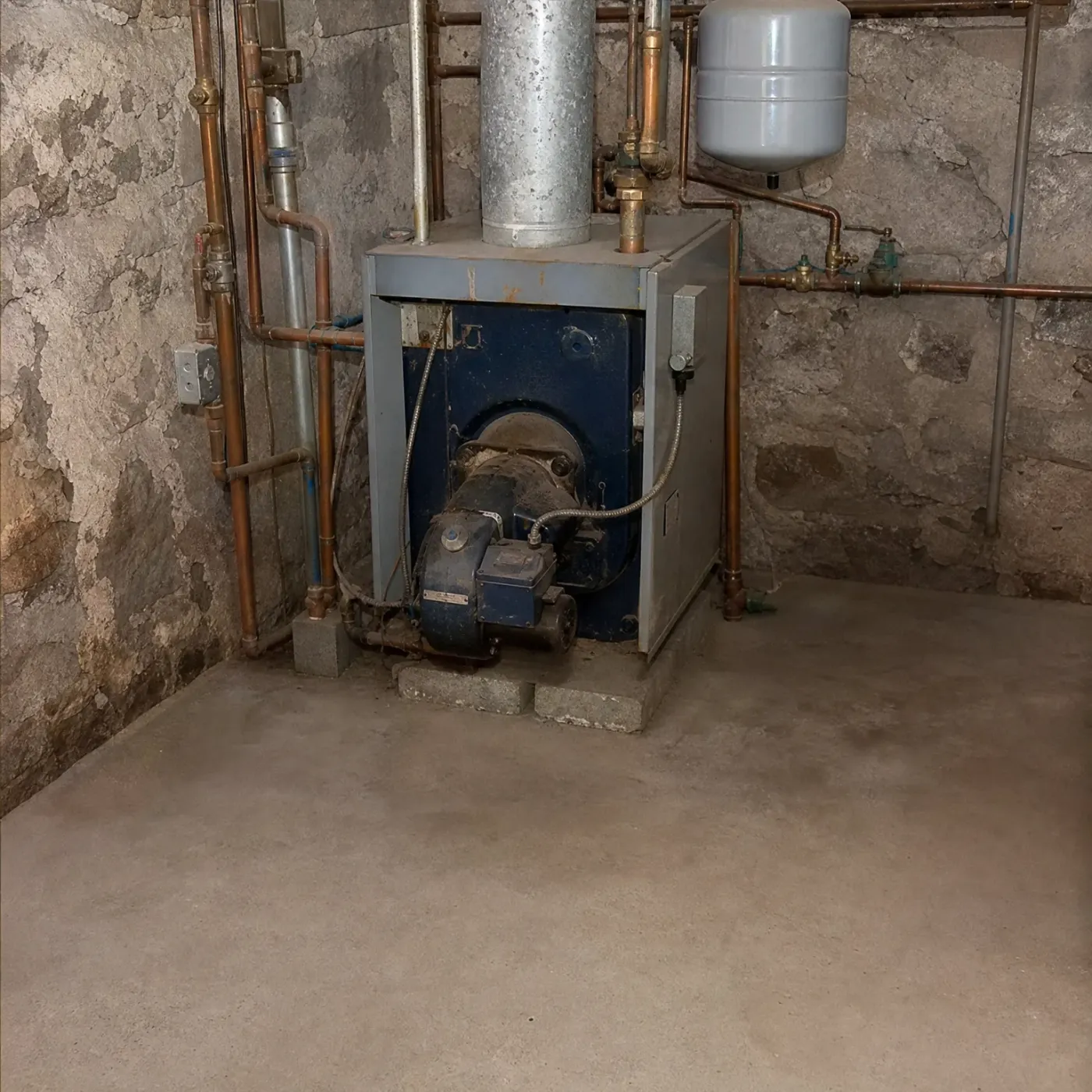
An oil-fired boiler with a blue and gray cabinet and burner sits on concrete blocks in a basement corner with stone walls, connected to copper pipes, a metal flue, and a wall-mounted expansion tank.
Before you get your boiler repair
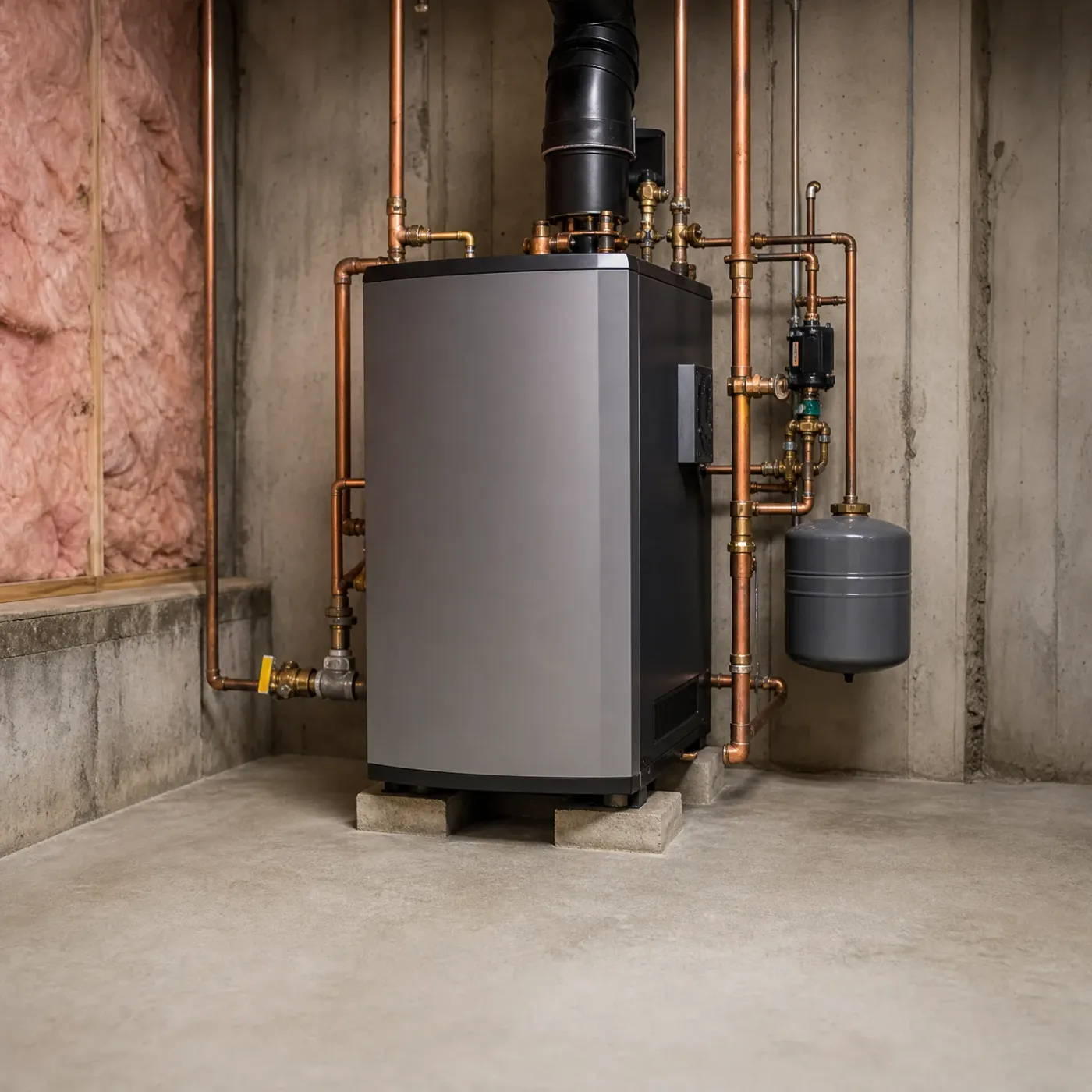
A gray and black boiler unit sits on concrete blocks in a basement corner, connected to copper piping, valves, a black flue duct, and a gray expansion tank, with bare concrete walls and exposed pink insulation at left.
After you get your boiler repair

Calling around to different companies means three or four trucks competing for the same job, and nobody treating it like their own.

One local contractor gets your request instead, someone who works on boilers and baseboard loops all winter and already knows where this kind of problem usually starts.

Winter nights average 15°F statewide

At 15 below freezing most winter nights, a boiler that's slow to fire or a zone that stays cold won't warm back up on its own before morning. That's the kind of cold where a stuck valve or a weak circulator stops keeping up fast, not eventually.

NOAA nClimDiv 1991-2020 county normals weighted by homes

Try bleeding it yourself first

Every baseboard loop has a bleed valve, usually at the end of the run or near the top floor, and letting the air out of it is something you can do with a key and a few minutes. If a cold section comes back warm after bleeding, the problem was air in the line and nothing more. It costs you nothing but the time. The catch is that if it was never air, bleeding won't tell you that. It just stays cold, and you've used the one easy fix without learning what's actually wrong.


Have it looked at properly

A circulator that hums but doesn't spin, a zone valve stuck shut, a boiler short cycling instead of holding a steady burn: none of that shows itself from bleeding a line, and a homeowner guessing at it can spend a weekend chasing the wrong part. Someone who works on oil boilers all winter knows which of those usually fails first and can tell within a few minutes of looking at the system. That's slower than grabbing a key tonight, but it's the difference between a guess and knowing what was actually wrong, with New Hampshire's power costs making a boiler running wrong something you don't want to leave guessing on.

A woman with shoulder-length brown hair wearing a beige knit cardigan sits in a gray upholstered armchair near a window, looking off to the side with a slight smile, with bookshelves blurred in the background.
A woman with her hair in a bun holds a sleeping young child against her chest, both wrapped in a textured beige knit blanket on a sofa in a dimly lit room with a lamp, framed picture, and bookshelf behind them.

Where This Leaves You

  • Cold baseboards almost always trace back to the circulator, a stuck zone valve, or air trapped in the lines.
  • A boiler that fires but never gets heat to the fins is working harder and longer against a 15°F winter night.
  • With oil heat and some of the highest power costs in the country, a stalled loop costs you twice over.
  • One local contractor who works on boilers and baseboard systems all winter already knows where these failures start.
  • Sending one request means one visit, not a string of trucks competing over the same job.

The cold baseboard in your house has a cause, and it's one of a short list: the circulator has quit, a zone valve is stuck, or air is sitting in the lines where it doesn't belong. None of those get better on their own, and none of them are things to guess at while a New Hampshire winter night sits at 15°F outside. Every hour the loop isn't moving water right is an hour your boiler works harder to catch up, burning more oil to do it, on top of power rates that are already steep here. That's the cost of waiting, not a reason to panic, just a reason to get it looked at properly.

The part that makes this easier is who ends up looking at it. A local contractor who deals with boilers and baseboard systems all winter has already seen this exact cold room, this exact silent circulator, more times than you have. They know which failure shows up first and how to check for it fast, because it's the same handful of systems they're in every week this time of year. Send one request and that's what you get: one contractor, not a handful of trucks calling you back competing for the job. No guessing which company to trust or juggling callbacks. Just someone who already knows baseboard heat, coming to look at yours.

A gray boiler unit in a concrete-walled basement, connected to copper piping, a metal flue duct, and a wall-mounted expansion tank.

Send one request and you're done looking

RepairBoilerNew Hampshire
Step 1 of 2

What ZIP code is the job in?