
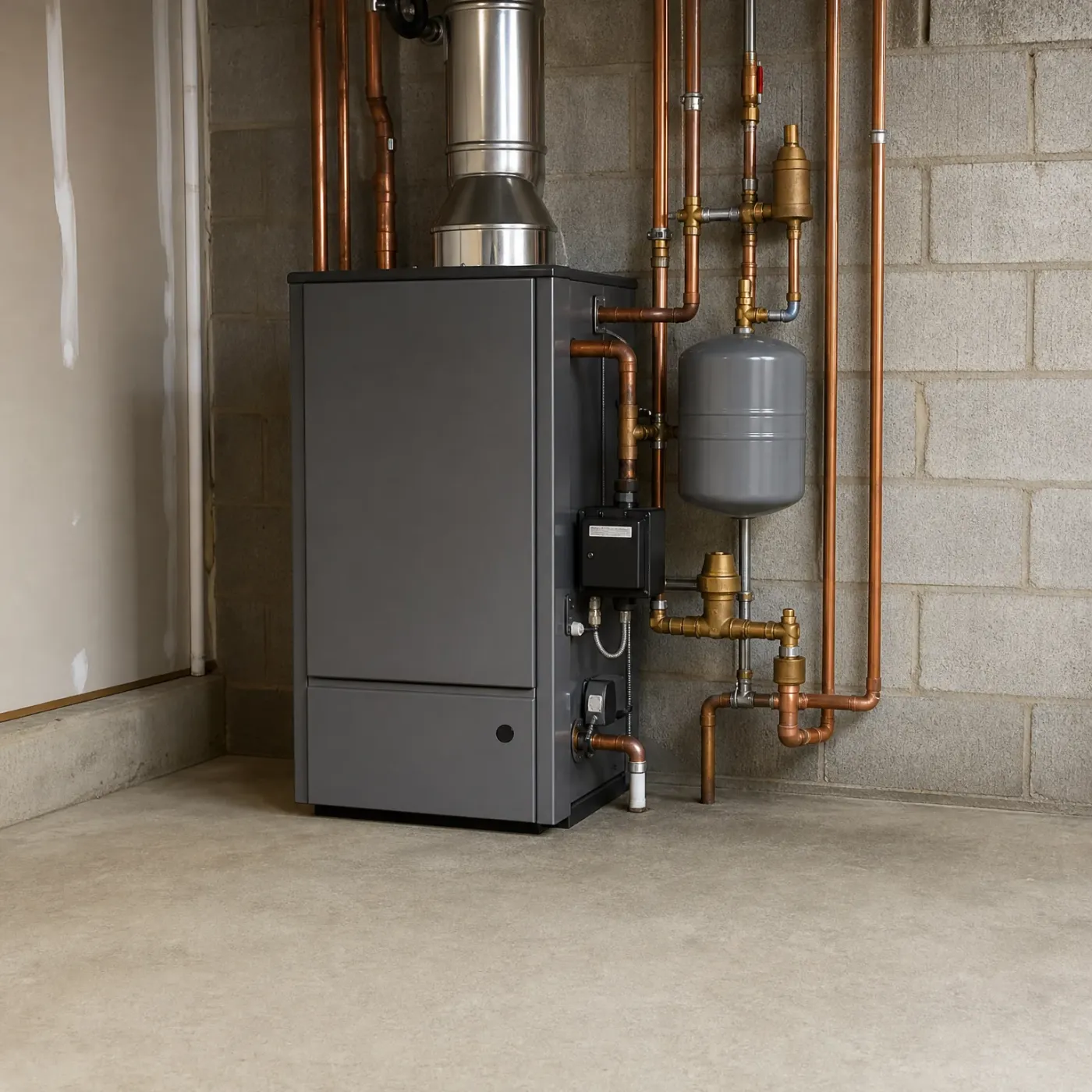
Running clean
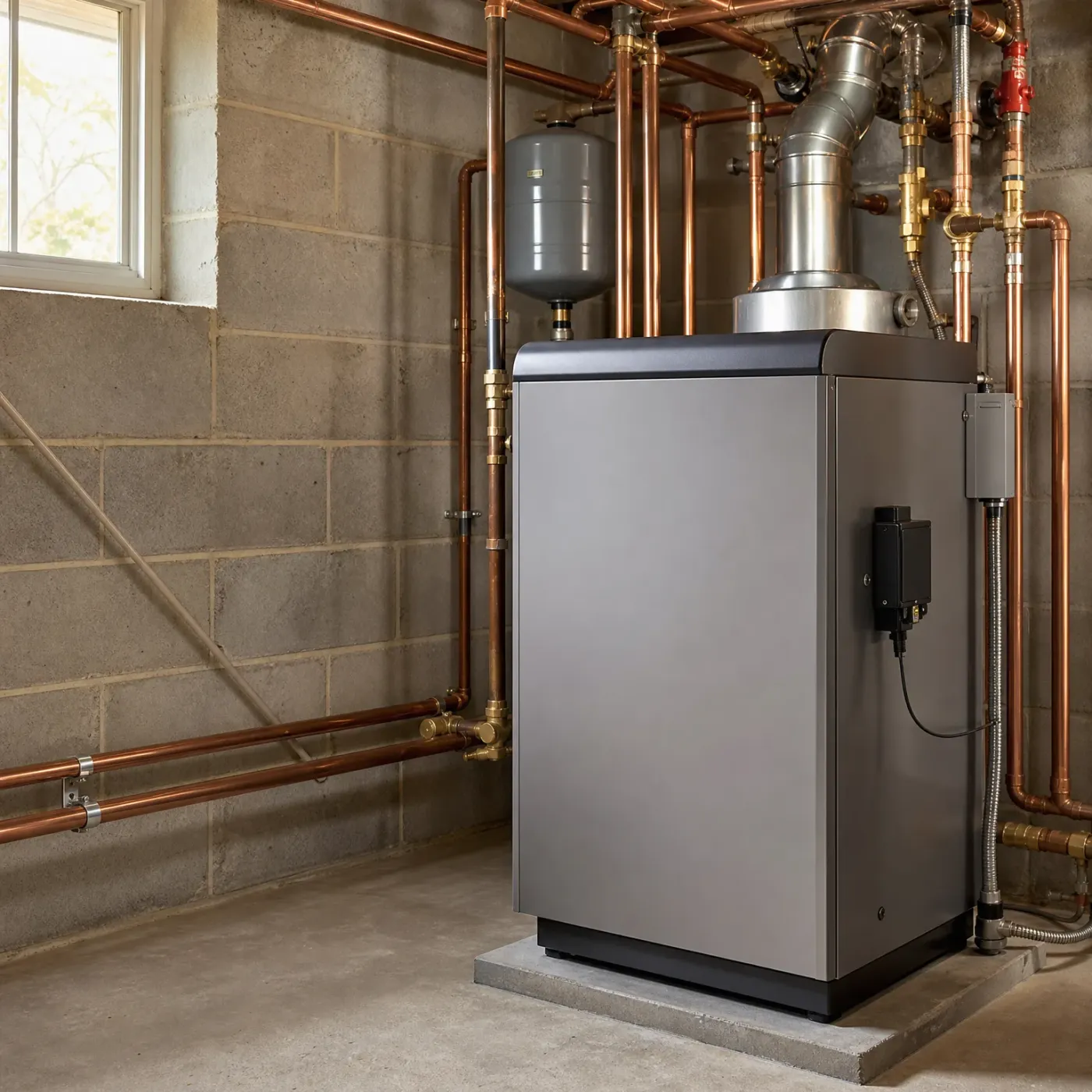
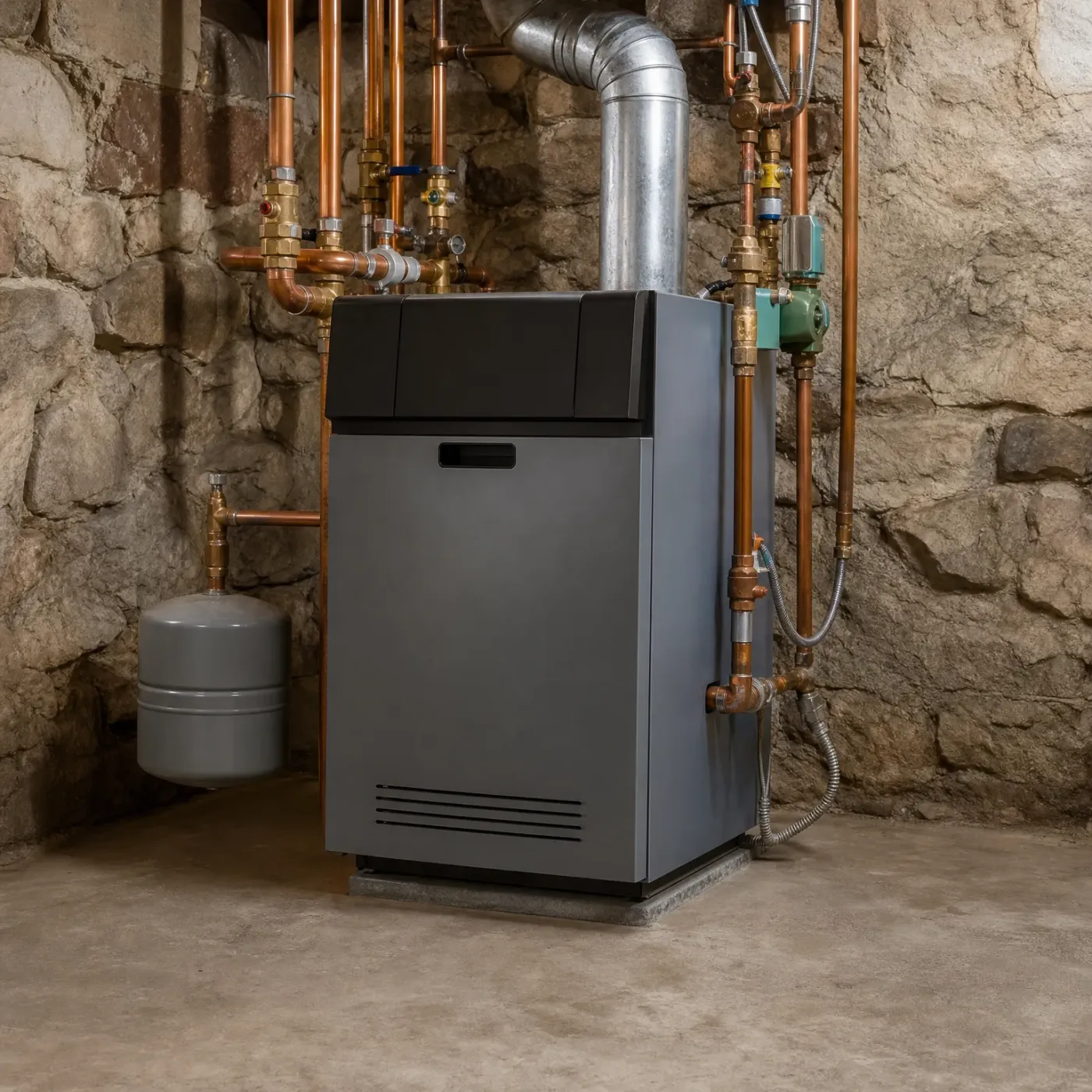
A boiler that's burning right is quiet about it. The flame stays blue, the flue pipe and fittings around it stay free of rust and soot, and the room it sits in doesn't smell of oil. Pipes and valves show normal wear, nothing more.
A boiler making carbon monoxide shows it before you smell anything, because you can't smell CO at all. Watch for soot or a yellow, flickering flame where it should burn blue. Watch for a burner flame that looks lazy, or scorch marks and rust near the flue connection. Inside the house, the signs show up in people before they show up on a meter: headaches, drowsiness, nausea that eases when you leave the house and comes back when you're home again. A boiler makes CO when it isn't getting enough air to burn fuel cleanly, often because the flue or vent isn't drawing right. Oil boilers, common across New Hampshire, depend on a clean burn and a clear vent to keep CO out of the house. If you have a CO alarm sounding, or see any of these signs, that's a boiler that needs a qualified repair, not a wait and see.
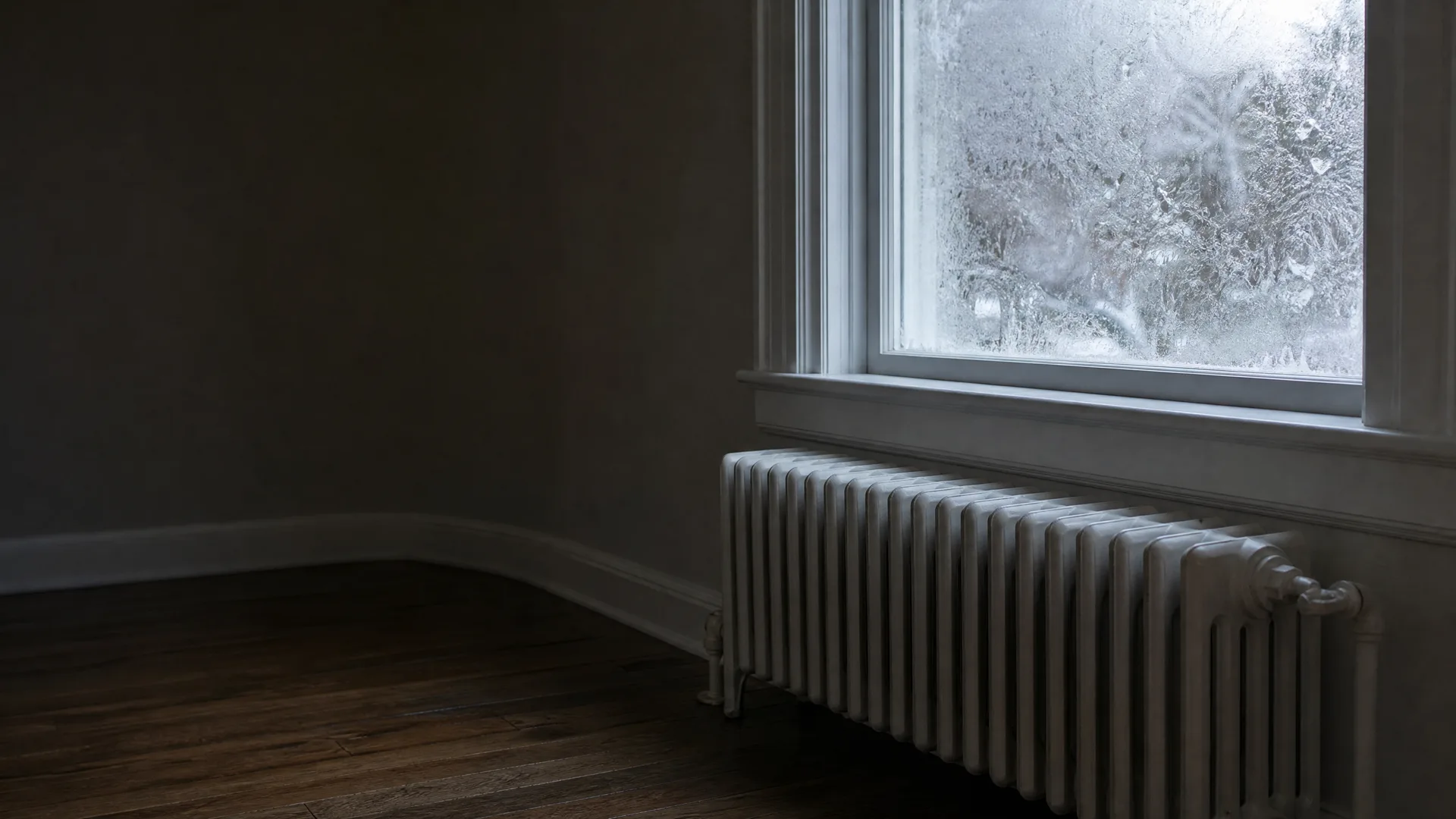
The radiator under the window has been knocking since five. Outside, it is still dark, and the glass has iced over on the inside, the way it does on the coldest mornings. You sit close to the cast iron in your coat because the room hasn't caught up yet. There's a smell you notice now, faint and sharp at the back of your throat, not the usual dusty smell of the heat coming on. Your head feels thick, the kind of dull ache you'd blame on sleep. The dog won't settle by the radiator like she usually does. You open the window an inch, just to the cold, and the ache eases before the coffee's even done.

A boiler burns oil to heat water, and that burn needs a steady supply of air and a clear path out through the flue. When the burner gets too little air, or the flue is blocked or drafting wrong, the fire doesn't finish burning. An incomplete burn is what makes carbon monoxide, and it's also what leaves soot on the heat exchanger and scorch marks near the flue collar. A cracked heat exchanger can let the gas drift into the room instead of going up the chimney. None of this shows up as a smell. You find it by what's left behind on the metal, not by what you breathe.
That's the part a technician checks first, before touching the thermostat or the pump. Someone who works on oil boilers in New Hampshire every winter knows which models tend to crack a heat exchanger young and which flues clog with soot faster in homes heated right through the cold months. When you put in a request, you're matched with one licensed contractor local to you, not a list of them, and they're the one who calls.

A boiler that's burning right is quiet about it. The flame stays blue, the flue pipe and fittings around it stay free of rust and soot, and the room it sits in doesn't smell of oil. Pipes and valves show normal wear, nothing more.
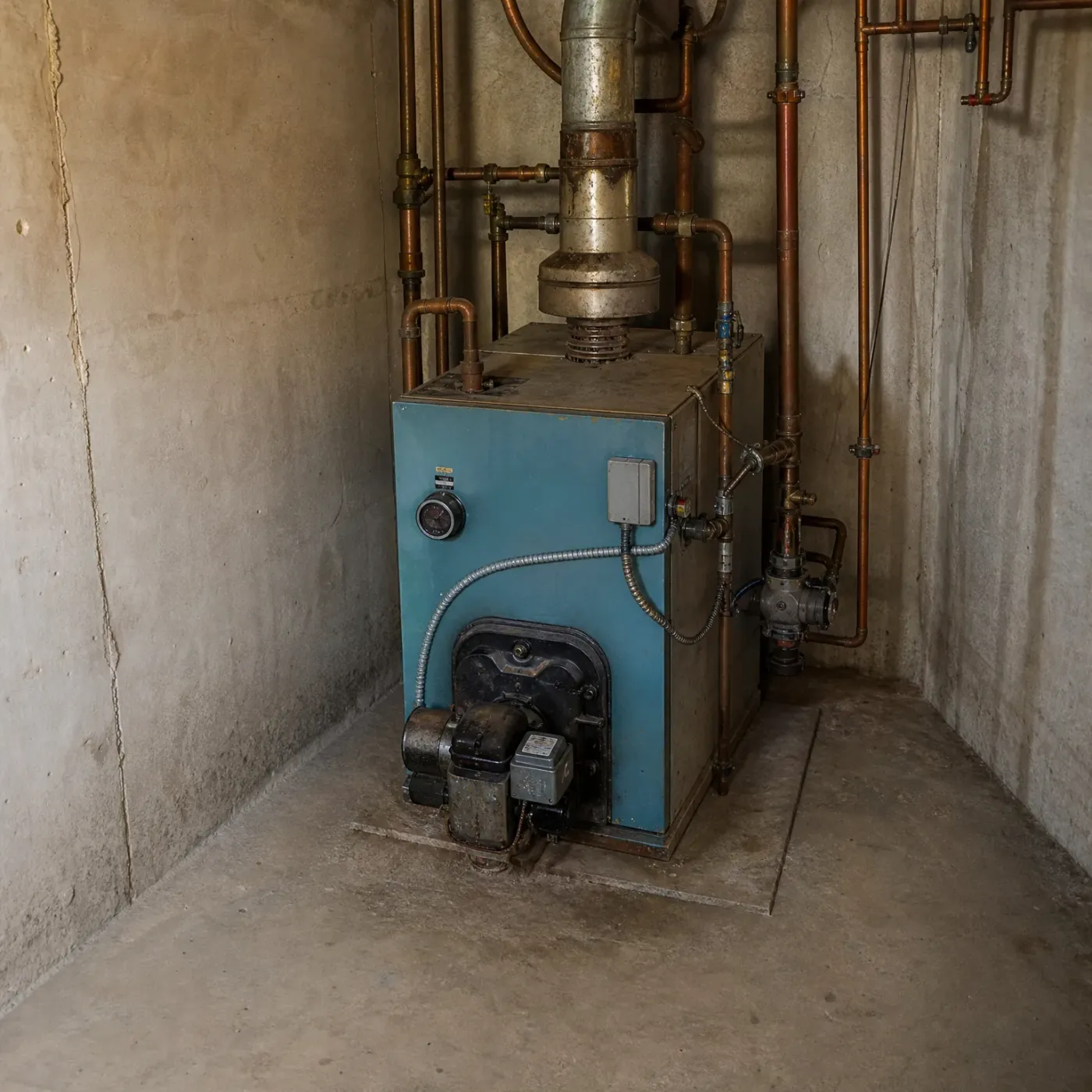
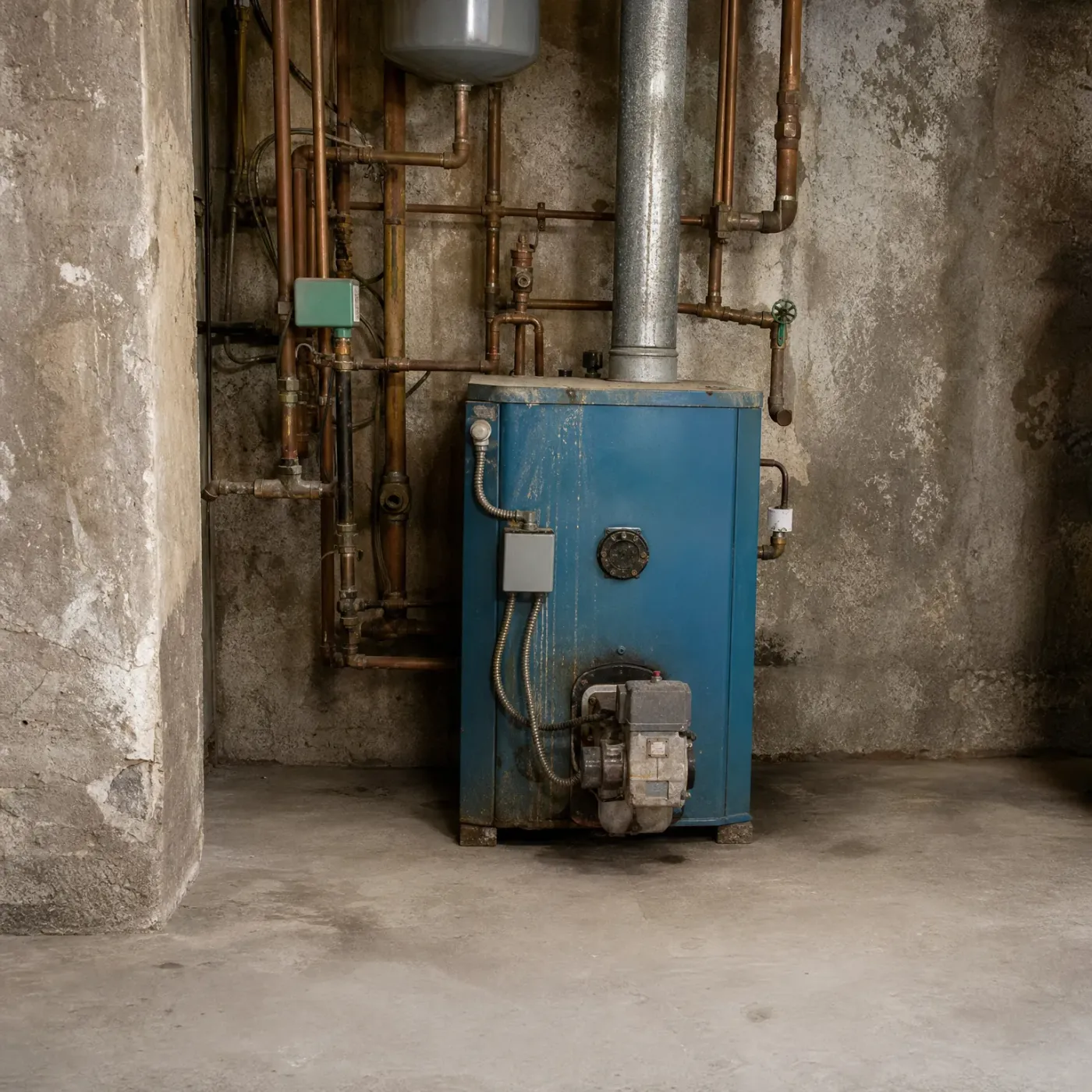
This is what trouble looks like. Rust and scorch marks around the flue connection, a casing that's aged past what's normal, a burner assembly working harder than it should. An oil-fired boiler like this one needs its burner and flue checked by someone who knows oil systems, not just gas.
Go stand next to it. A dark smudge above the draft hood or around the burner door means something's off with the burn. A smell of oil fumes in that room, especially when the boiler's running, is worth paying attention to. So is a pilot or burner flame that looks orange or yellow instead of blue, or one that seems to lift and waver instead of sitting steady. Moisture fogging the windows near the boiler, or rust forming on the flue pipe itself, points the same direction. None of these are things you smell as gas, because CO has no odor. Left alone, a boiler burning this way keeps putting carbon monoxide into a space where people sleep and spend time, and that risk doesn't fix itself.




Your request goes to one pro, not a list of companies.
Tell a local repair pro what your boiler is doing.
It costs nothing to send, and you don't have to hire anyone.
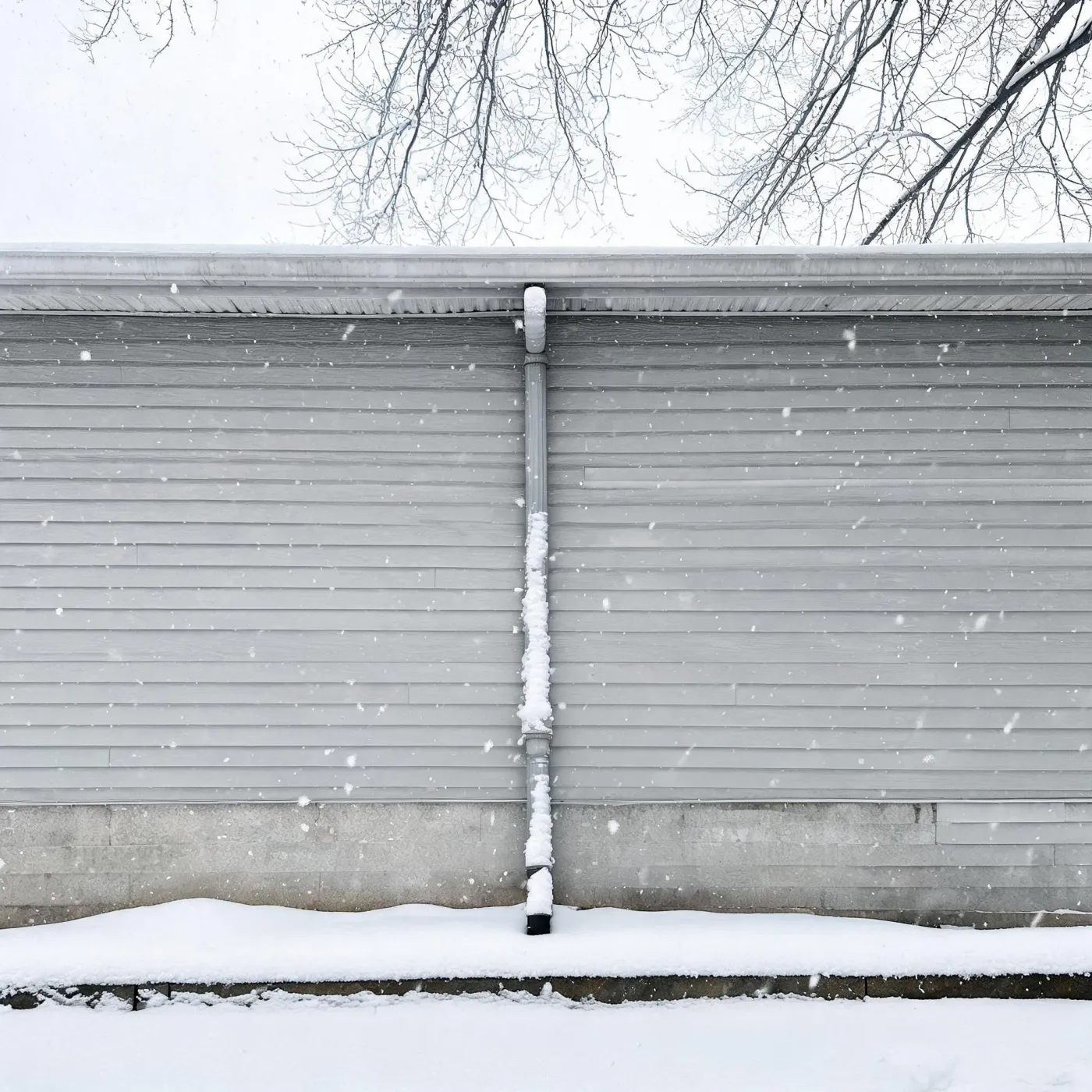
On the coldest nights here, the state averages around 15°F, according to NOAA climate data. At that temperature your boiler is firing long and often, trying to keep up, and it's running through the same combustion air and the same flue path hour after hour. If that flue is even partly blocked, or the burner isn't getting enough air, a boiler working this hard is when carbon monoxide shows up fastest. A short cycle on a mild day might burn clean. A long, cold-night run is what exposes a problem that's already there.
NOAA nClimDiv 1991-2020 county normals weighted by homes
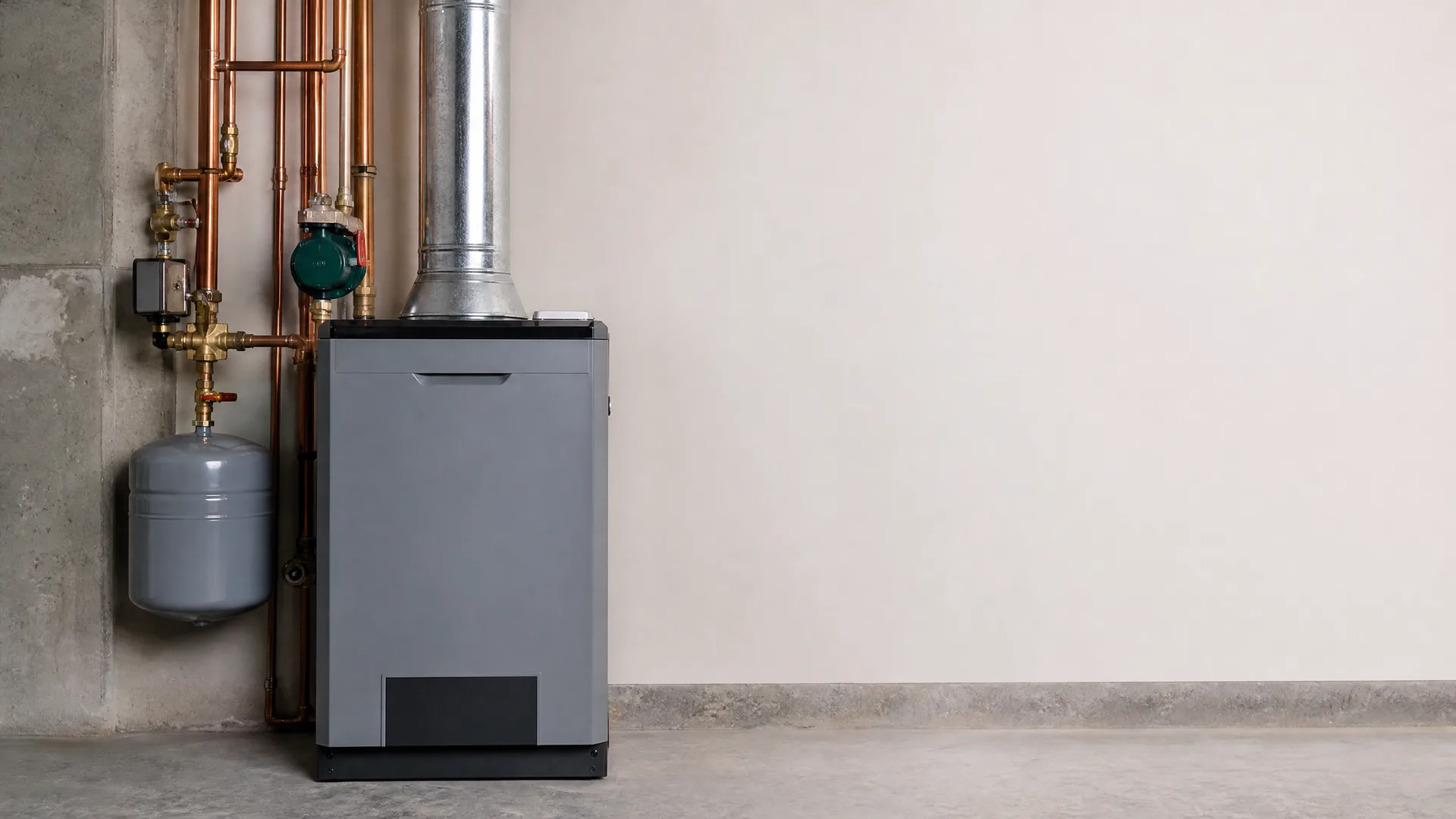
Most boilers in New Hampshire run on oil, and an oil flame is less forgiving than gas about air and draft. Give it too little air or a flue that isn't pulling right and it stops burning clean. Soot builds up fast on the heat exchanger, the flame goes ragged instead of a tight blue cone, and the burn starts putting off more carbon monoxide than it should. A gas flame would show trouble sooner. Oil can run dirty a while before anyone notices.
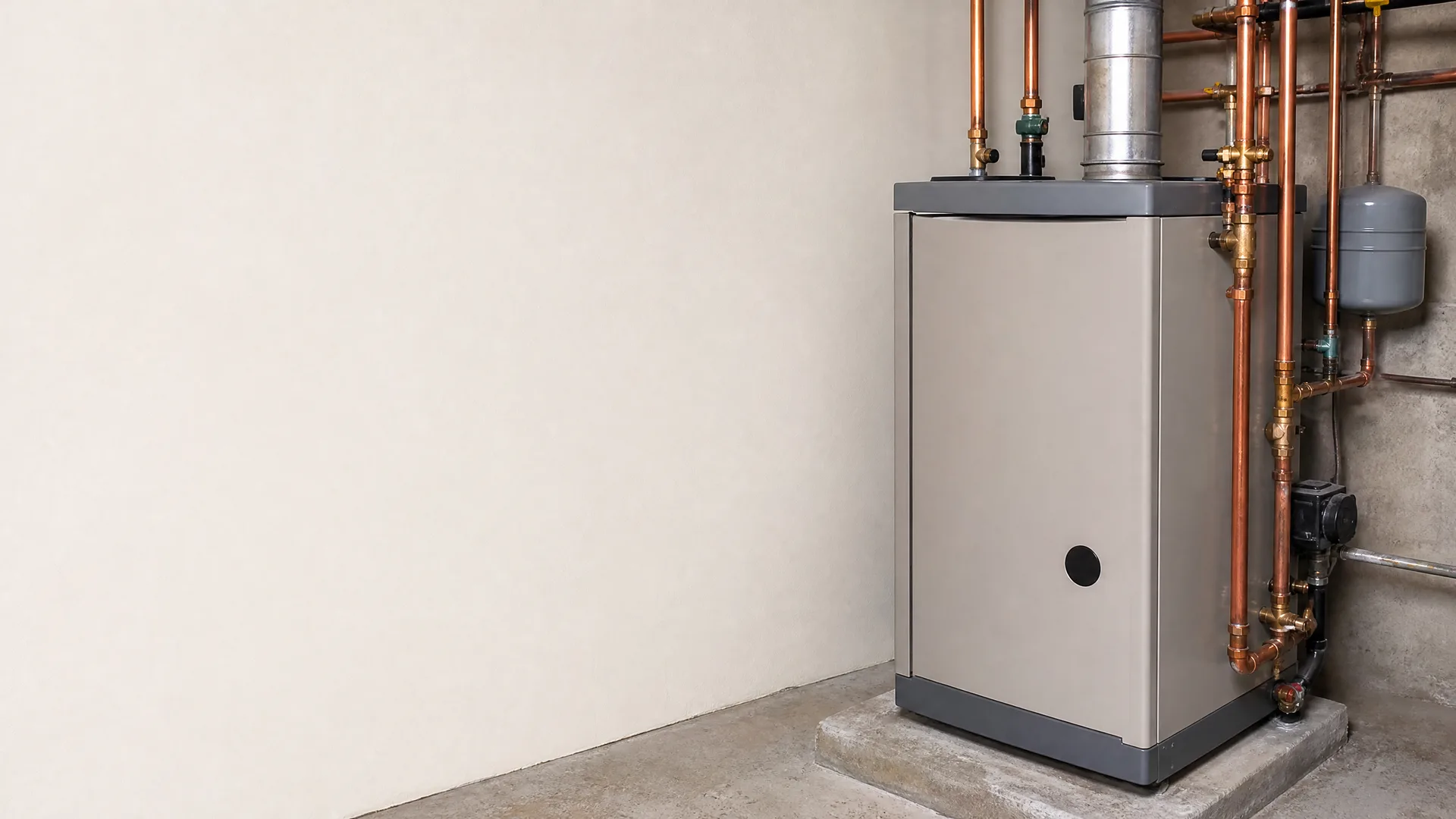
The flue is the only path the exhaust has out of the house, and it depends on a steady draft to pull combustion gases up and out. Wind, a bird's nest, even a loose or disconnected section can slow or reverse that draft. When it backs up, carbon monoxide that should have gone up the flue ends up in the boiler room instead. That's why rust or staining right at the flue connection is worth more attention than almost anything else near the unit.
15°F is the average overnight low here in December, January and February, not the worst case. On nights colder than that, your boiler runs close to nonstop, pushing the same burner and flue it's used all week to keep the house warm.
NOAA nClimDiv 1991-2020 county normals weighted by homes
None of these signs are subtle once you know where to look. A flame that's gone yellow, soot around the burner door, rust working its way up the flue pipe, a smudge above the draft hood, the smell of oil in the room when the boiler's running. Any one of them means the burn has gone wrong somewhere between the oil and the flue. The only one you can't see or smell is the gas itself, which is why a detector near the boiler matters more than a nose does. On a night near 15°F, with the boiler firing almost without stopping, whatever's already wrong gets worse fast, because the same burner and the same flue are working harder with no break to catch up.
Oil boilers in New Hampshire get checked by the same kind of contractor winter after winter, and that work teaches someone what a yellow flame next to rust near the flue usually means versus what it means on its own. That's who gets matched to your call: someone local, working on this equipment all season, not a dispatcher reading down a list. You'll hear from one contractor, licensed for New Hampshire, not a handful of companies calling to compete for the job. Whatever you've seen or smelled near the boiler, that's the thing worth describing when they reach out. It's the detail that tells a tech where to start looking before they've even opened the burner door.





The pro who reaches out is licensed in New Hampshire.
No charge to send it. You decide if you hire them.