Why your boiler smells like oil in New Hampshire

RepairBoilerNew Hampshire
Step 1 of 2

What ZIP code is the job in?

Why does my boiler smell like oil?

A faint oil smell near the boiler is something most homeowners here notice sooner or later, especially once the system has been running steady through the cold months. Oil heat is the common setup across New Hampshire, so the smell isn't unusual to come across, but it's not something to just live with either. You want to know if it's the normal smell of the fuel or a sign something's leaking or burning wrong.

A faint smell after startup is normal. A strong or lasting one means fuel is leaking or not burning fully

Oil boilers give off a light smell for a minute or two when the burner fires, especially on a cold start. That's just unburned fuel vapor clearing out before combustion settles in. A smell that lingers, or shows up when the boiler isn't running, usually means something else. It could be a loose fitting on the oil line, a cracked nozzle, or a filter that's letting fuel seep out around the seal. It can also mean the burner isn't getting enough air and the oil isn't burning clean, which leaves unburned fuel in the flue gases. Either way, oil in the air of a mechanical room isn't something to wait out. A boiler burning efficiently shouldn't leave a smell behind once it's running.

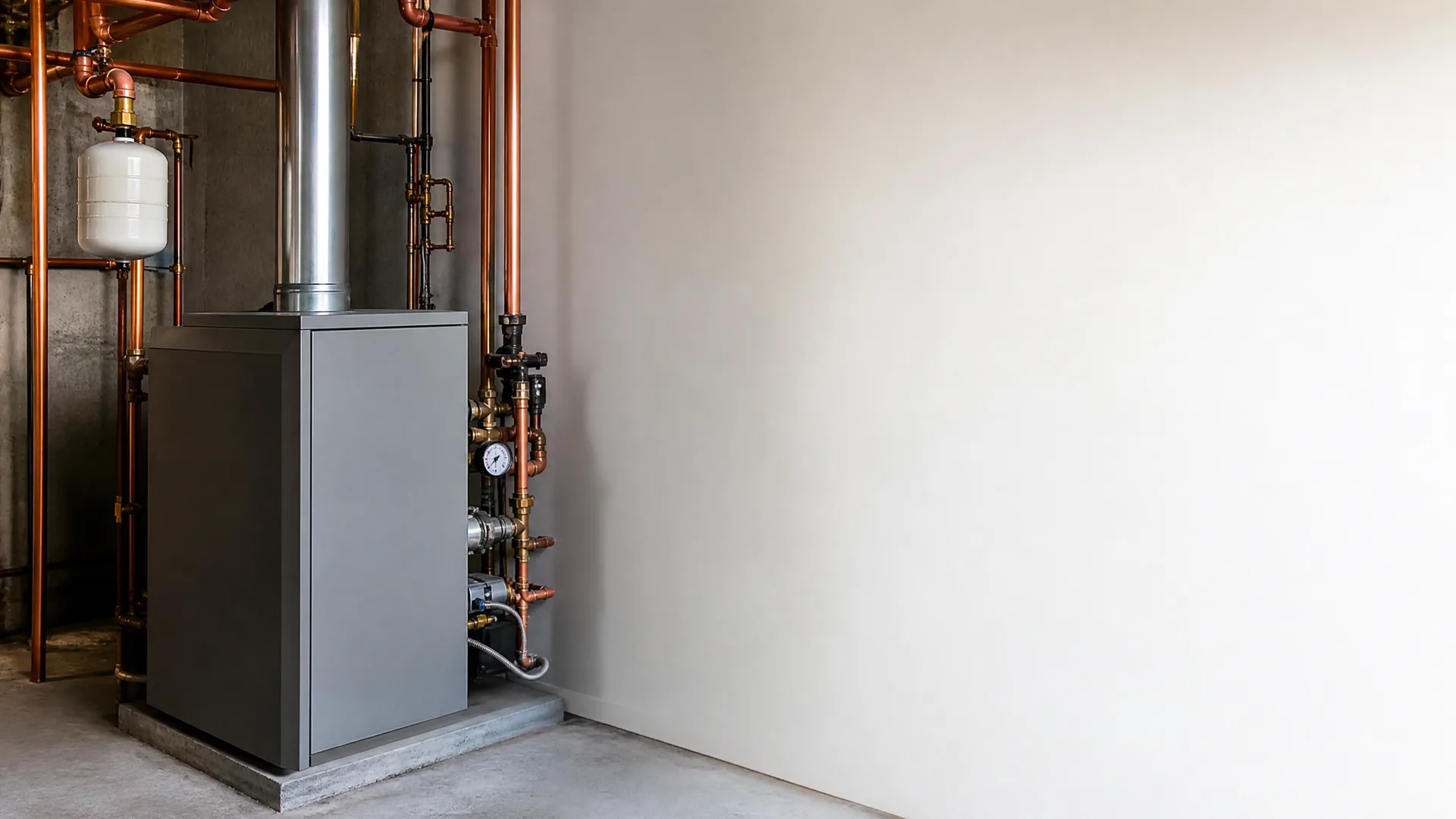
A grey floor-standing boiler with a metal flue and copper pipework, valves and a pressure gauge stands in the corner of a room with plain light walls and a concrete floor.

Where the smell actually starts

Oil boilers burn fuel inside a sealed combustion chamber, and that chamber should hold the smell in along with the heat. A smell in the room usually means fuel or exhaust is escaping somewhere along the way, at a loose fitting, a cracked puff back door, or a nozzle that isn't firing clean. A small drip at a fuel line connection can sit there for weeks, slowly turning into an odor you notice on cold mornings before the house warms up.

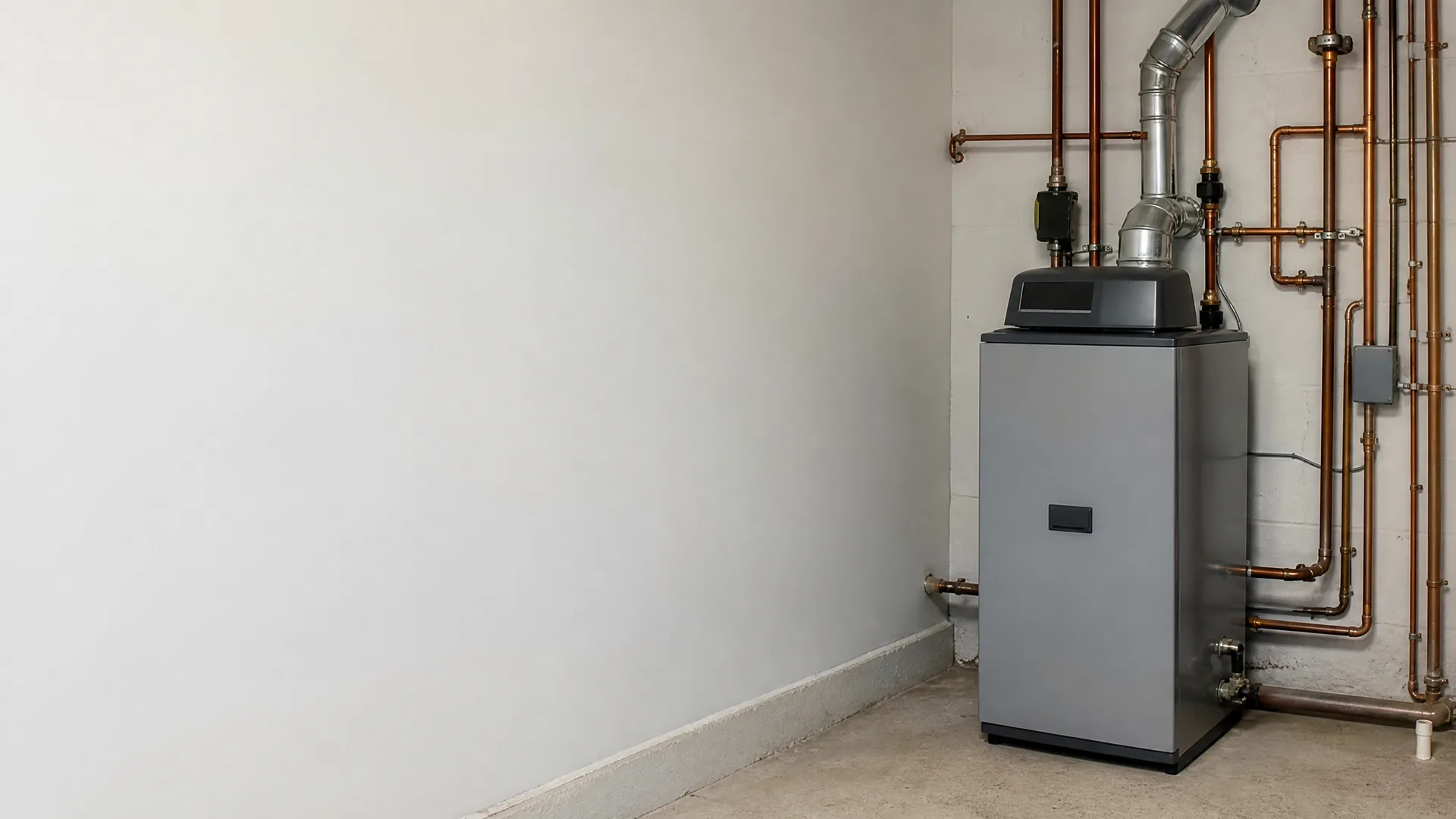
A gray floor-standing boiler with a metal flue pipe stands in the corner of a plain painted basement room, connected to copper pipes running along the wall.

Why a bad burn makes it worse

When the burner doesn't get the right mix of air and oil, it doesn't burn all the fuel. That leftover oil turns into soot and fumes instead of heat, and some of it works its way out through the cabinet seams. A dirty nozzle or a clogged air intake is often behind this. You might also notice more soot on the chimney cap outside or dark residue building up around the boiler's base.

Is that oil smell something to worry about?

You probably noticed it first in the room with the boiler, maybe in the basement, a smell that's not quite smoke and not quite exhaust. It can get stronger right when the burner kicks on, or sit there steady even after it shuts off. Some homeowners also notice a bit of soot around the unit, or the smell traveling up through a nearby stairwell. On its own, a faint smell doesn't mean the house is in danger. But oil escaping where it shouldn't, whether as liquid fuel or unburned exhaust, means something in the system isn't sealed the way it should be, and left alone that can mean a bigger repair later, or fuel burning less efficiently than it should at a time when every gallon costs you.

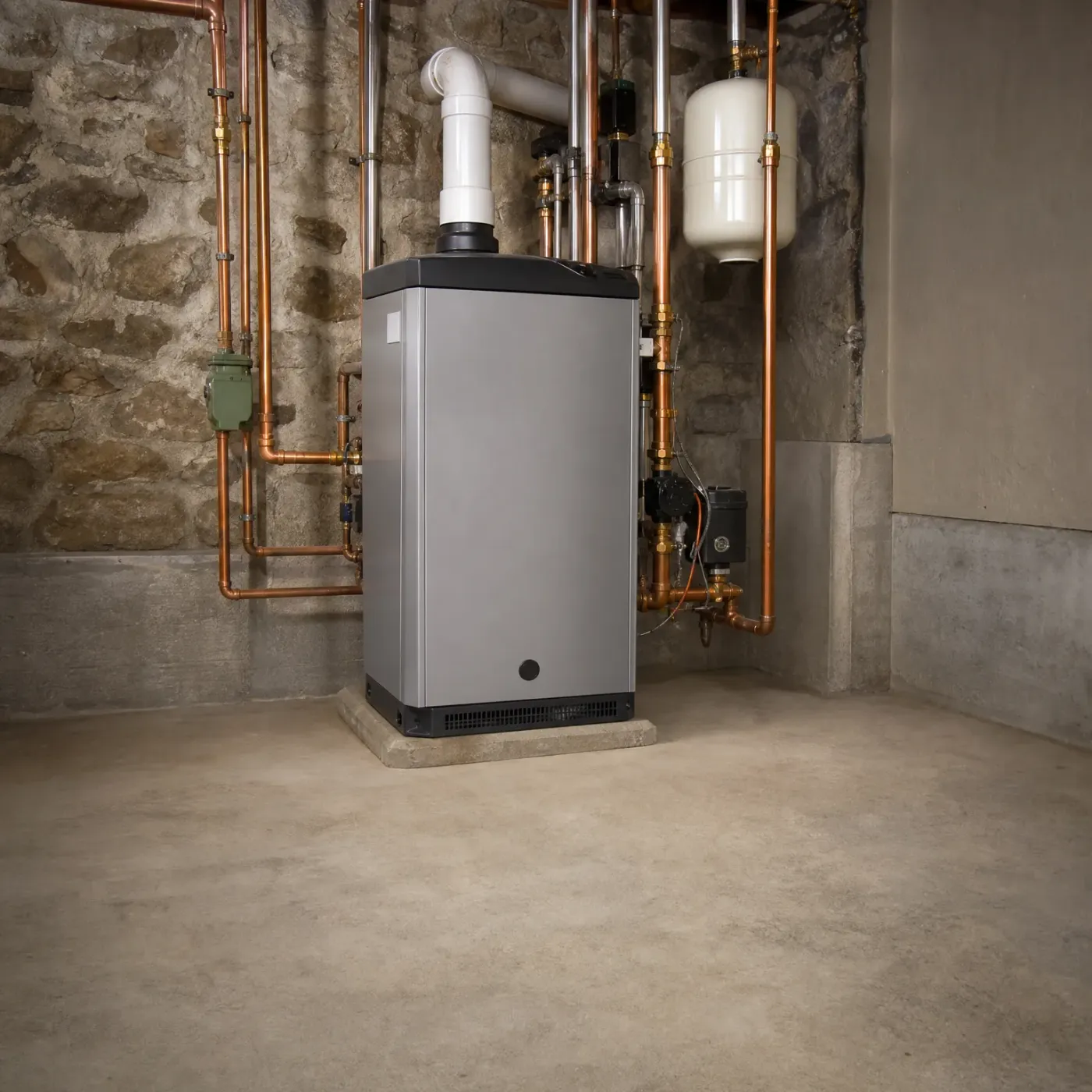
A gray floor-standing boiler on a concrete pad in a basement, connected to copper pipes, a white expansion tank, and a white PVC vent against a stone and concrete wall.

Normal operation

A boiler like this runs clean. The flue is tight, the fittings are dry, and the burner fires without any fuel smell reaching the room. Pipes and valves hold their seal, and the only smell you get is a faint warmth when the burner first kicks on.
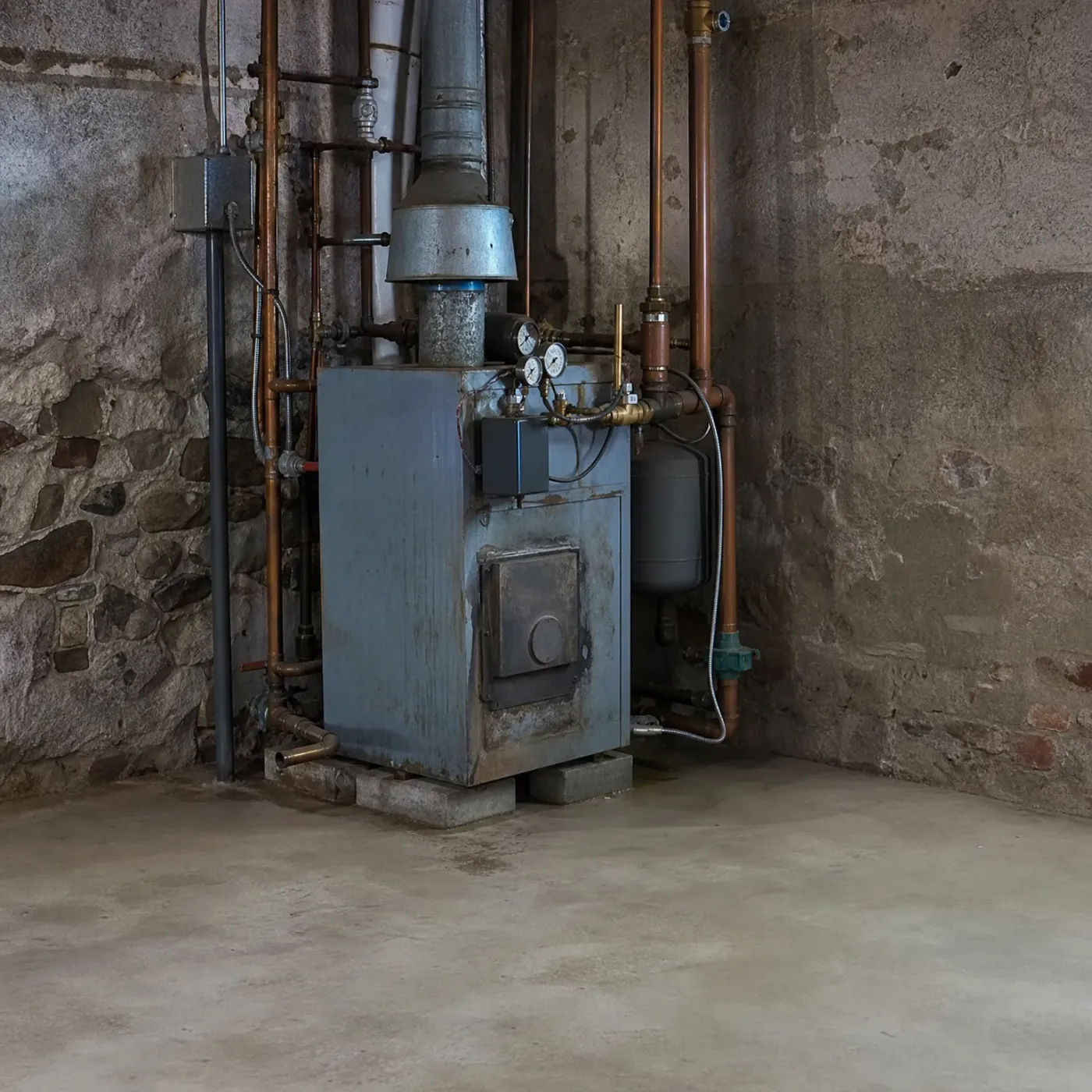

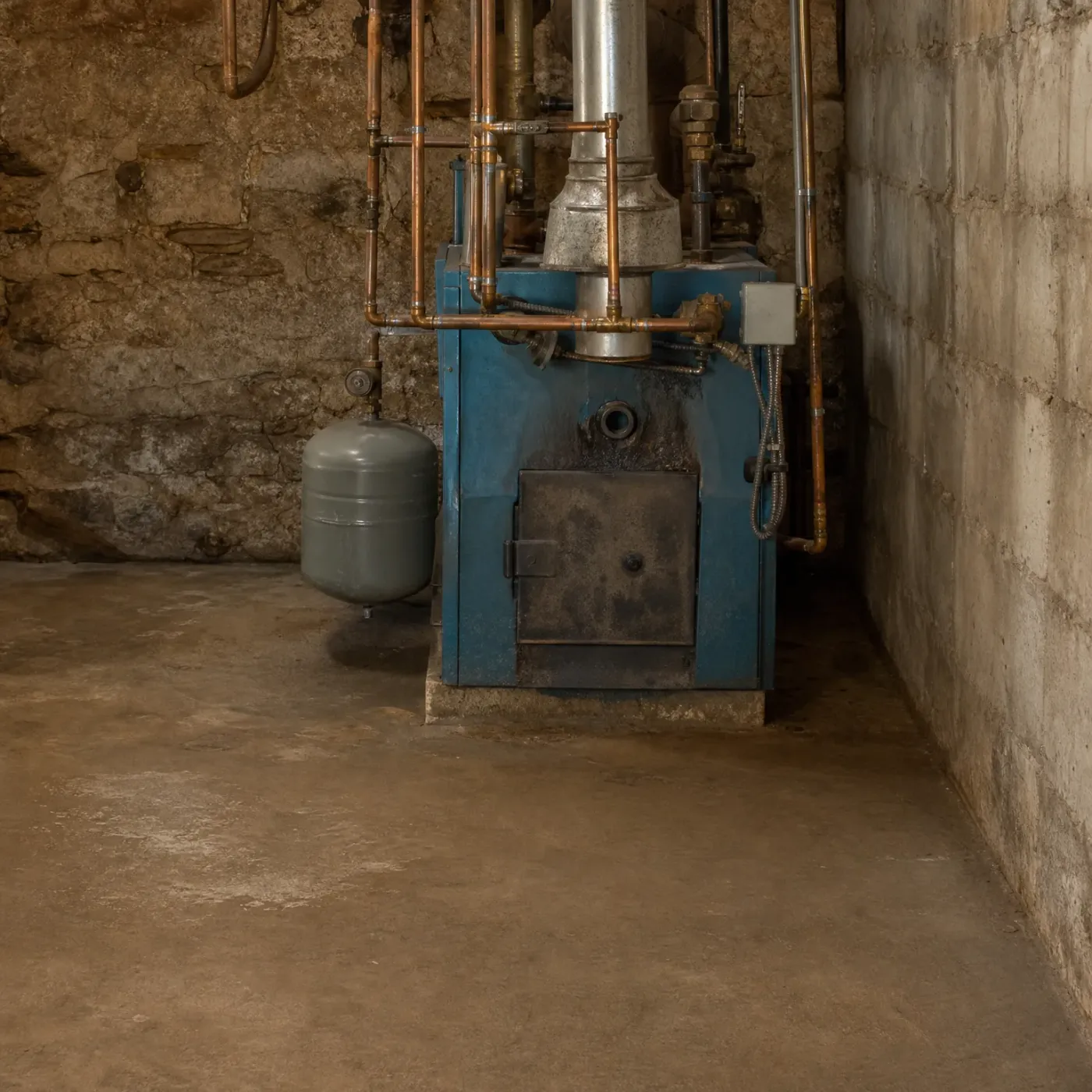
An older gray boiler with a metal flue, copper piping, pressure gauges and an expansion tank sits on concrete blocks in a basement corner with stone and concrete walls.

Something's leaking

An older cast iron boiler like this has had decades of fittings, valves, and gaskets to wear through. A smell that lingers near the unit usually means oil or exhaust is escaping somewhere along those joints, not staying inside the chamber where it belongs. A tech who works on this equipment all winter can trace it to the exact fitting or seal.

A woman with long light-brown hair in a gray knit sweater sits in a living room looking off to the side, with a sectional sofa, houseplant, lamp, wooden table and large windows behind her.
A woman in a chunky gray turtleneck sweater sits indoors looking off to the side, with a blurred dining table, chairs, pendant lamp and window behind her.
A woman in a cream knit sweater with her hair in a bun stands near a window, looking off to the side, with a gray sofa, houseplant and open kitchen with pendant lights blurred behind her.
A woman with long brown hair in a cream knit sweater stands near a window, looking to the side, with a white sofa, shelving, and a hallway visible behind her.

One form, no calling around

The pro who reaches out is licensed in New Hampshire.

Sending the form costs nothing.

How the burner actually fires

  • The burner draws oil from the tank, mixes it with air, and fires it as a fine mist through the nozzle.
  • A spinning fan built into the burner pushes air past the flame so it burns clean inside the combustion chamber.
  • Exhaust leaves through the flue pipe, pulled along by draft, carrying the byproducts up and out of the house.
  • The nozzle sits close to the ignition electrodes, and a worn or clogged one sprays unevenly instead of in a tight pattern.
  • A cracked heat exchanger or a loose flue connection lets exhaust drift into the room instead of going up the chimney.
  • Puffback happens when oil builds up before ignition and lights all at once, pushing smoke and soot out through any gap it can find.

The oil burner on your boiler is a small, precise machine, and most of what it does, it does out of sight inside the combustion chamber. Oil comes in from the tank through a line, and a pump pushes it through a nozzle small enough to turn it into a fine mist rather than a stream. That mist meets air from the burner's fan and ignites against the electrodes, and when everything is set right, it burns almost completely, with very little smell escaping anywhere. The flue pipe handles what's left, pulling exhaust up and out using draft, the same way a chimney draws smoke from a wood stove. Every part of this depends on the part before it working correctly. A nozzle that's clogged with old fuel or just worn from years of use doesn't spray that fine mist anymore. It sprays unevenly, in a pattern the electrodes don't ignite cleanly, and some of that oil doesn't burn where it should. If ignition is delayed even a second or two, oil can build up in the chamber and then light all at once, which is what causes a puffback. That sudden ignition pushes pressure outward through any gap it can find, a loose panel, a cracked seam, the joint where the flue meets the boiler, and that's when soot and a strong oil smell end up in the room instead of going up the chimney where they belong.

A woman and a sleeping child wrapped together in a cream knitted blanket on a couch, with a potted plant, framed photo and lit lamp in the background.
A gray-haired woman in a cream knit sweater stands in a dimly lit kitchen at night, looking to her right, with a round loaf of bread in the foreground and a dark window and potted plant behind her.

Calling around to every oil company

Most oil companies in New Hampshire sell service contracts and repairs the same way they sell fuel. You call one, get a voicemail or a dispatcher who takes a message, then wait to hear back. Call another and you're explaining the same smell, the same symptoms, the same question about whether it's safe to leave the burner running, all over again. Some won't come out at all unless you're already on their delivery list. By the time you've reached two or three companies you've repeated yourself three times and you're still not sure which one actually knows your boiler, or when anyone can get there to look at it.

One call to someone who knows oil burners

Requesting help here sends the job to one licensed contractor working near you, someone who services oil boilers through a New Hampshire winter and has seen what causes that smell more times than you have. You describe it once. No juggling callbacks from three different companies, no retelling the story to a second dispatcher because the first one never called back. Just one contractor who shows up knowing what you told them, ready to check the flue, the fittings, and the burner itself. That's the part that's gone once you ask. What's wrong with the boiler still takes a proper look to find.

Winter nights average 15°F statewide

At 15°F, your boiler is firing often, sometimes for hours at a stretch. That steady run time gives a loose fitting or a worn seal more chances to leak, which is when the oil smell shows up.

NOAA nClimDiv 1991-2020 county normals weighted by homes

A blue cast-iron boiler with a metal flue pipe and copper piping stands against a stone and concrete block basement wall beside a gray expansion tank on a bare concrete floor.
Before you get your boiler repair
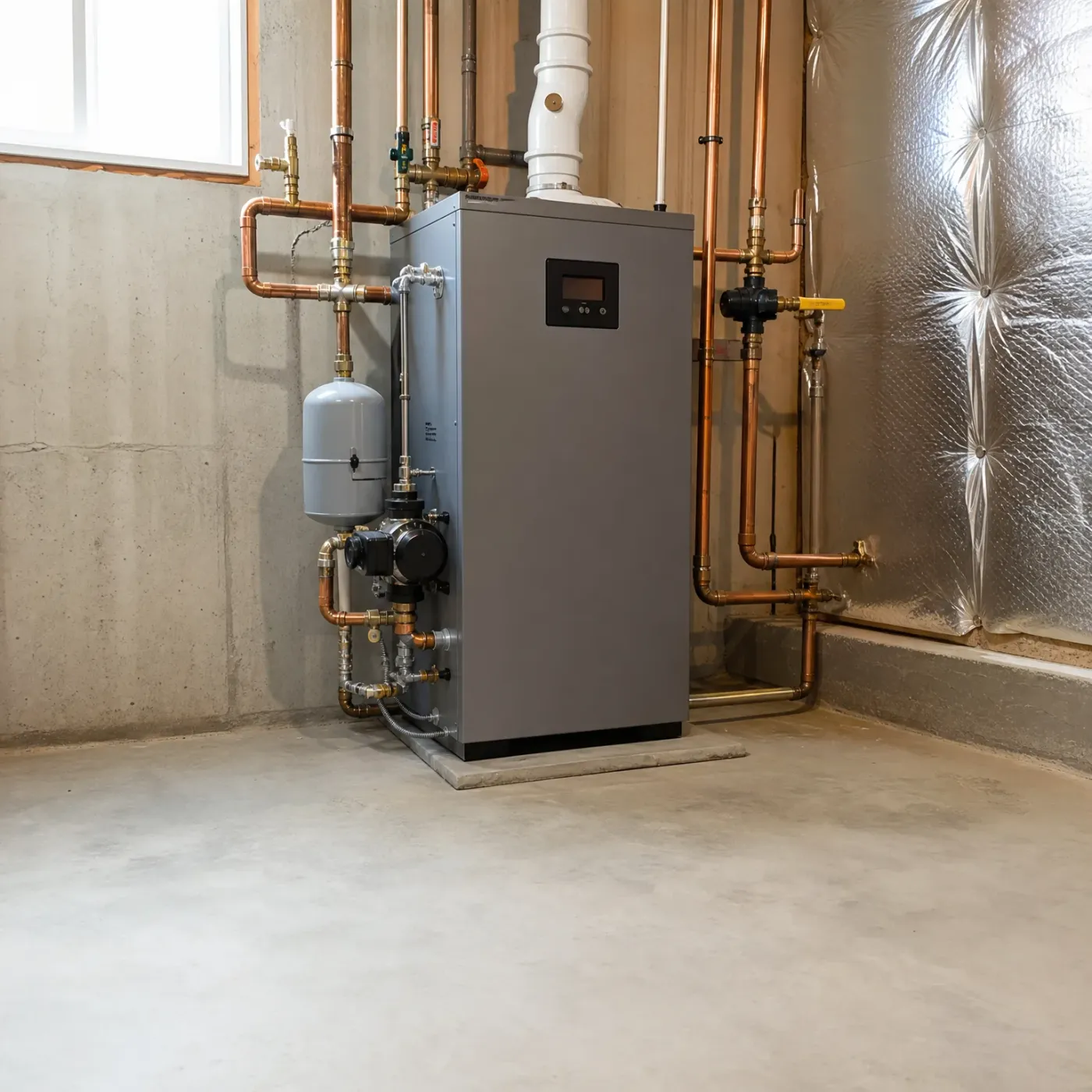
A gray boiler unit with a digital display stands on a concrete basement floor, connected to copper piping, a gas valve, a circulator pump and an expansion tank, beside a concrete wall and foil-faced insulation.
After you get your boiler repair
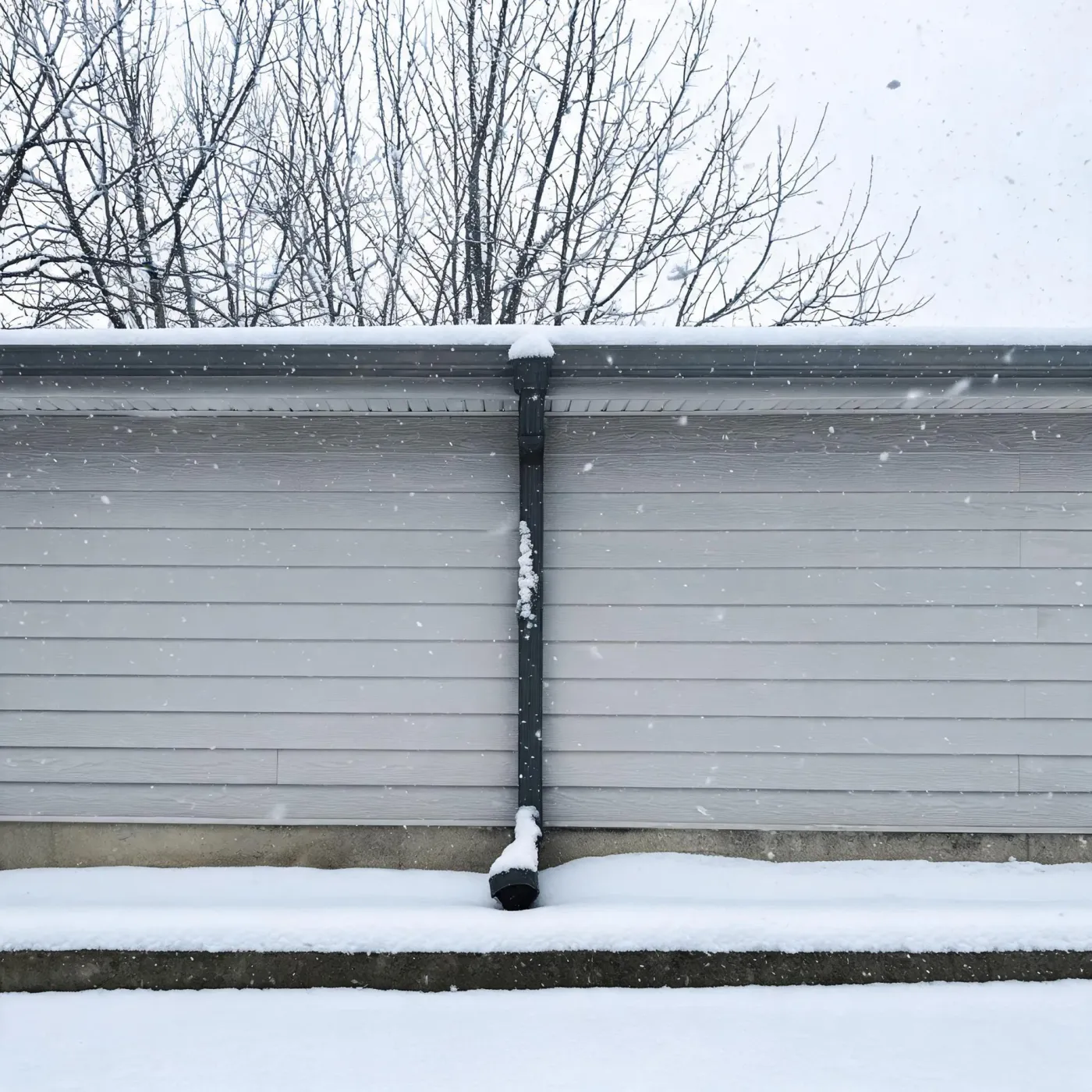
Exterior wall of a building with light gray horizontal siding and a dark downspout running to the ground, with snow on the roofline, steps, and ground, and bare trees behind during falling snow.

New Hampshire winter nights average 15°F statewide, according to NOAA. At that temperature your boiler isn't cycling on and off for a few minutes at a time, it's running long stretches to keep the house warm. That extra run time puts more hours on every fitting, gasket, and seal in the system. A joint that holds fine on a mild 40°F night can start weeping oil once it's under steady heat for hours on end. That's often when the smell shows up, not on the first cold snap but a few weeks into real winter, once the boiler has been working hard and long enough for a weak spot to give.

NOAA nClimDiv 1991-2020 county normals weighted by homes

An oil smell near the boiler almost always comes down to a loose fitting, a worn seal, or a crack somewhere in the flue, and none of those fix themselves. The smell tells you where to look, not how bad it is, which is why it's worth having someone check it rather than waiting to see if it gets worse. A tech who works on oil boilers all over New Hampshire every winter has seen this exact smell come from a dozen different houses and knows where to check first, instead of guessing. You'd get matched with one licensed contractor local to you, not a handful of companies calling you back at once, so there's no sorting through quotes or explaining the same smell to three different voicemails. Whatever is leaking, oil or exhaust, it's a problem that gets found with the right eyes on it, in a house that still needs heat tonight.

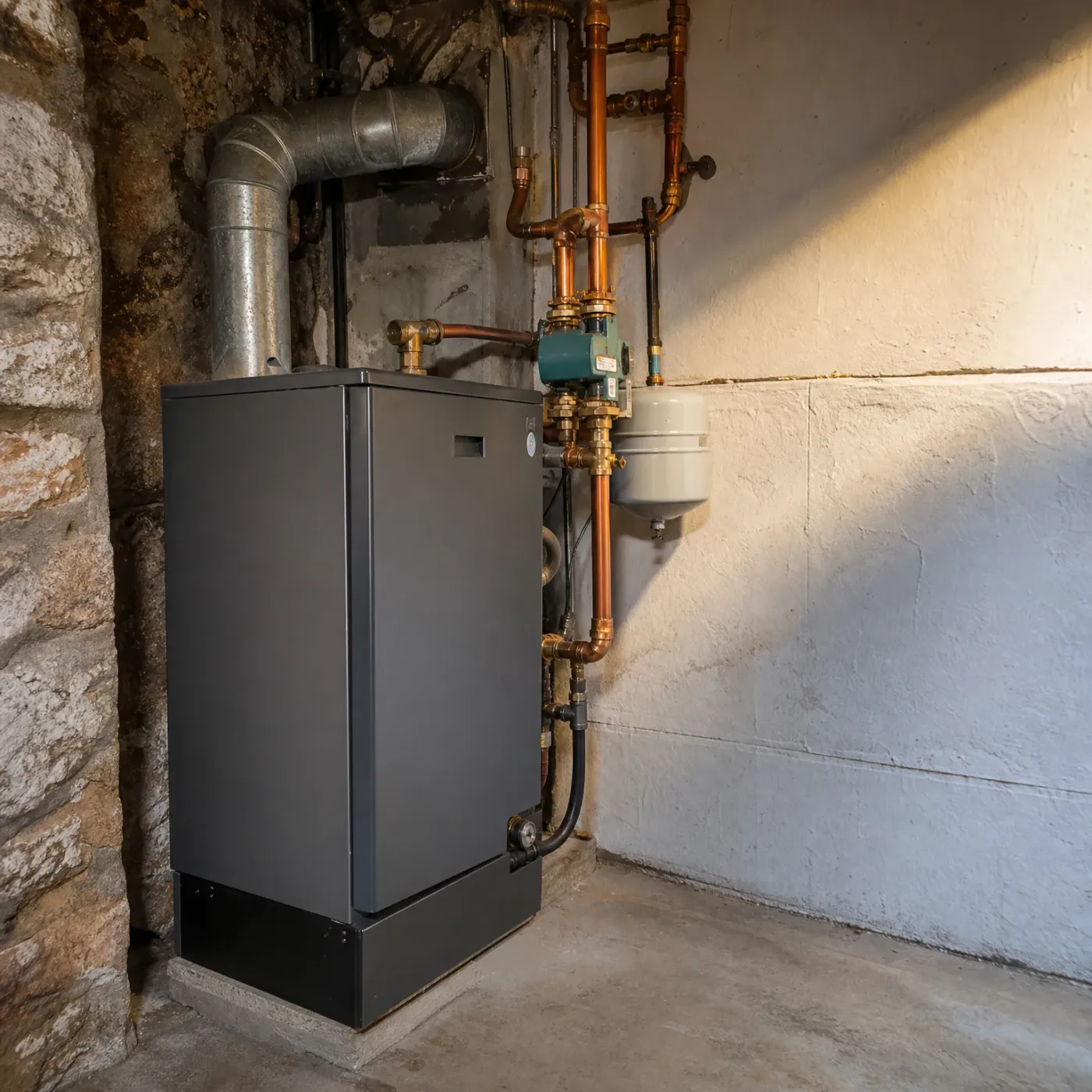
A dark gray boiler unit stands in a basement corner against a stone and painted concrete wall, connected to copper pipes, a circulator pump, an expansion tank, and a galvanized metal flue duct.

Skip the search

Reach a local pro

Only one pro gets your request, so you hear from one company.

You're not committing to anything by asking.