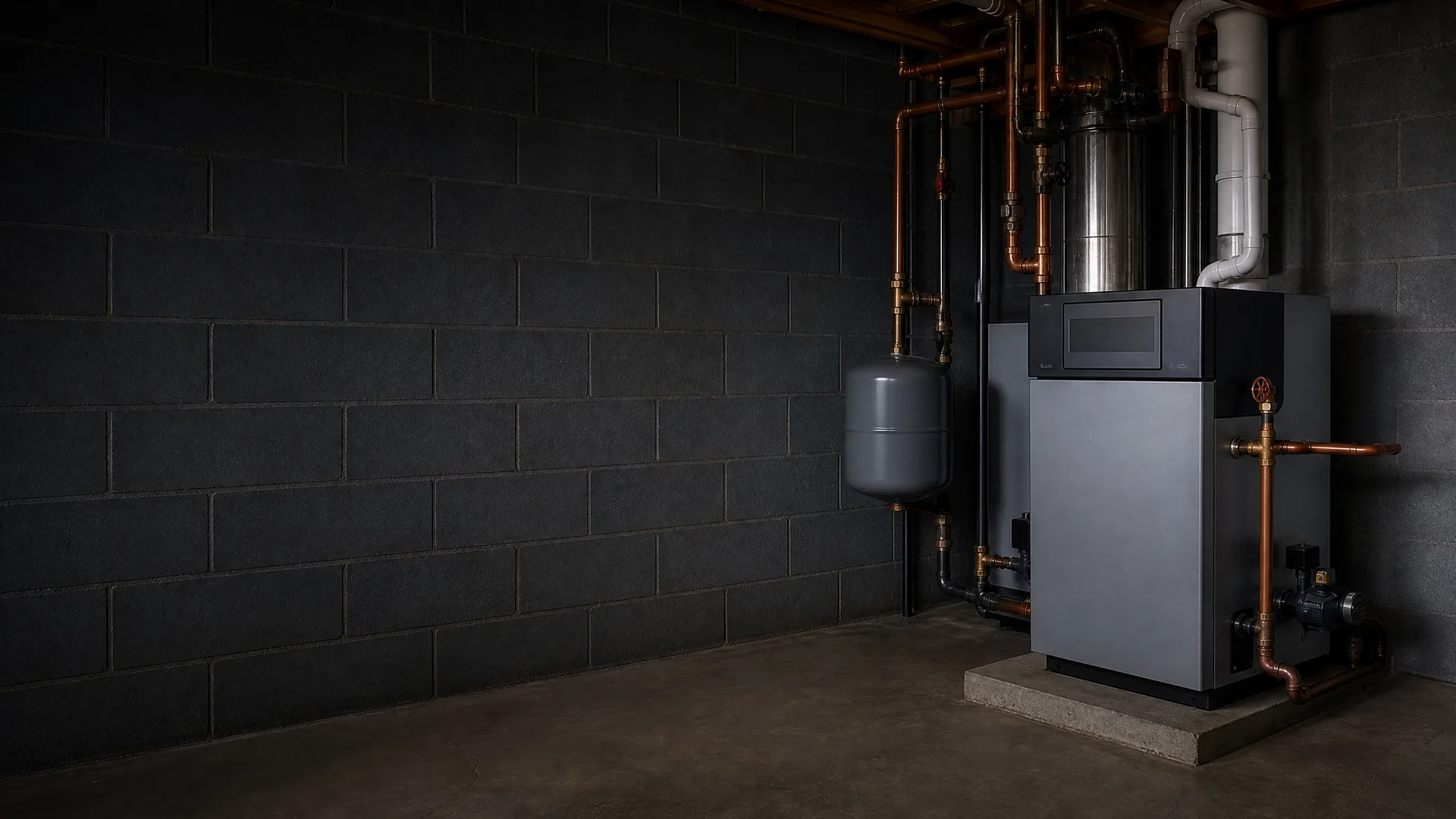
You've got a boiler already, and you're wondering if it's worth pulling up the floors for radiant heat. Most of New Hampshire heats with oil, and with electricity priced the way it is here, you want to know this pays off before you commit to a winter of construction and a bigger bill if it guesses wrong.
Yes, if it runs off your boiler instead of electric cable
Radiant floor heat pays off in New Hampshire when it's hydronic, meaning hot water from your boiler runs through tubing under the floor. Oil heats most homes here, and a hydronic system uses that same boiler as its heat source, so you're not adding a second fuel bill. Electric radiant floors are a different story. With New Hampshire's electric rates among the highest in the country, heating a floor with resistance cable all winter gets expensive fast. The other piece is comfort: radiant heat warms the floor itself rather than blowing air around, so rooms feel even from floor to ceiling without a furnace cycling on and off. That matters most in bathrooms, kitchens, and any room where you're on your feet.
Running off your existing boiler
That boiler already heats water for the rest of the house. Radiant floor loops tie into it through a manifold, so the same oil-fired unit that runs your radiators or baseboards can run the floors too. No second heat source to install or maintain.
An old boiler changes the math
An older unit like this one may not have the output to add floor loops on top of its current load. If it's near the end of its life anyway, that's worth sorting out with a contractor before any floor gets opened up.
What it changes in your house
Right now your boiler sends heat to rooms through radiators or baseboards, and the air warms unevenly. Radiant floors change that. The floor itself holds the heat and lets it off slowly, so a room stays even from the bathroom tile to the bedroom at the far end of the hall. You'd notice it most on the coldest mornings, when a baseboard system is still catching up and a radiant floor already has the room settled.
Pulling up flooring to run the loops is real work, and it touches rooms you use every day. Before you get into any of that, the question worth answering is whether your boiler and your layout can even support it well, and that's a judgment a contractor needs to make in person, not something to guess at from a search result. Getting matched with one who knows New Hampshire boilers and radiant retrofits means you explain your house once, to someone who can actually answer it, instead of calling around and repeating yourself to find out who even does this kind of work.
Skip collecting and comparing quotes for the new boiler.
There's no charge for the request.
A radiant floor loop doesn't tap your boiler's main supply line directly. It runs off a manifold, and that manifold gets its own mixing valve, because floor loops want water around 100 to 120 degrees while your radiators or baseboards want it closer to 160 or 180. The mixing valve blends hot water from the boiler with cooler water returning from the floor loops until it hits the right temperature, then a circulator pump pushes it through the tubing. Each loop runs its own circuit back to the manifold, and a good install balances those loops so a bathroom loop and a living room loop get the flow each one needs. The boiler still fires the same way it always has. What changes is the water temperature leaving it for that zone, and the control that manages the blend is what a contractor sizes when they design the system for your house.
Your boiler keeps running the floors and the radiators both, no changes made to it.
An old boiler straining to feed both systems shows it fastest in the pressure gauge.
What are you actually dealing with right now
You've got cold floors in the bathroom in January and a boiler that cycles on and off all evening trying to keep the living room even. Maybe a room at the end of the baseboard run never quite catches up, so you nudge the thermostat higher and the oil bill follows. None of that means your boiler is failing. It means the heat is traveling through baseboards or radiators built for a different kind of warmth, one that rises fast and fades fast. If you're also noticing the boiler short-cycling more than it used to, or pressure that creeps up when it's working hardest, that's worth having a contractor look at before you add anything new to the system.
Winter nights average 15°F statewide
A 15°F night is a long, steady draw on your boiler, not a quick jab. Radiant floors hold onto that heat instead of losing it the moment the burner cuts off, so the floor stays warm between cycles and your boiler isn't relighting every few minutes to keep the living room from sliding back down.
NOAA nClimDiv 1991-2020 county normals weighted by homes
Where this leaves you
Radiant floor heat works off the boiler you already have, through a manifold with its own mixing valve.
It holds heat in the floor instead of cycling the air hot and cold the way baseboards do.
A longer, steady run on a cold night suits radiant floors better than quick bursts of heat.
Whether it pays off depends on your boiler's capacity and the floors you plan to open up for it.
Finding a contractor who installs radiant systems and also knows oil boilers in New Hampshire takes more than one phone call.
A matched contractor looks at your specific boiler and floor plan before telling you what the job involves.
So is it worth it. For a New Hampshire house running on oil, radiant floor heat fits the way your boiler already works better than people expect. It doesn't ask for a second heat source, just a manifold and a mixing valve tapped off what you have. It trades the uneven blast of baseboards for a floor that holds heat and lets it go slowly, which suits the long cold stretches here better than short bursts of burner. Whether that's worth doing in your house comes down to two things nobody can answer in general: what your boiler can actually carry, and which floors you're willing to open up to run the loops. Those are specific to your house, not to New Hampshire as a whole.
That's the part that takes legwork. Finding someone who installs radiant systems and also understands an oil boiler well enough to size the mixing valve correctly isn't a one-call job. You'd normally be the one calling around, explaining the same layout of rooms and the same boiler model to every contractor who picks up, then trying to line up quotes that aren't even answering the same question. Getting matched with a contractor who handles both sides of this job skips that part. They look at your boiler and your floor plan before anyone tells you what the work involves, so what you hear back is about your house, not a guess.
Get your boiler to the right pro
Fill out one short form instead of calling around.