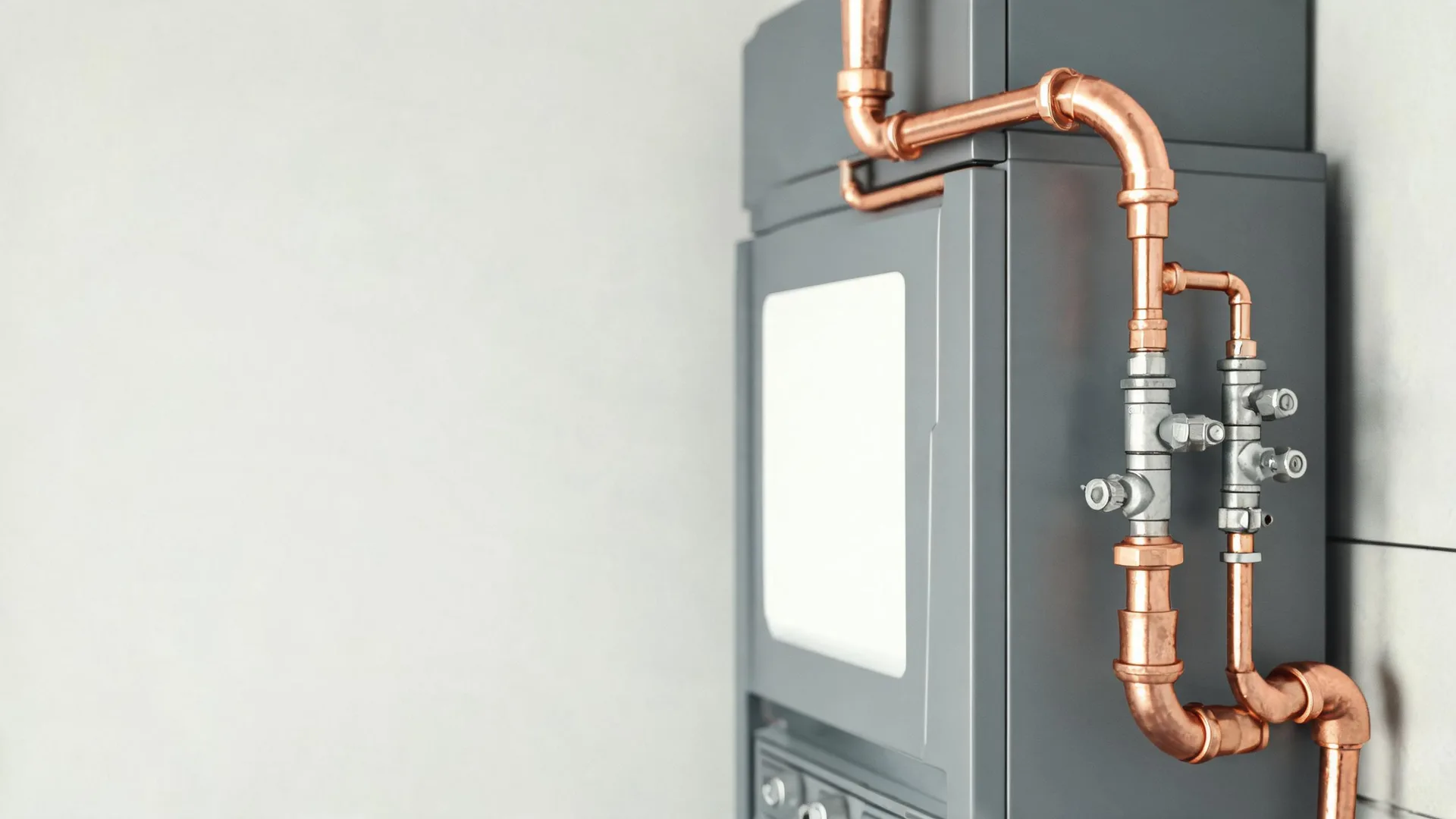
Weather here is hard on equipment
Cheshire County logged 247 severe weather events between 2015 and 2024, including damaging wind and winter storms most years. A boiler sits indoors, but the power it runs on does not always hold up through that.
Takes about a minute. No obligation.
Cheshire County logged 247 severe weather events between 2015 and 2024, including damaging wind and winter storms most years. A boiler sits indoors, but the power it runs on does not always hold up through that.
Gas and oil boilers still need electricity for the controls, the igniter and the circulator pump. Close to a quarter of New Hampshire households went at least 24 hours without power in 2024. Worth asking about a battery backup or manual operation for the system you install.
A boiler in Keene runs nine months of the year, September through May.
Size it for a 15°F night in January, not for the mild days in between.



Most homes in Cheshire County heat with fuel oil or kerosene, 57.1% of them. Bottled or LP gas comes next at 13.7%, with utility gas barely used at all. If your old boiler burned oil, the tank, the fill pipe and the vent are already set up for it. Replacing it with another oil boiler is usually the straighter job. Switching fuels means new venting, a new gas line or a new tank, work your current setup may not be ready for. Ask what your house already supports before you decide what to put in its place.
Cheshire County falls in climate zone 5A, a cold zone where heating carries the load. Any gas-fired hot water boiler installed here now has to hit 84 percent AFUE at minimum. That rule narrows the field before you even start comparing models, and a federal tax credit is available on top of it for units that qualify. Worth working out which systems clear both bars before you pick one.
Find a contractor
Contractors can quote the same boiler and mean different things by efficiency. Ask for the AFUE number in writing, not just a claim that it runs efficient. A condensing boiler only hits its rated efficiency if it's vented and piped the way the manufacturer calls for, so ask how the install handles that, not just what the nameplate says.
A boiler sized off square footage alone can end up wrong for the house it's going into. Ask whether the contractor ran a heat loss calculation, room by room, or just matched the number on the old unit. An oversized boiler short cycles and wears out early. An undersized one runs constantly and still can't keep the house warm on the coldest nights.
A heat loss calculation looks at the walls, the windows, the ceiling height, and how many sides of each room face outside, then adds it all up room by room. That number, not the square footage, is what the boiler should be matched to. Houses the same size can need different boilers because one has more glass, or higher ceilings, or less insulation behind the walls. Oversize it and the boiler reaches temperature fast, shuts off, and starts again a few minutes later, cycling on and off all day instead of running a long steady stretch. That short cycling wears on the igniter and the circulator pump well before their time. Undersize it and the boiler runs almost constantly on the coldest nights and still loses ground.
Installation day starts with the old boiler coming out, along with whatever venting and piping won't carry over to the new one. If the fuel or the venting type is changing, that's where most of the day goes, not in setting the new unit in place. Running new vent pipe, a new gas line, or a new condensate drain takes longer than swapping one boiler for a similar one. Once the boiler is set, the installer pipes it into the heating loop, wires the controls, and connects it to the thermostat. Then comes startup. The installer checks gas pressure or oil draw, checks the flue draft, and bleeds air out of the system so every radiator or zone actually gets hot water. A boiler that's installed but never bled or balanced will leave some rooms cooler than others. That last step matters as much as anything done earlier in the day.