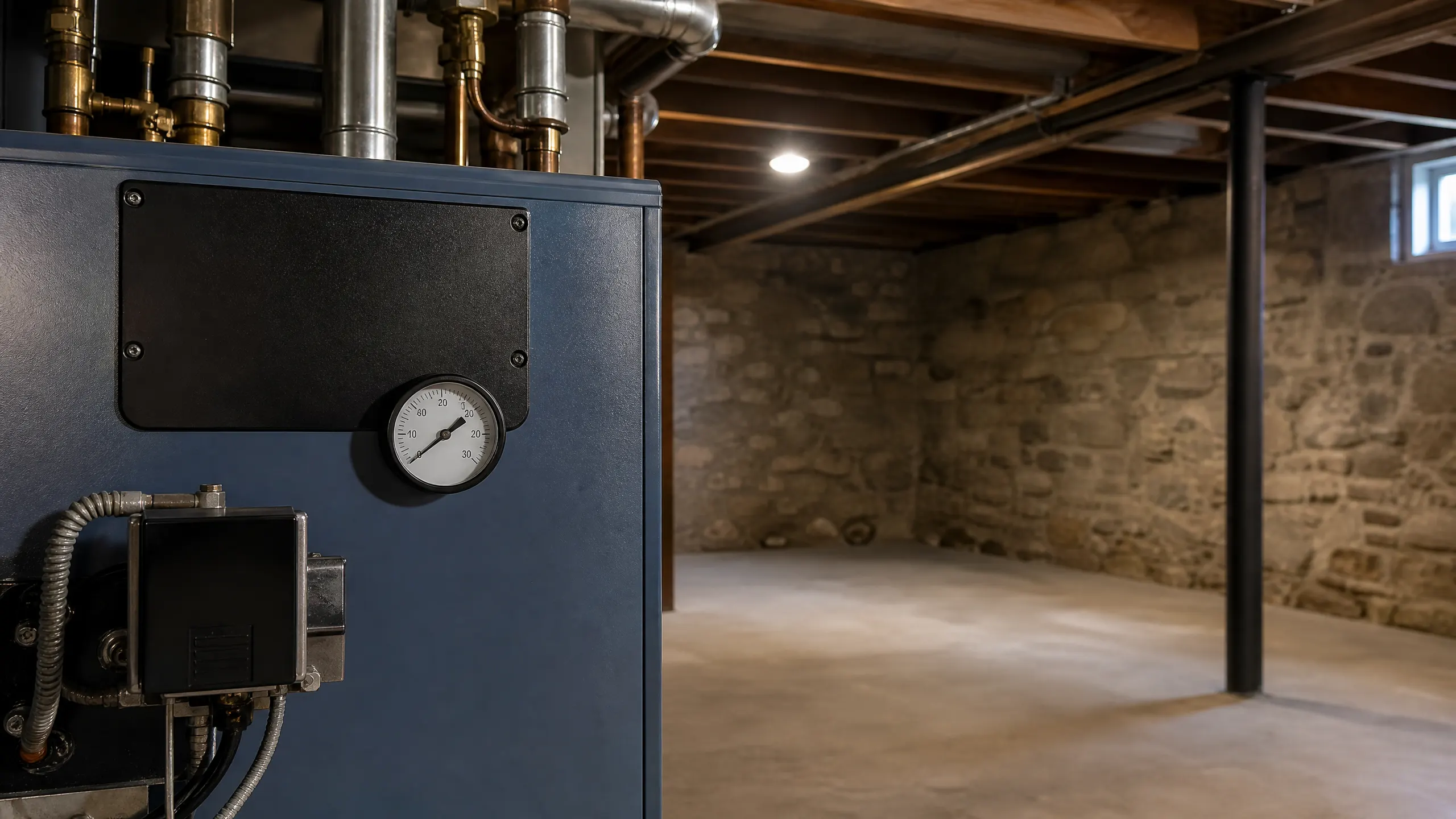



A blue boiler with copper pipework and a pressure gauge mounted in an unfinished basement with stone foundation walls.

Boiler Installation in Manchester, NH

Tell us about the job

Takes about a minute. No obligation.

New system or replacementBoilerHillsborough County, NH
Step 1 of 2

What ZIP code is the job in?

A boiler here runs eight months out of the year, October through May. Overnight lows average 16°F across the heart of winter, so a boiler put in this fall is working through the coldest stretch almost right away. That kind of run favors a unit sized for this house, not the cheapest one on the quote or the biggest one on the truck. Hillsborough County has seen dozens of winter storms over the past decade, heavy snow, ice, blizzards, and a boiler that's undersized or already struggling has less room to keep up when one hits.

Natural gas in New Hampshire ran $18.09 per million Btu in 2024.

A boiler sized right for this house burns less of it, all winter long.

A standard boiler sized for this house is the right call here

Half the homes here were built by 1978
Heat runs October through May
Winter nights average 16°F

Heat starts here in October. September is the month to get a boiler in, while there's no rush and no cold snap waiting on the install. Putting it in before the season means the contractor can take the time to size it right and run it through its paces before it has to work. Wait until the first cold night and you're choosing from whatever can be installed fast, not what fits this house. A boiler put in during September is already broken in by the time the lows hit.

A new boiler here has to meet zone 5A's efficiency floor, and a federal credit helps cover it

Manchester sits in zone 5A, a cool climate where heating carries the bigger share of the year's work. Any gas-fired boiler installed here now has to hit 84 percent AFUE at minimum. That floor is already built into new units, so a boiler installed now meets it without any special ordering or upgrade. A federal tax credit is available on qualifying installations too, which helps cover the cost of meeting that standard.

Find a contractor

Sizing comes from a heat loss calculation

A contractor works out boiler size by figuring how much heat the house actually loses, through the walls, the windows, the attic. It has nothing to do with what the old boiler put out or what size is popular that year. A house with more glass or a thinner attic needs more boiler than one built tighter, even at the same square footage.
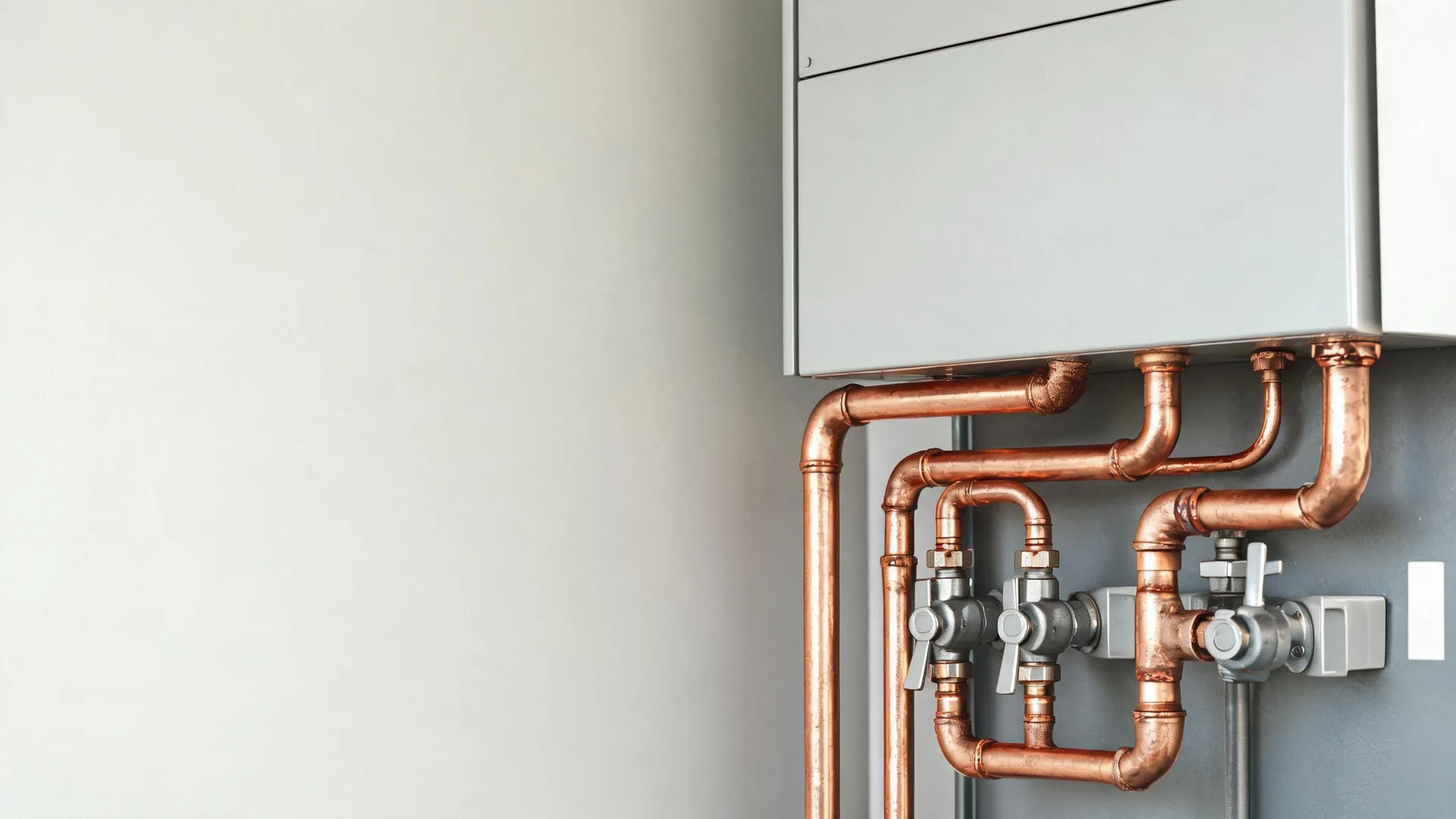
Short cycling wears a boiler out early

A boiler too big for the house heats it fast, shuts off, then kicks back on again soon after, instead of running one long steady cycle. That start and stop wears the heat exchanger and the igniter harder than normal running does. A boiler too small has the opposite problem. It runs flat out and still can't catch up to the thermostat on the coldest nights.

What drives the cost of a boiler installation is mostly the work around the unit, not the unit itself. Running new venting, upgrading gas line sizing, adding zone valves or replacing old piping all take time on site that a straightforward swap doesn't. A boiler going into a spot with existing venting and gas supply that already meets code costs less to install than one that needs new venting run through the roof or a bigger gas line brought in. Zoning adds cost too. A house heated as one zone needs less control wiring and fewer valves than one split into several, each with its own thermostat. Cast iron boilers tend to cost more up front than steel ones, but they also tend to outlast them, so the choice is less about price and more about how long the owner wants the equipment to last. None of this shows up on the nameplate. It shows up in how much the installer has to change to get the new boiler running safely.

Install day starts with the old boiler coming out. If the piping has to be cut apart rather than unbolted, that part alone can take a few hours. Once it's out, the contractor runs new venting or adjusts the old, connects the gas and water lines, and sets the new unit in place. Every joint gets pressure tested before anything is fired up. A leak found after the fact means tearing back into work that's already closed up. With the boiler connected, the system gets filled and the air gets purged out of the lines. Skip that step and trapped air shows up later as banging pipes and cold spots. Startup comes last. The contractor checks the gas pressure, confirms the flue is drawing properly, and runs the boiler through a full heating cycle to see how it responds. The job isn't done until the system has cycled on its own and held the temperature it was set to.