





A row of illuminated white colonial houses along a road photographed at dusk.

Furnace Repair in Concord, NH

Tell us about the job

Takes about a minute. No obligation.

RepairFurnace or heatingMerrimack County, NH
Step 1 of 2

What ZIP code is the job in?

Furnaces in Concord run from September through May. That's nine months of the year the burner is firing and the blower is moving air through the house. Overnight lows in Merrimack County average 14°F through December, January and February, which means the furnace isn't cycling lightly during those months. It's running long stretches to hold the house at temperature. That kind of use wears on an igniter or a blower motor faster than it would somewhere with a shorter winter. When something starts acting up here, it's usually not bad luck. It's a part that's been working hard for a long time finally giving out.

9 months
September through May, your furnace is on duty
14°F
the average winter night it heats against
35 winter storms
in ten years, the nights a failure hurts most
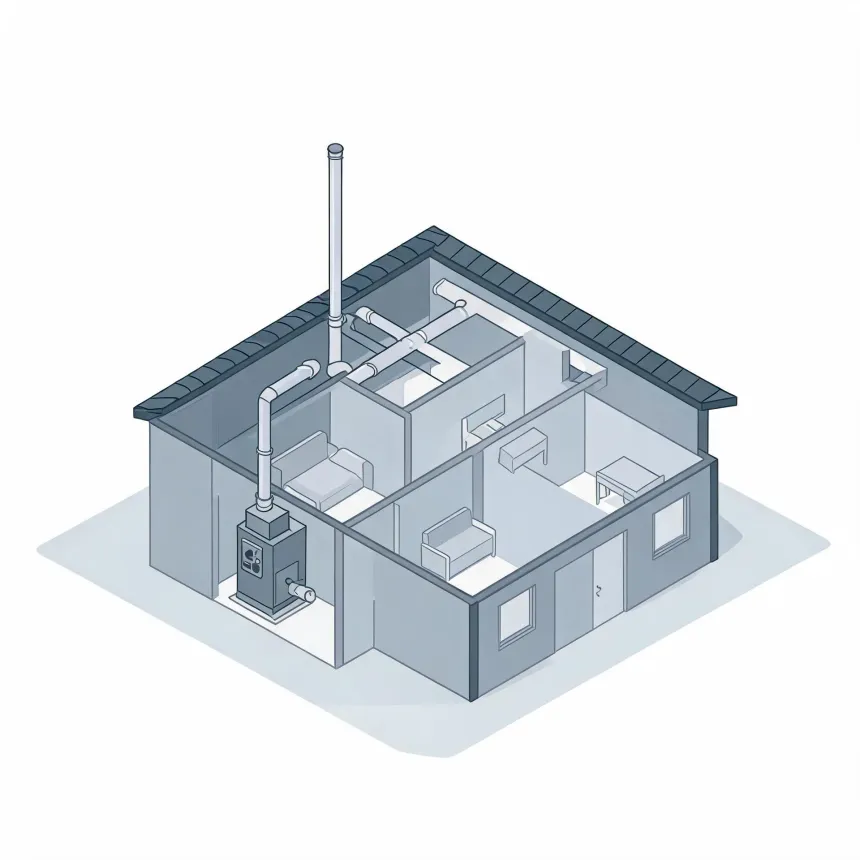
Isometric grayscale illustration of a cutaway single-story house showing interior rooms with furniture, a furnace unit connected to ductwork and a tall vertical flue pipe extending above the roof.
Your furnace works hardest from November through March.

NOAA nClimDiv, 1991–2020 normals

A furnace that keeps needing the same repair is telling you something.

The next breakdown is likely a different part giving out, not the one that already got fixed.

A furnace running badly here is costing you every month it stays broken

Heat runs September through May
Winter nights average 14°F
Climate zone 5A

A cracked heat exchanger is the clearest case of a problem that gets worse with runtime. Small cracks let combustion gases leak into the air the blower pushes through the house, and every cycle the furnace runs pushes more of that air through. Shutting it off at the first sign of trouble, a burner that won't stay lit, soot around the access panel, a strange smell when it kicks on, stops that. A failing blower motor is the same story in a different part. Once the bearings start to go, the motor runs hotter and draws harder to keep the same airspeed, and that hastens the end of a motor that might have had more life left in it. Even something as simple as a clogged filter gets worse the longer it's ignored, since the furnace keeps pulling air through a restriction that's only getting tighter, and the heat exchanger runs hotter than it was built to. None of this means every noise or short cycle is an emergency. But a furnace that's clearly struggling and keeps running anyway is rarely fixing itself in the meantime.

Furnaces here start failing in the first weeks of the season

Heat starts running in September here, and that first stretch of cold is when a weak part tends to give out. It was already worn down by last season and August is the month before the furnace has to work again. A check then catches that part while it's still sitting idle, instead of waiting for it to fail once the furnace is back to running every day.

Find a contractor
A man in a cap, dusty dark shirt and work pants walks up stone steps toward a dark navy front door, carrying a worn canvas tool bag, with a potted shrub beside the entry.
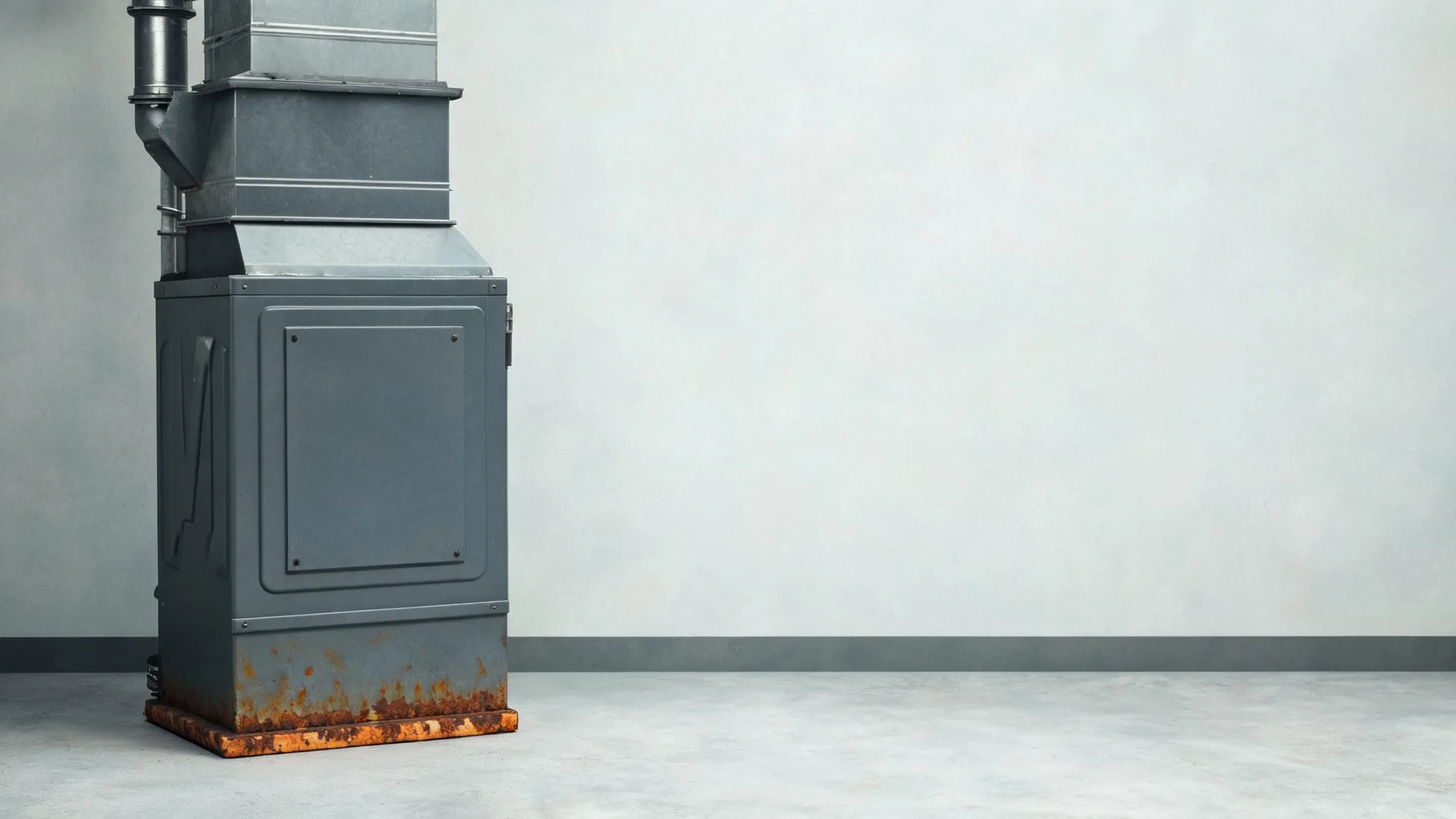
A gray residential gas furnace installed in an unfinished basement, surrounded by ductwork, a metal flue pipe, and a gas supply line.

Nine months of runtime doesn't leave room for guessing

Nine months of heating and overnight lows averaging 14°F through the worst of winter means a furnace here rarely gets a real break. If yours is making noise, short cycling, or not keeping up, that's not something to watch for a few weeks and see how it goes. Have the actual part checked, the igniter, the blower motor, whatever's acting up, instead of guessing from the symptom. A repair done on a guess tends to come back.

Most failures start with ignition

A furnace that won't light is usually the igniter, and it fails the way a light bulb does. It glows hot every cycle for years, then one day it doesn't. A flame sensor causes the same complaint from a different cause. Soot builds up on it until it can't tell the burner is lit, so the furnace shuts itself down as if nothing happened.
Moving parts wear before the cabinet does

The blower motor and the inducer motor both run on bearings, and bearings are a wear item, not a defect. A motor that squeals on startup or runs louder than it used to is partway through that wear, not at the start of it. A capacitor behind a weak motor fails the same way, holding the motor back until it can't get the blower moving at all.

Most homeowners notice a furnace problem long before they can name it. The house takes longer to come up to temperature, or one room stays cold while the rest is fine. The blower might run but no heat comes out of the vents, which usually means the burner isn't lighting even though the fan thinks everything's normal. A furnace that clicks several times before it catches, or doesn't catch at all, is struggling with ignition. Short cycling, where it fires up and shuts off again within a few minutes, often points to a dirty flame sensor or a furnace overheating from restricted airflow. A burning smell that doesn't fade after the first few minutes of a cycle is worth paying attention to, as is any soot near the access panel. None of these are things to wait out. A furnace showing one of these signs is already telling you which part needs a look.

A diagnostic visit starts before any panel comes off, with the complaint itself. Clicking but no flame, flame but no heat at the vents, short cycling, a smell. Each of those points at a different part, so a tech checks the obvious suspect first rather than pulling the whole furnace apart. That usually means pulling the igniter or flame sensor to look at it directly, since both show wear you can actually see. Reading voltage and amperage at the motor and capacitor tells whether a slow or noisy blower is still within range or on its way out. Airflow gets checked too, because a restricted filter or blocked vent can make a healthy furnace act like a failing one. The goal is to find the part actually causing the symptom, not just the first thing that looks old.