



A row of illuminated white colonial houses photographed at twilight along a tree-lined road with a stone wall in the foreground.

Furnace Repair in Conway, NH

Tell us about the job

Takes about a minute. No obligation.

RepairFurnace or heatingCarroll County, NH
Step 1 of 2

What ZIP code is the job in?

Most furnace calls come down to a handful of usual suspects. The igniter wears out from heating up and cooling down over and over, and eventually it cracks or stops glowing hot enough to light the gas. A flame sensor gets a coating of soot after a while and starts telling the control board there's no flame even when there is, so the system shuts itself down as a safety measure. The blower motor can wear out, or its capacitor can weaken, which shows up as weak airflow or a furnace that hums but won't push warm air through the vents. A clogged filter puts strain on the whole system and is worth checking before anything else, since it can cause problems that look like bigger failures. Dirty burners and a cracked heat exchanger are rarer, but they're why a furnace that's acting strange is worth having looked at rather than ignored.

9 months
September through May, your furnace is on duty
12°F
the average winter night it heats against
103 winter storms
in ten years, the nights a failure hurts most
Isometric cutaway illustration of a single-story house with a dark shingled roof, showing interior rooms with furniture and a furnace connected to ductwork and a flue pipe extending above the roof.
Your furnace works hardest from November through March.

NOAA nClimDiv, 1991–2020 normals

An igniter or a flame sensor is a straightforward repair, and most furnaces get years more use after one.

A cracked heat exchanger is a different question, and a furnace with one shouldn't keep running while you decide.

Nine months of heat means September is when a weak part fails

Heat runs September through May
Winter nights average 12°F
103 winter storms from 2015 to 2024

Heating oil here runs $24.23 per million Btu, one of the higher rates the EIA tracks. A furnace with a bad igniter or a dirty burner has to work harder to put out the same heat, and that shows up on the bill before it shows up as a breakdown. If yours is short-cycling or running longer than it used to, you're paying for that struggle every day it goes on. Fixing an igniter or a flame sensor is usually quick work, and it stops the bleeding right away.

Half the homes in Carroll County were built in 1982 or later

Half the homes in Carroll County were built in 1982 or later. That's recent enough that the furnace in yours probably isn't original equipment, and it likely has years of working life left. If it's acting up now, a repair is usually the right call.

Find a contractor

A small problem feeds on itself

A sooted flame sensor doesn't just risk a shutdown. Run it enough cycles and the soot builds further. The shutdowns come sooner each time until the furnace won't stay lit at all. A cracked igniter follows the same path. It still lights the gas, until the day it doesn't, and the wear that cracked it only gets worse with every heat cycle.
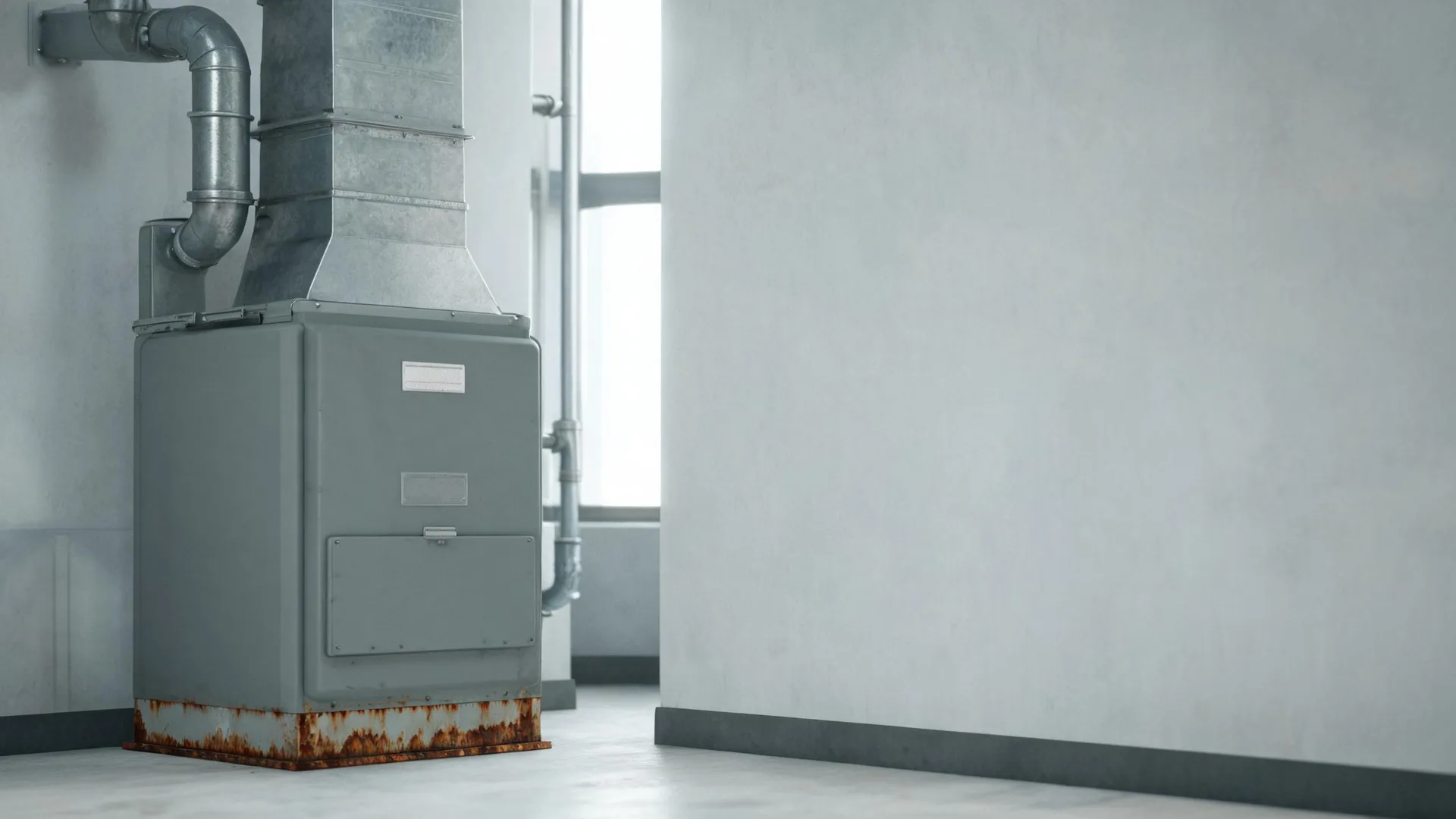
Some failures spread to other parts

A dirty burner throws the flame pattern off. That uneven flame heats the heat exchanger unevenly too, and the metal stresses in one spot more than the rest. Keep it running long enough and a burner problem turns into an exchanger problem. A failing blower capacitor works the same way. The motor strains to spin without it and pulls more current than it's built for, so weak airflow can end with a burned-out motor.

Before anyone comes out, there are a few things worth checking yourself. Look at the filter first. If it's gray and matted, swap it, since a clogged filter chokes airflow and can cause a lot of what people call about. Check that the thermostat is set to heat and the temperature is set above room temperature, and swap its batteries if it uses them. Go to the furnace and look for a blinking light behind the small window on the front panel. That light flashes in a pattern, and the pattern tells you what shut the system down, so it's worth writing down before you call. Check that the switch on the furnace itself, and the one that looks like a light switch nearby, are both flipped on. If the furnace uses a condensate line, look for water pooled at the base, since a clogged line will shut the whole thing down on purpose rather than let it overflow.

A diagnostic visit starts before any panel comes off. A tech will ask what the furnace was doing right before it quit. A furnace that was blowing cold before it shut down points somewhere different than one that never fired at all. They'll check the thermostat call, then watch the furnace run through its sequence, since the inducer motor runs first, then the igniter, then the gas valve, then the burners. Watching where it stalls in that sequence usually narrows things down fast. They'll pull the fault code from the control board if there is one, since that blinking light tells them what the system saw before it shut down. They'll test the flame sensor and igniter with a meter rather than guess from how they look, and check gas pressure at the valve. A full visit also means checking the heat exchanger for cracks and testing the limit switch, since that's what decides whether the furnace is safe to run at all, not just whether it runs.