





An unfinished basement containing a forced-air furnace with metal ductwork, exposed wooden ceiling joists, a hanging Edison bulb, and bare concrete floors.

Furnace Repair in Lebanon, NH

Tell us about the job

Takes about a minute. No obligation.

RepairFurnace or heatingGrafton County, NH
Step 1 of 2

What ZIP code is the job in?

A furnace that's starting to fail usually tells you before it quits outright. Short cycling is one of the clearest signs, where it fires up, runs for a bit, then shuts off before the house warms up. That points to a flame sensor that needs cleaning or a limit switch tripping from restricted airflow. A burner that won't light on the first try, or lights with a pop instead of a steady whoosh, often means the igniter is weak or the gas valve is slow to respond. Pay attention to the air coming out of the vents too. If it's lukewarm instead of hot, or you notice a burning dust smell that doesn't fade once the cycle gets going, that's worth a call. A furnace making new noises, grinding, clicking that wasn't there before, or a rattle from the blower, is usually telling you a part is wearing out before it fails completely.

9 months
September through May, your furnace is on duty
10°F
the average winter night it heats against
74 winter storms
in ten years, the nights a failure hurts most
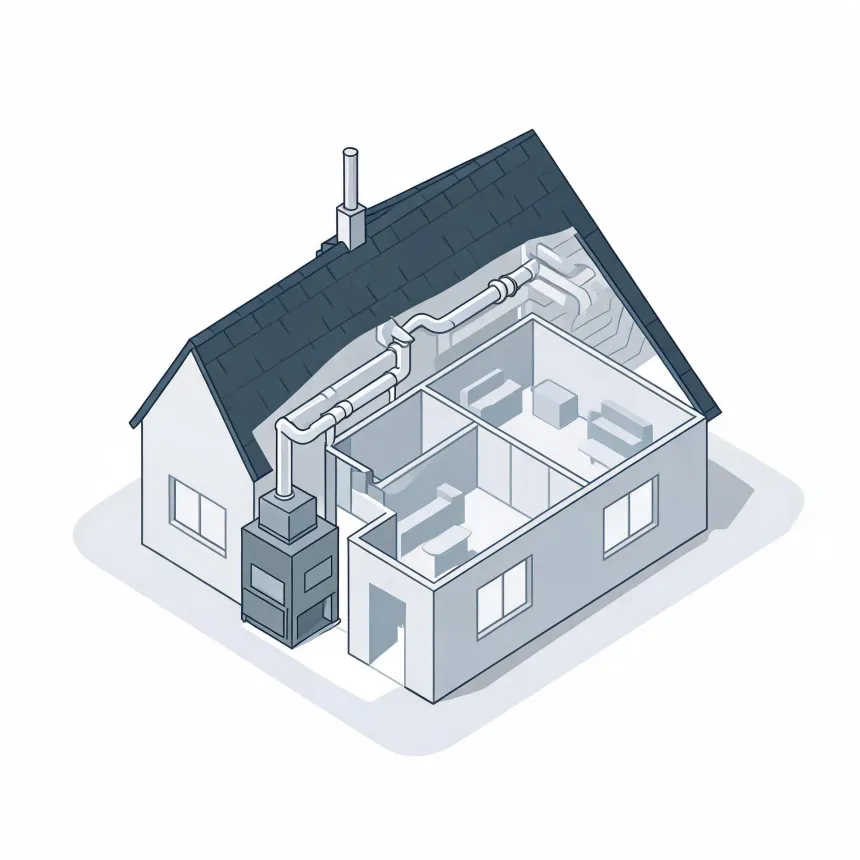
Isometric line illustration of a cutaway single-story house with a dark shingled roof, showing interior rooms and ductwork connected to a gray furnace unit with a flue pipe.
Your furnace works hardest from November through March.

NOAA nClimDiv, 1991–2020 normals

Heating with oil in New Hampshire ran $24.23 per million Btu in 2024.

A furnace that's short cycling or struggling to light burns fuel without heating the house, and at that price you feel it fast.

Nine months of heat, nights near 10 below, and a storm track that tests every system in it

Heat runs September through May
Winter nights average 10°F
74 winter storms from 2015 to 2024
Built for nine months of heatFurnaces in Grafton County run September through May, with August the month to catch problems before the first cold night.

Half the homes in Grafton County were built in 1981 or later, and plenty go newer than that. If your furnace came with a house from the last couple decades, it hasn't put in the years that usually end a furnace's life. Short cycling, a slow-lighting burner, a new rattle in the blower, these are often one part wearing out, not the whole unit giving up. A flame sensor, an igniter, a limit switch, those get replaced on their own all the time. Worth having someone look at what's actually failing before you think about the furnace itself.

Stop paying for a struggling machine

Power costs more here, so a machine that's running badly costs you every month. Get it fixed soon.

Find a contractor
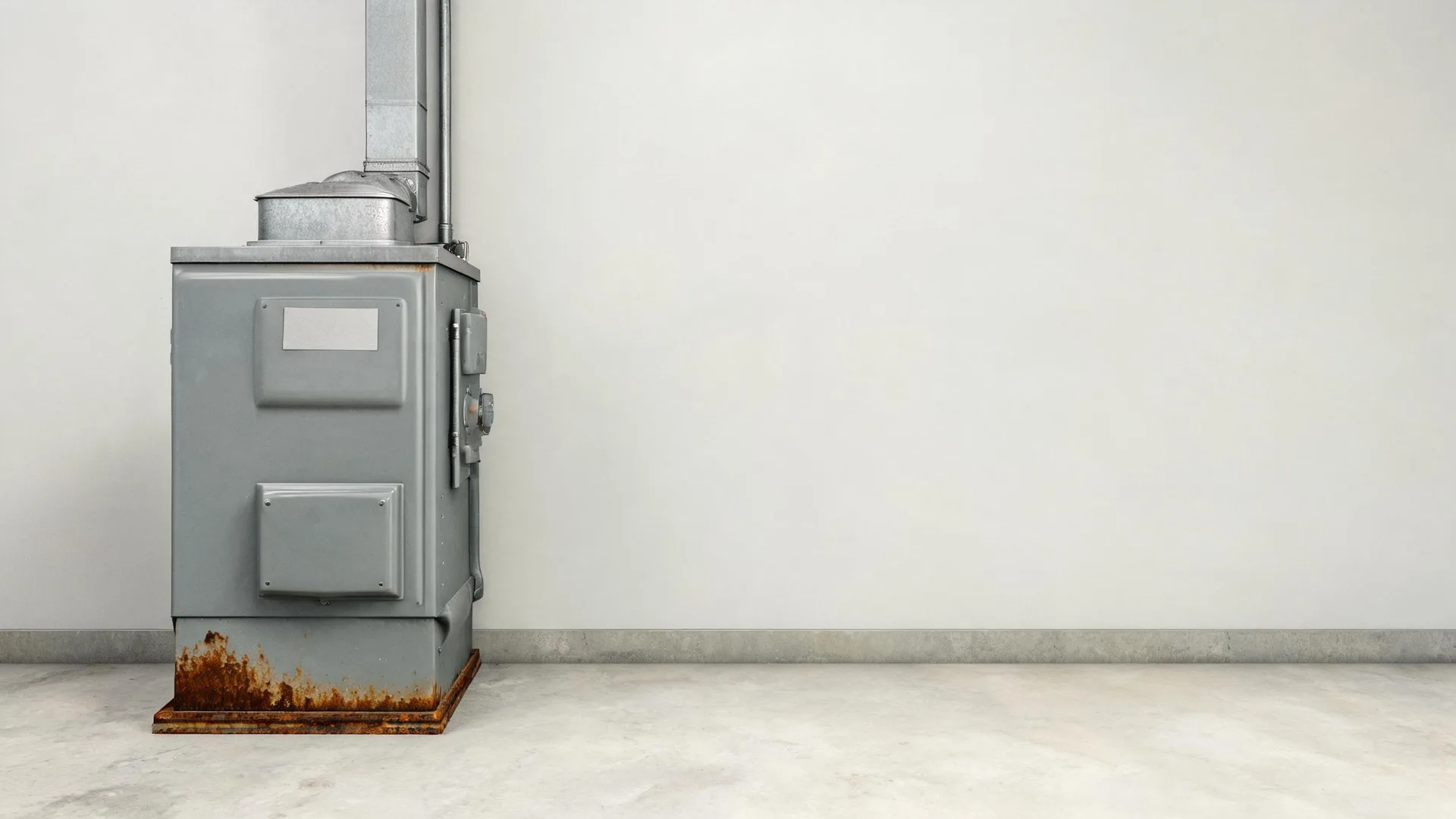
A gray residential gas furnace installed in an unfinished basement, surrounded by ductwork, a metal flue pipe, and a gas supply line.

A newer furnace is worth repairing

If your house is one of the newer ones in the county, that's a reason to get the failing part checked rather than start pricing a new furnace. A flame sensor or limit switch replacement is a small job on a unit that still has years ahead of it. Have someone look at what's actually wrong before the time-lapse here runs through another winter.

Most failures start small

A furnace rarely dies all at once. A flame sensor coated with a thin layer of residue stops reading the flame right and shuts the burner down. A cracked heat exchanger gets caught by the limit switch before it becomes dangerous. An igniter that's cracking gets weaker each time it fires until it finally won't. These are wear parts doing what wear parts do, and replacing one is a different job than replacing the furnace.
Airflow problems cause the rest

A dirty filter or a blocked return makes the blower work against resistance it wasn't built for. That heats the air too much before it moves, trips the limit switch, and wears the blower motor down faster than it should. A lot of what looks like a failing furnace traces back to something restricting the air, not a part that's simply broken.

Running a furnace through a problem instead of fixing it is what turns a small repair into a bigger one. A flame sensor that's losing its coating gets a little slower to read the flame each time the burner fires, until one day it doesn't catch at all. A blower pushing against a blocked filter runs hotter than it should, and that heat wears down the motor windings a bit more on every cycle. A cracked heat exchanger doesn't heal itself by firing again. None of these get better with more runtime. The part just needs replacing while it's still one part and not a bigger repair, and most of these wear parts are quick work for someone who knows what they're looking at.

A diagnostic starts at the thermostat, confirming the furnace is actually getting the signal to run before anything gets opened up. From there it moves to the burner compartment. The flame sensor comes out first, checked for a coating that's keeping it from reading the flame. The igniter gets a look too, to see if it's glowing weak or cracked, and the burner gets watched across a few cycles to see how it lights. The filter and return get checked, since restricted airflow is behind a lot of what looks like a part failure. The pressure switches, the limit switch and the control board get tested against what the furnace is actually doing, not just what it's supposed to do. The exhaust and heat exchanger get a look as well, since that's not something to guess about. By the end you're not hearing that the furnace needs work. You're hearing which part it is and why it's doing what it's doing.