




A white picket fence runs along a grass lawn in front of a row of similar gabled houses with siding, beneath overhanging leafy tree branches.

Boiler Repair in Claremont, NH

Tell us about the job

Takes about a minute. No obligation.

RepairBoilerSullivan County, NH
Step 1 of 2

What ZIP code is the job in?

Heat runs about nine months a year in Sullivan County, September through May. That's most of the year your boiler is cycling on and off, heating water, pushing it through the system, shutting down, starting again. Overnight lows average 13°F through December, January and February. On the coldest nights it's running close to flat out just to keep up. A boiler built for occasional use somewhere warmer doesn't see this kind of load. Here, it's normal. That's usually what's behind a breakdown or a strange noise. Not bad luck, just a part that's been working hard for a long time.

Boilers in Claremont start their season in September.

Get a boiler checked in August, before the cold puts weight on a weak part.

Half these homes are older, but that's not why your boiler is acting up

Half the homes here were built by 1974
Heat runs September through May
Winter nights average 13°F
Claremont gets storms like anywhere else in New Hampshire37 winter storms hit Sullivan County between 2015 and 2024, about the same as the rest of the state sees

Before you call anyone, look at the pressure gauge on the front of the boiler. If the needle is sitting low or near zero, that alone can keep the boiler from firing, and the fix is as simple as the feed valve near the bottom of the unit being closed when it should be open. If radiators feel warm at the bottom but cold at the top, there's air trapped inside them, and bleeding each one with the radiator key often brings the heat right back. Check the thermostat has power and is actually calling for heat, since a dead battery looks the same as a dead boiler from where you're standing. If the unit has shut off completely, look for a reset button near the burner and press it once. If it trips again after that, stop and leave it alone. That's a sign of something a reset won't fix.

Get the boiler looked at before it quits on a cold night

A boiler that runs nine months a year doesn't get much of a break to show you a problem before it becomes a bigger one. If yours is making noise or struggling to keep up, have someone look at it rather than waiting to see if it sorts itself out.

Find a contractor
A man in a cap, gray jacket and tan cargo pants, seen from behind, carries a worn canvas duffel bag up steps toward a dark navy front door, with a potted shrub beside the entry.

Kettling and banging mean scale or sediment

A boiler that bangs, knocks or makes a sound like a kettle coming to boil usually has scale building up on the heat exchanger or sludge sitting in the bottom of the tank. That buildup makes the boiler work harder to heat the same water, and left alone it can crack a heat exchanger that was otherwise fine.
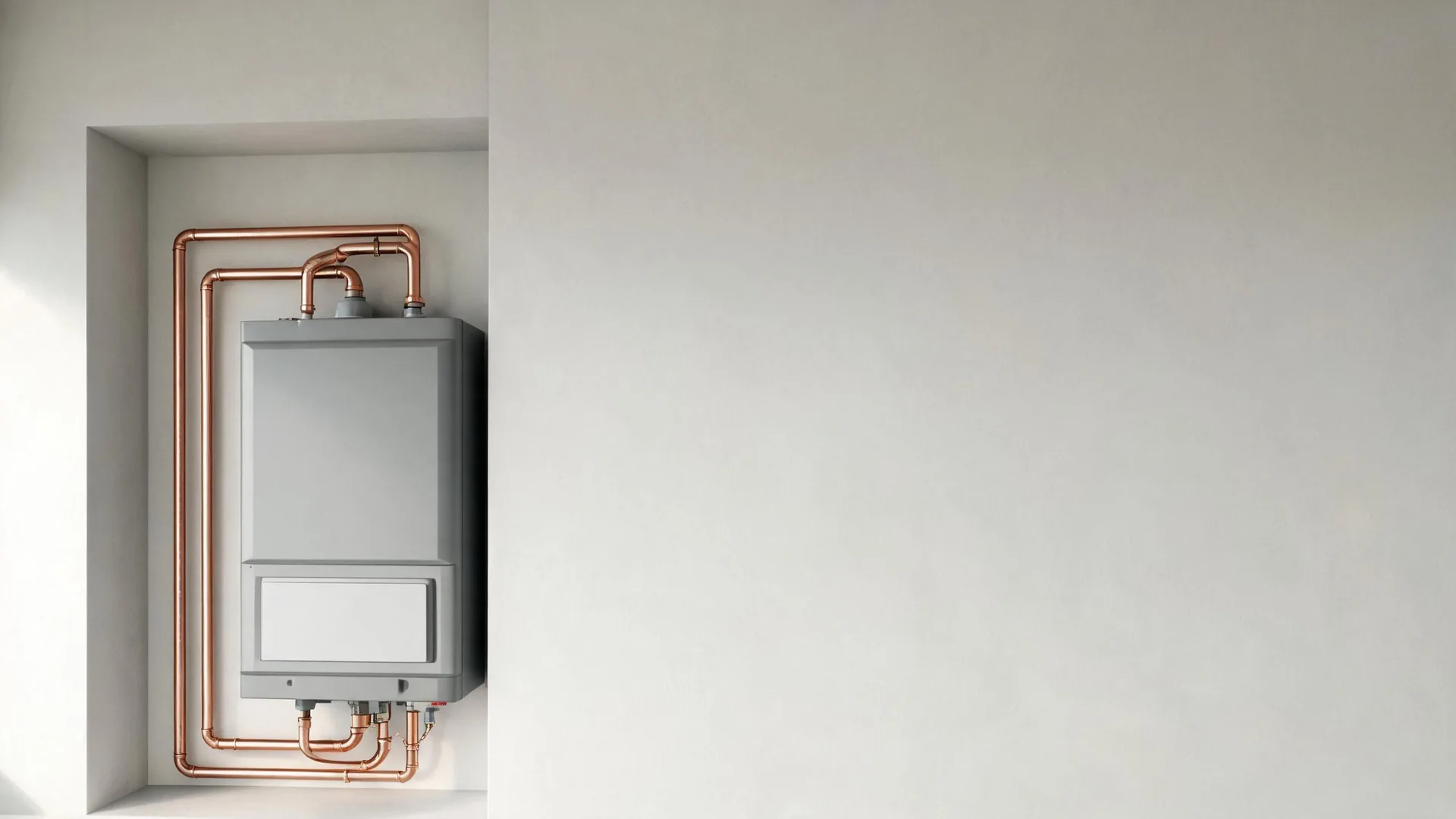
Short cycling wears out the parts that start it

A boiler that fires, runs for a minute, and shuts off again and again is short cycling. Every start puts load on the ignition system and the circulator pump. A boiler doing this all day is putting more wear on those parts in a week than normal cycling would put on them in a month.

Most boiler failures trace back to a handful of parts that wear out doing their job. The circulator pump moves water through the system constantly during the heating months, and the bearings or seal inside it wear down over time until it seizes or starts leaking. The ignition system, whether it's a pilot and thermocouple or an electronic igniter, is what fails when a boiler won't light at all. Low water cutoffs and pressure switches are safety parts, so when they trip the boiler is usually telling you about a real problem with water level or pressure rather than failing on their own. Diaphragms inside expansion tanks lose their air charge after years of pressure changes, and once that happens the system can't absorb the normal expansion of heated water. None of these fail overnight. They wear gradually, which is why a boiler usually gives some warning, noise, a pilot that won't stay lit, heat that's weaker than it used to be, before it quits outright.

A diagnostic visit starts with questions. A tech wants to know when the noise started, whether the boiler has been losing pressure, whether some rooms heat and others stay cold. After that comes the gauges, checking pressure and temperature against what they should read. The tech watches the burner through a full cycle, from lighting to running to shutdown, because a problem that only shows up partway through a cycle gets missed if you only glance at it once. A combustion analyzer often goes into the flue to read what the burner is actually doing. A flame can look steady and still be burning rich or starving for air, and the analyzer catches that even when the eye can't. If the boiler has been losing pressure, the water gets checked too, since that usually points to a leak in the system rather than a fault in the boiler itself. By the time the panels go back on, the tech should know which part is failing and why, not just that something is wrong.