





A dark grey floor-standing boiler with a metal flue stands against a concrete basement wall, surrounded by copper pipework, valves and a wall-mounted expansion tank, with ivy and a shelving unit at right.

Hand off the boiler problem

Why your boiler relief valve is leaking in New Hampshire

A relief valve lets go when pressure or temperature inside the boiler climbs past what it's built to hold, and sometimes just when the valve itself has worn out. This page walks through what's likely causing it and what to check before deciding it needs a repair. Once you send the form, you're done hunting down who can look at it.

Let a pro reach out

A relief valve drips because something is pushing pressure in the boiler past the point the valve is set to hold, usually around 30 psi, and it opens to let that excess out before it becomes a real problem. The most common reason is waterlogged expansion tank. Once that tank fills with water instead of holding the air cushion it needs, the system has nowhere to absorb the pressure that builds as the boiler heats up, so the relief valve takes the hit over and over. It can also mean the boiler is overfilled, or the valve itself has worn out and is just no longer sealing right, even at normal pressure. With oil heat running most homes through a New Hampshire winter, that boiler cycles on hard for months, and a valve that is already borderline tends to show it. A slow drip left alone can turn into a steady one, and it is worth having someone look before the valve or the tank behind it fails outright.

A smiling man in a dark navy sweater sits on a light sofa in a living room, with a glass bowl of popcorn on a wooden coffee table and bookshelves behind him.
A smiling man in a dark green sweater sits on a tan leather sofa in a dimly lit living room, with a bowl of popcorn in the foreground and a kitchen area blurred behind him.
A smiling middle-aged man in a dark shirt sits on a gray sofa in a living room, with a bowl of popcorn on a side table and shelves, a window and kitchen area behind him.
A smiling bearded man in a dark gray t-shirt sits on a gray couch in a living room, with a large glass bowl of popcorn on a wooden table in the foreground.

The valve sits on top of the boiler, and the line it drains through runs down near the floor, so that's where the drip actually shows up even though the problem starts higher up. Most of the time the real cause is the expansion tank. Once it's waterlogged, there's no air pocket left to absorb the water as it heats and expands, so the pressure has nowhere to go but out through the valve. Oil-fired boilers cycle on and off a lot through a New Hampshire winter, and every one of those cycles adds a little more pressure if the tank isn't doing its job. A fill valve stuck open will do the same thing from a different angle, adding water and raising pressure even with the boiler off. Check the gauge when you catch it dripping. If it's reading high right then, that's pressure pushing the valve open, not just a worn valve letting go on its own. Scale or a small chip under the seat can also keep it from closing fully once it's opened.

What's actually happening inside the system

  • The relief valve sits on top of the boiler and its outlet runs down close to the floor, so look there first for the actual drip.
  • A waterlogged expansion tank has no air cushion left, so every time the boiler fires, the water has nowhere to expand except out through the valve.
  • Oil-fired systems here cycle hard through a New Hampshire winter, and each cycle pushes pressure up a little more if the tank can't absorb it.
  • A fill valve that's stuck open keeps adding water to the system, which raises the static pressure even when the boiler's off.
  • Mineral scale or a chip under the valve's seat keeps it from sealing fully closed once it's opened and released pressure once.
  • The pressure gauge on the boiler will often read high at the exact moment the valve is dripping, which tells you it's pressure and not just a bad valve.
A woman in a dark gray sweater reclines on a light sofa with eyes closed and a slight smile, under a textured gray blanket with an open book resting on her lap, with a lit table lamp and plant in the background.
A smiling bearded man in a navy crewneck sweater sits at a dinner table with a glass of red wine, plates and glasses in the foreground, in a dimly lit room with a lamp and framed picture behind him.

What This Leak Costs You

  • A boiler running on oil all winter cycles more often, which wears the valve seat faster than a lightly used system would.
  • Water dripping down into a finished basement ceiling or storage area can go unnoticed until there's staining or warped drywall.
  • A valve that won't fully reseat keeps leaking slowly, and that steady drip adds to a water bill you're already watching.
  • Left alone, a worn valve can fail to open when pressure actually spikes, which is the situation it's there to prevent.
  • Mineral buildup from New Hampshire well water can scar the valve seat, so a leak that starts small rarely stops on its own.
  • A puddle near the boiler on a damp basement floor can sit for days before anyone notices the smell or the rust.

A relief valve rarely fixes itself. Most oil-fired boilers run hard through a New Hampshire winter, and that steady cycling wears on the valve seat faster than a system that only kicks on now and then. Once the seat is worn or scarred by mineral deposits from well water, a small weep tends to turn into a steady drip rather than stopping on its own. That water has to go somewhere. In a finished basement, it can run down behind a wall or across a storage area for weeks before anyone notices a stain on the ceiling or warped drywall. On an unfinished floor, it pools near the boiler and sits, and a damp concrete floor can hold that puddle long enough to grow rust and a smell before you catch it. A slow drip also adds up on a water bill you're already watching, given what power costs in this state. The bigger risk is what the valve is actually there for. It's supposed to open when pressure spikes and protect the boiler from a real problem. A valve that's already worn, or clogged with scale, can fail to seat right or fail to open at all when it's needed. At that point the leak isn't the issue anymore. The valve not doing its job is.

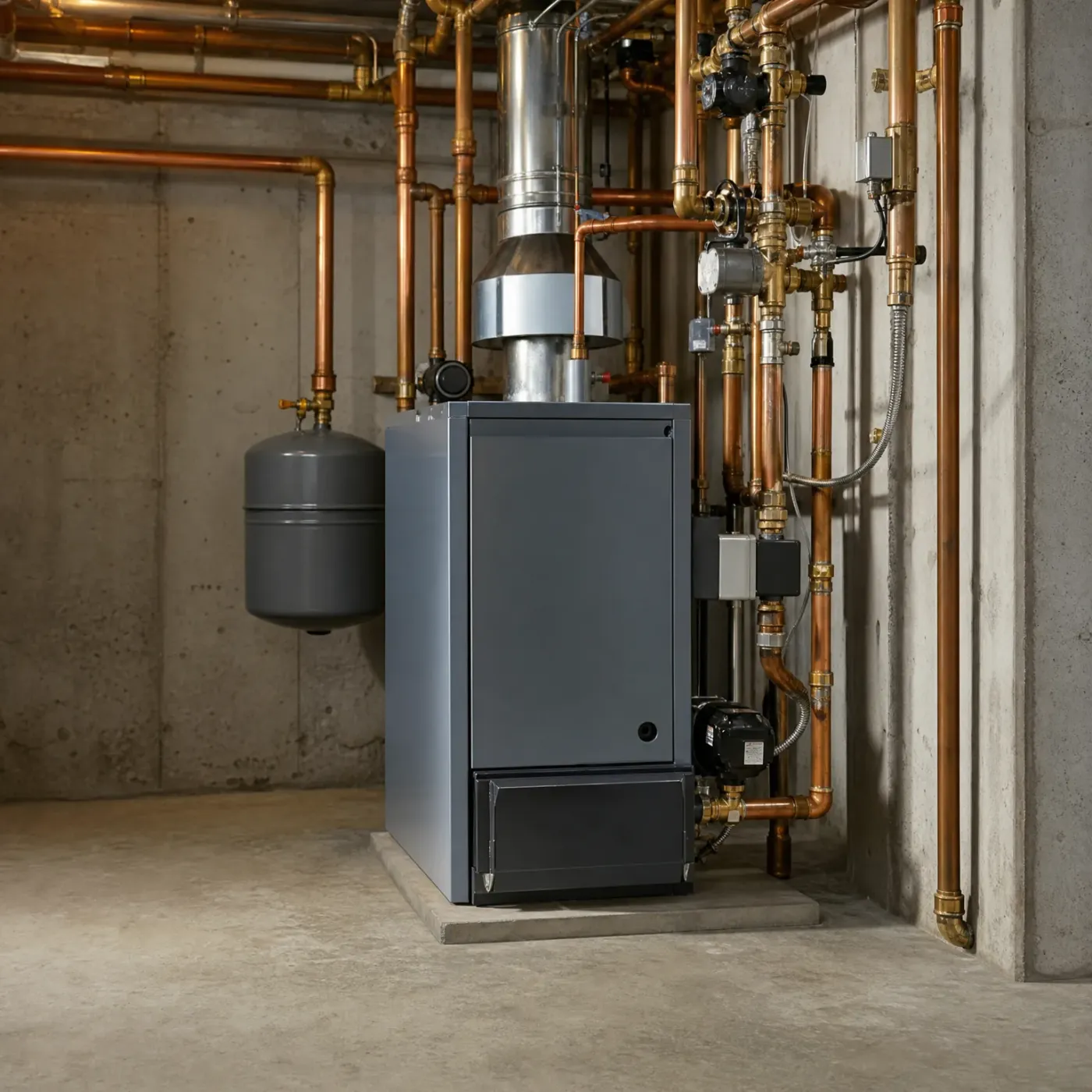
A gray boiler on a concrete pad in a basement, connected to copper piping, valves, circulator pumps, a metal flue, and a wall-mounted expansion tank.
Pressure stays steady, the gauge holds where it should, and the valve stays dry because the expansion tank is doing its job absorbing the swell.
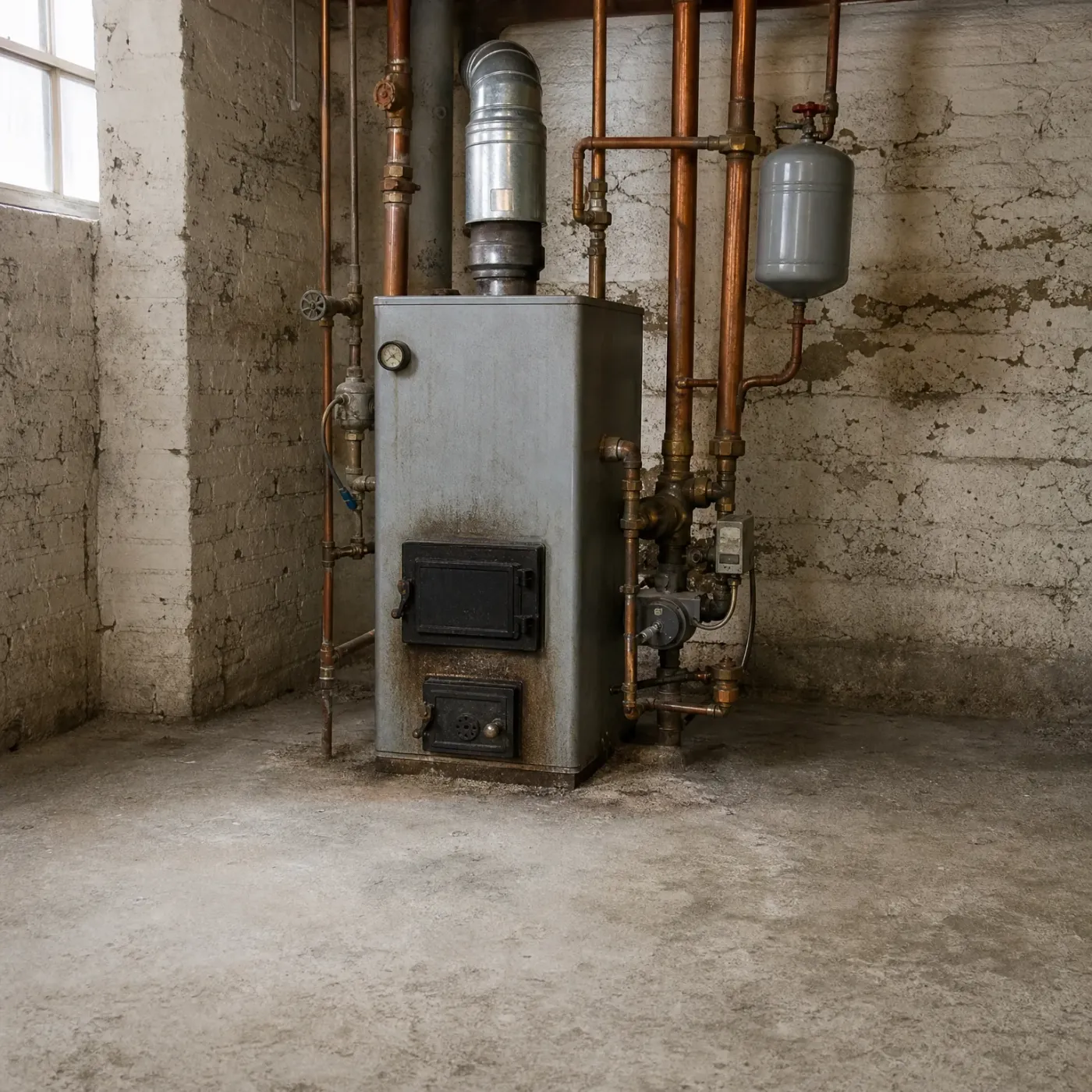
An old gray boiler with copper piping, a flue duct, pressure gauge and an expansion tank stands in the corner of a basement with painted masonry walls and a bare concrete floor.
Mineral scale around the valve body or a steady drip at the outlet means it's already opening when it shouldn't have to.
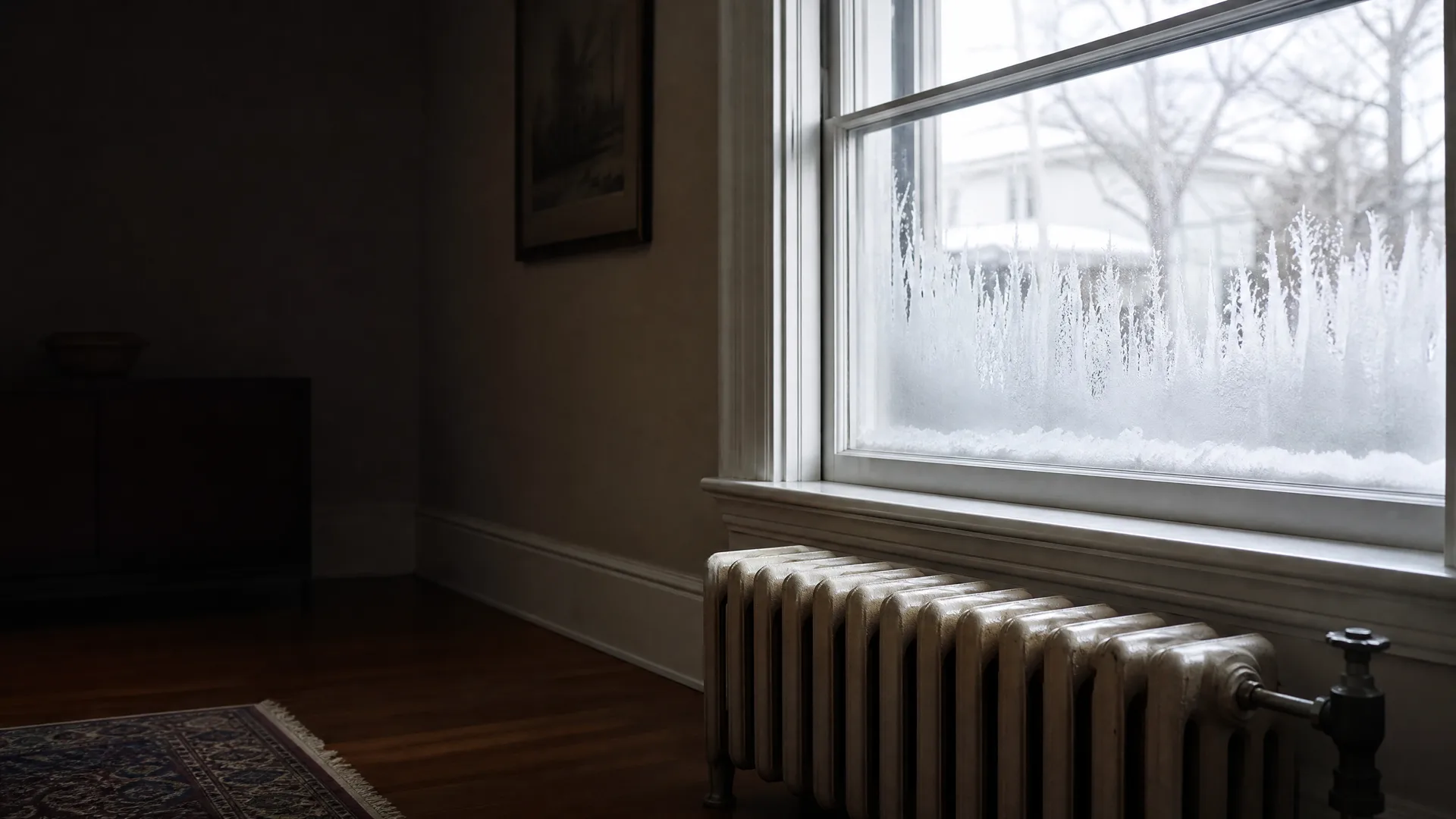
A cast-iron radiator with a valve sits beneath a frost-covered window in a dim room with dark wood floor, a patterned rug, a framed picture, and a low cabinet.

Six in the morning and the house is still dark. You come down to put another log in the woodstove and the oil furnace kicks on behind you, that low rumble through the floor. The radiator under the front window has a thin crust of frost on the inside of the glass above it, the kind that forms when the room's warm and the window isn't. You go to check the gauge on the boiler and your sock lands in a puddle at the base, right where the relief valve's outlet pipe meets the floor. It's dripped enough overnight to pool. You stand there in the cold holding your coffee, looking at it, trying to remember if it was there yesterday.

Let someone else find the pro

A dripping relief valve doesn't fix itself, and running the boiler through another New Hampshire winter with it leaking means watching that drip for months while the water heater and electric rates do the rest of the damage to your budget. Oil boilers here cycle hard from October through April, and every cycle is another chance for a waterlogged tank or a worn seat to push more water out that valve. Figuring out which one it is means knowing what the pressure gauge is doing and what the tank feels like, and most homeowners aren't going to climb down and check that themselves with any confidence. Finding someone who works on oil boilers specifically, calling two or three of them, explaining the same drip and the same gauge reading each time, waiting on quotes that come back on different days with different numbers. That's the part that takes the time. Send this one and that search ends. A contractor who already knows New Hampshire boilers gets your request, and the rest of it is off your plate.

Why 30 psi is the number

Most residential boilers ship with the relief valve set to open at 30 psi, and the pressure gauge on the boiler itself usually runs between 12 and 30 psi during normal operation. That gap is there on purpose. It gives the expansion tank room to absorb the water as it heats and swells. When the gauge climbs past that range and stays there, the valve has nowhere left to go but open. Checking the gauge when the boiler is cold, then again once it's running, tells you whether the system is holding steady or creeping toward that limit every time it fires.
Why the drip doesn't stop itself

Once the valve seat has opened under pressure, it's sealing against mineral deposits and scale that built up during the discharge. That's why a valve often keeps weeping even after pressure drops back to normal. The seat needs a clean, even surface to reseal, and a few grains of grit are enough to keep it from closing fully. This is different from the pressure problem that caused it to open in the first place. Both can be happening at once, which is why a drip that started small sometimes doesn't go away on its own.

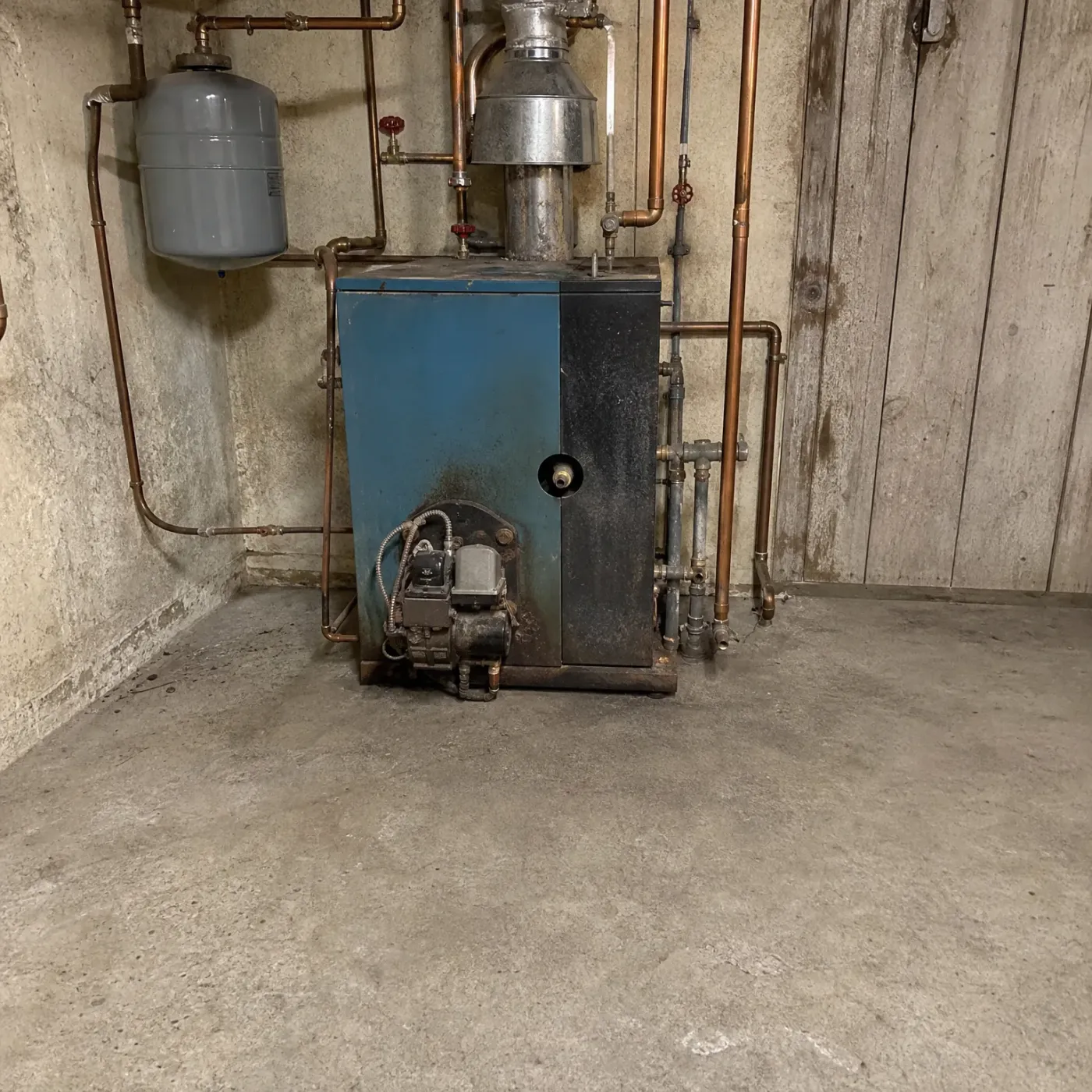
A blue and black boiler with a burner unit, flue, expansion tank and copper and steel piping stands on a concrete basement floor against a concrete wall and wooden plank partition.
Before you get your boiler repair
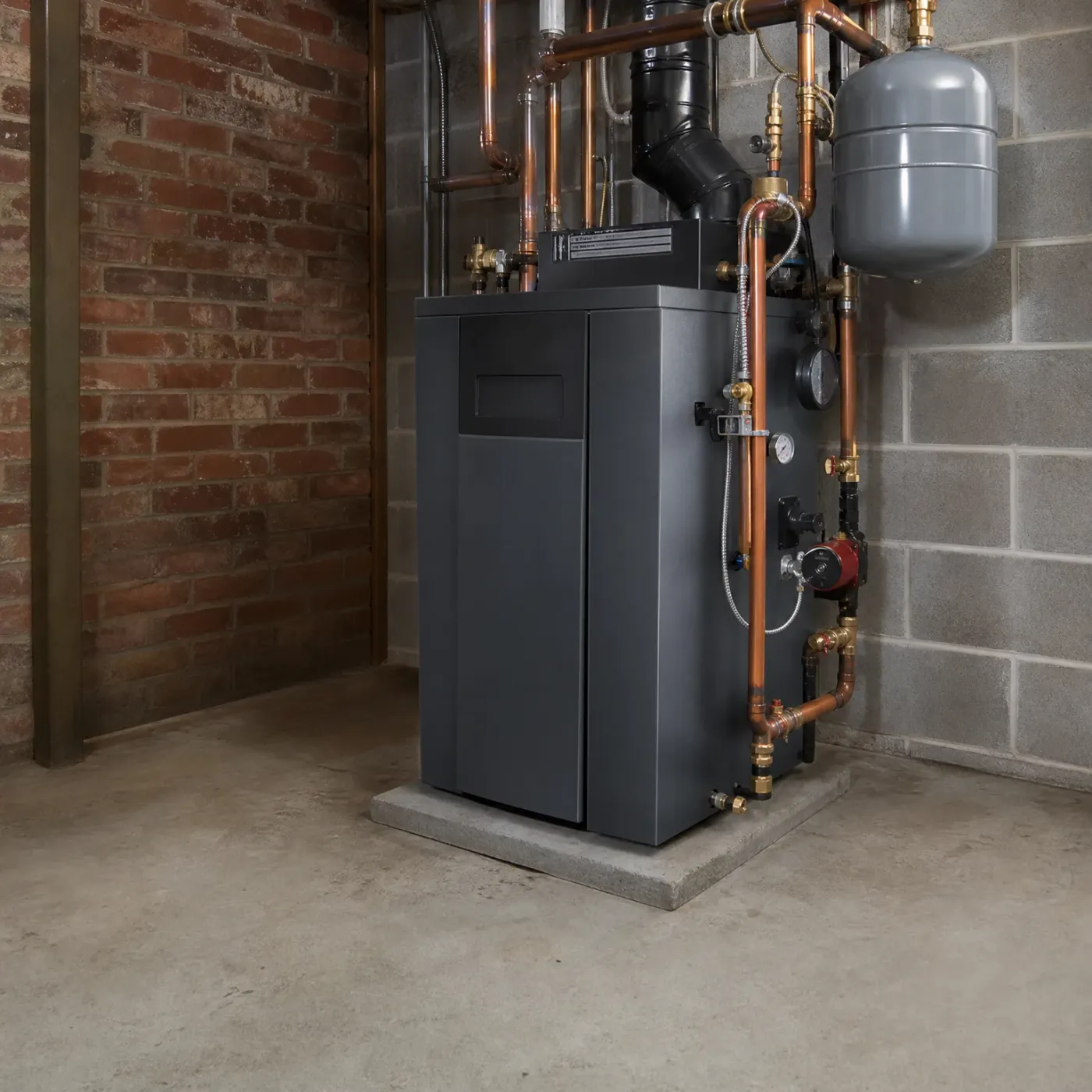
A dark gray floor-standing boiler on a concrete pad in a basement, connected to copper piping, valves, a circulator pump, a gauge, a black flue pipe, and a gray expansion tank, with a brick wall on the left and concrete block wall behind.
After you get your boiler repair

Before you get your boiler repair

You're checking the relief valve outlet every day, mopping up drips, and wondering if the next one means a bigger problem waiting under the floor.

Hand it over

After you get your boiler repair

The valve stays dry, the gauge holds where it should, and you stop thinking about the boiler until next fall.

Hand it over

Winter nights average 15°F statewide

Winter nights here average 15°F, and that's the stretch where your boiler runs longest and cycles most. Every one of those cycles pushes heat and pressure through a relief valve that's already working harder than it would in a milder state. A valve that drips in October only gets worse once January's cold settles in.

NOAA nClimDiv 1991-2020 county normals weighted by homes

A dark gray floor-standing boiler in a concrete-walled basement, connected to copper piping, circulator pumps, a gray expansion tank, and a cream-colored storage tank to the left.

A dry valve, a quiet basement

The copper piping runs tight to the boiler, the pumps cycle, and the gauge holds steady. No drip at the outlet, no mineral crust forming underneath. The expansion tank beside it is doing the job of absorbing the swell, so the water stays where it belongs.

A gray residential boiler with a metal flue pipe stands in a concrete-block basement corner, surrounded by copper piping, valves and a gray expansion tank.

A valve that's already given up

Same kind of room, same network of copper and fittings, but the flue pipe and the corner placement don't matter here. What matters is the valve itself, worn past holding, letting water down the outlet pipe every time the boiler fires.

What are you actually seeing under there

Go look at the pipe coming off the relief valve. If there's a drip at the end of it, or a trail of dried white or rust-colored mineral crust running down to the floor, that's the valve opening on its own. You might hear a faint hiss when the boiler fires, or find a small puddle near the base that shows up again a day or two after you wipe it. If it's dripping onto a finished basement floor or ceiling below, left alone it stains drywall and warps flooring before you notice how long it's been going. None of that fixes itself, and the drip usually means the valve has already been opening more than it should for a while.

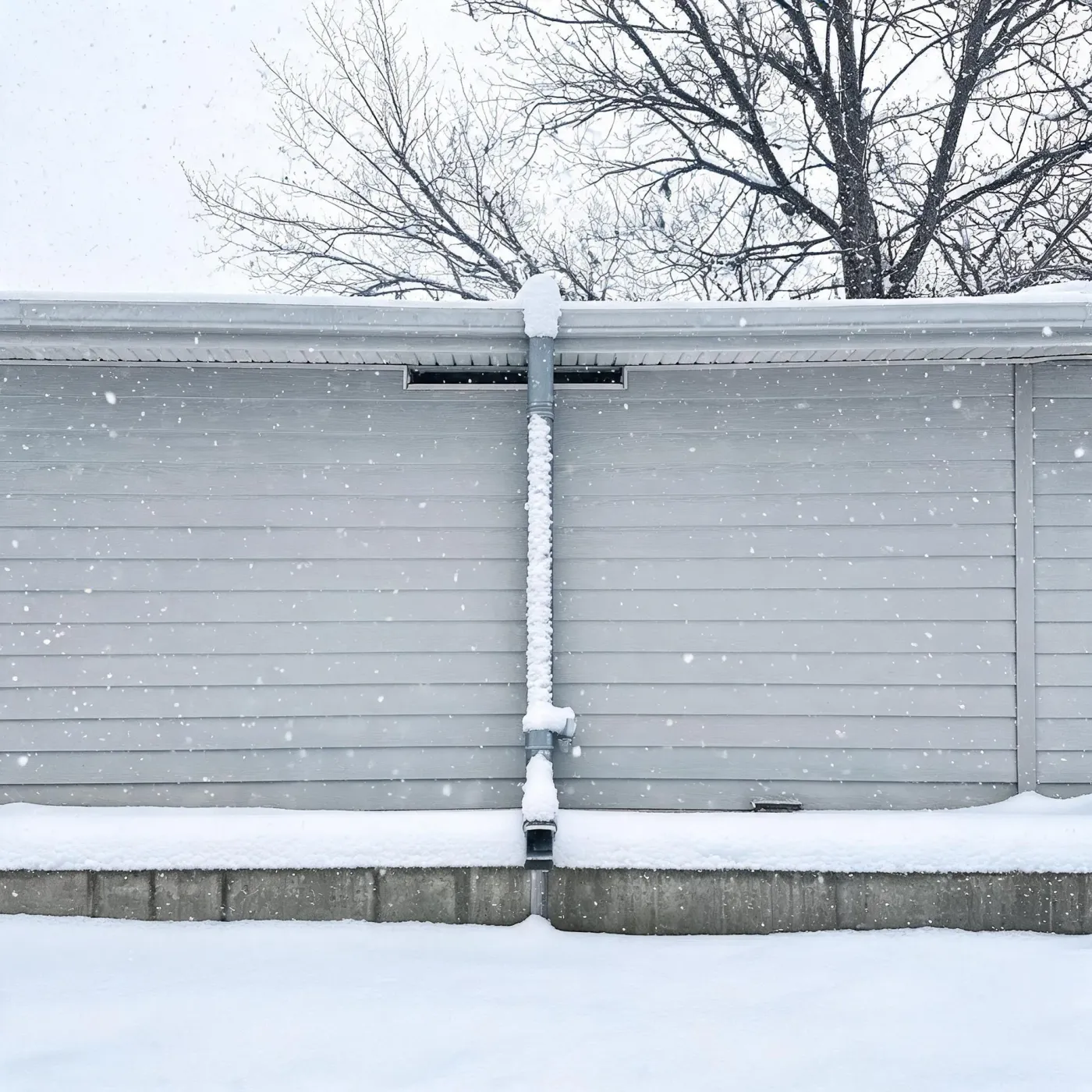
Exterior wall of a building with light gray horizontal siding and a snow-covered downspout running down its center, with bare trees behind the roofline and falling snow over deep snow on the ground.

Winter nights statewide average 15°F, according to NOAA, and that cold is what keeps your boiler firing for hours at a stretch instead of short bursts. Every hour it runs, the water inside expands and the pressure climbs, and the relief valve is the part absorbing that swell over and over. A valve that's already worn doesn't get a break on a night like that. You'll see it as a drip that picks up pace once the temperature drops, not just a steady trickle, and a puddle under the boiler that's bigger by morning than it was the night before.

NOAA nClimDiv 1991-2020 county normals weighted by homes

A closed silver laptop and a ceramic mug of dark coffee sit on a wooden table in front of two chair backs, with a kitchen counter, tiled backsplash, wooden cutting boards, a vase of greenery and a potted plant by a window behind.

A leaking relief valve is telling you something, not failing on its own

A relief valve drips because pressure inside the boiler is going higher than it should, usually from a waterlogged expansion tank, and the valve is doing exactly what it's built to do. Left alone through a New Hampshire winter, that drip doesn't stop, and the part underneath it, whether that's a finished ceiling, a storage area, or the valve seat itself, keeps taking the damage. A boiler repair finds the actual cause and gets the valve seated and dry again.

You don't have to spend an evening searching for an oil boiler technician in your part of the state, calling a few down to see who answers, and going through the problem again with each one before you can even compare what they'd charge. Send the form once and that search is off your plate. Someone licensed to work on your system takes it from there.

Interior corner of a room with a window and sheer curtain at left, a gray upholstered sofa with a cushion at right, and a round wooden table holding stacked books and a round vase with an olive branch.
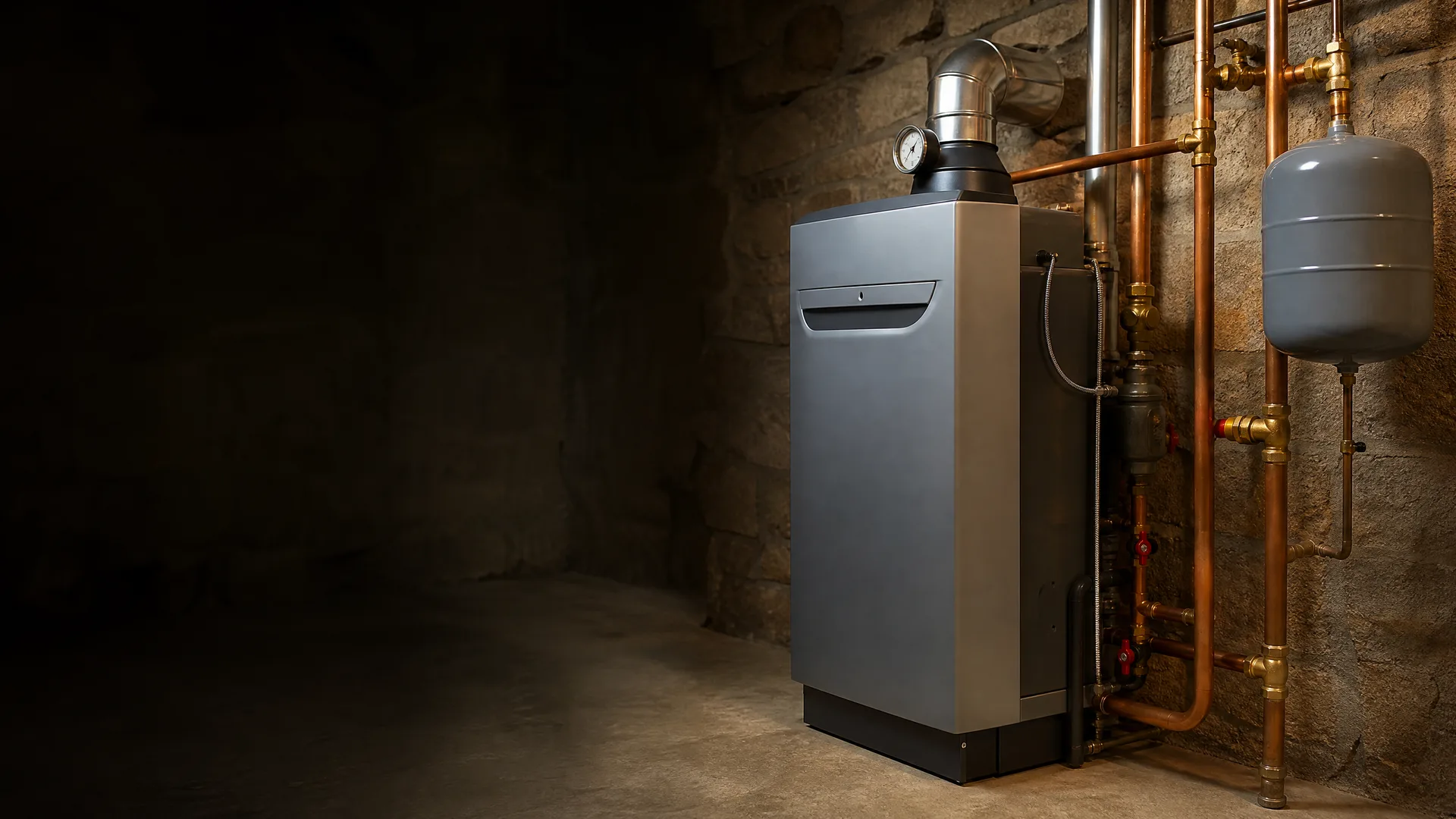
A gray floor-standing boiler with a flue pipe and pressure gauge stands against a stone basement wall, connected to copper and brass piping and a gray expansion tank.

Done looking for a boiler pro

RepairBoilerNew Hampshire
Step 1 of 2

What ZIP code is the job in?