





Two white colonial houses with lit windows and black shutters photographed at dusk along a tree-lined residential street.

Boiler Repair in Keene, NH

Tell us about the job

Takes about a minute. No obligation.

RepairBoilerCheshire County, NH
Step 1 of 2

What ZIP code is the job in?

Cheshire County saw 247 severe weather events between 2015 and 2024, and damaging wind caused most of them. A boiler sits indoors, away from hail and falling branches, but the power behind it does not. A boiler needs electricity to run its igniter and circulator pump even when the fuel is gas or oil, so a long outage means no heat no matter how sound the unit is. Statewide, close to a quarter of households went at least a day without power last year. Winter storms are exactly when that matters most.

Oil here ran $24.23 per million Btu in 2024.

A boiler that's short-cycling or losing heat burns through that fuel for less warmth, month after month.

Half the boilers in Keene are older than you think

Half the homes here were built by 1972
Heat runs September through May
Winter nights average 15°F
Nine months of work a yearHeat runs September through May here, with winter nights averaging 15°F.

Heat runs September through May here, nine months straight. August is the quiet month, the last one before the boiler has to work every night. That first stretch in September is when a weak igniter or a failing circulator pump tends to show itself, because a part that sat unused all summer is suddenly asked to run without a break. If your boiler was fine in August and is already acting up now that the heat's on, that's not bad luck. It's a marginal part meeting nine months of work right at the start, instead of waiting until deep winter to fail.

If the power's been out, check the boiler before the next storm does

A boiler's own cabinet keeps it away from hail and wind. What it can't do without is power, and an outage that runs a day or more will shut down the igniter and circulator pump same as a storm would. If your boiler lost power recently, or struggled to restart after one, get it looked at before the next outage finds the same weak spot.

Find a contractor
A man in a dark long-sleeve shirt and brown work pants, seen from behind, carries a worn canvas tool bag as he steps up porch stairs toward a navy blue front door of a light gray clapboard house, with a potted shrub beside the entry.

Most calls trace back to the same few parts

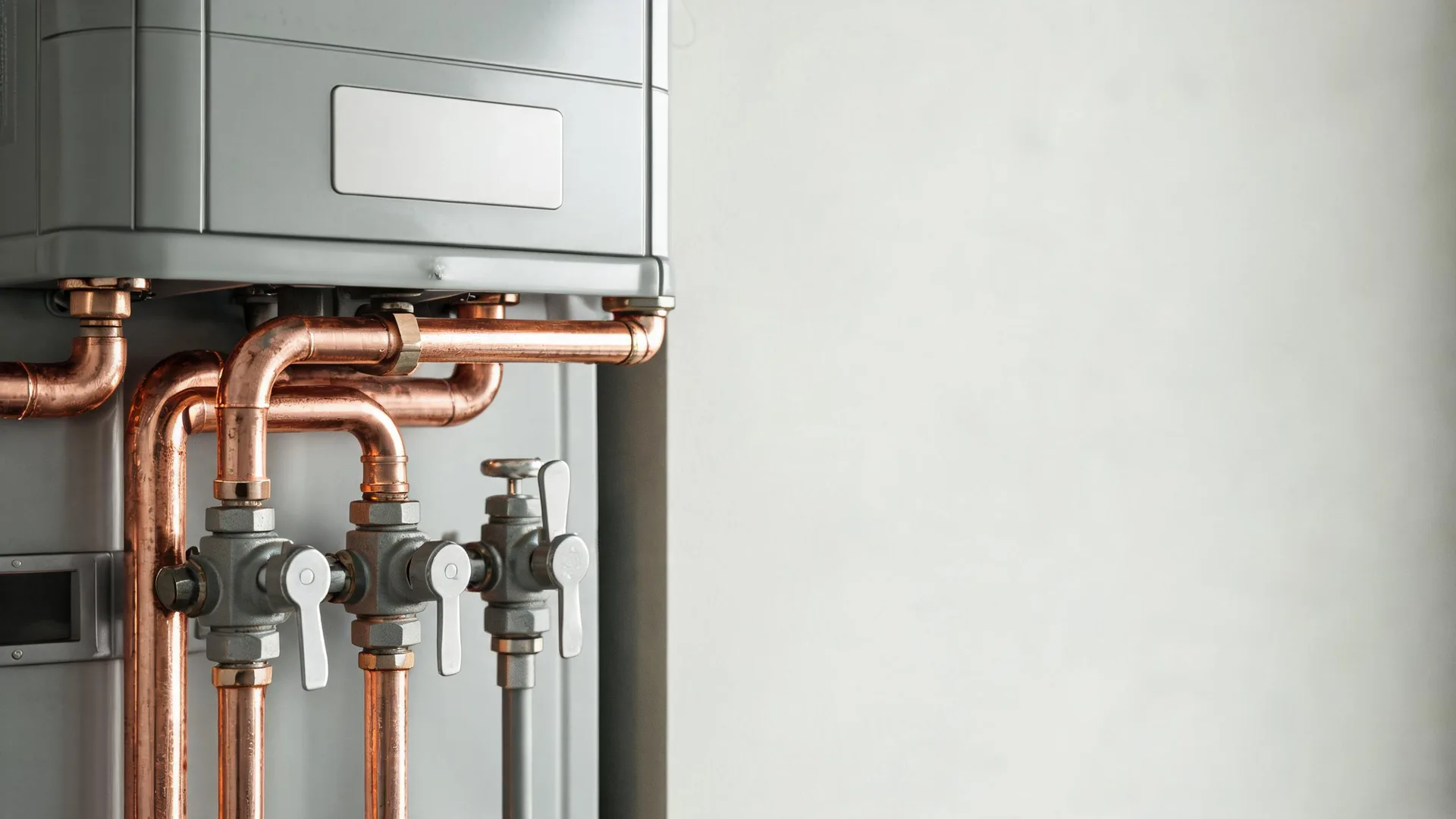
A boiler fails most often at its circulator pump, its igniter, or a low-pressure switch tripping because water has leaked out somewhere in the system. The circulator pump pushes hot water through the lines, and when its bearings wear out or it seizes, rooms stay cold even though the boiler itself is firing fine. An igniter that's cracked or coated with soot will struggle to light the burner on the first try, then the second, until one morning it doesn't light at all.
Low pressure is a symptom, not the problem

If a boiler keeps losing pressure, something is letting water out, often a slow leak at a valve or fitting rather than anything dramatic. Topping off the pressure gets heat back for a while, but it comes back low again because the leak is still there. Chasing where the water is going matters more than resetting the gauge.

A boiler that's losing pressure or short-cycling will keep heating the house, so it's easy to let it ride. That's the wrong read on what's happening inside it. Low water pressure means the boiler is firing with less water than it needs, and running it that way lets the heat exchanger run hotter than it should, which is what cracks one. Short-cycling wears on the same ignition parts every time it restarts, so a problem that shows up as a quick fix early on turns into a burner or exchanger replacement later. The boiler doesn't know it's hurting itself. It just keeps doing what it's told until the part that was failing finally gives out.

A diagnostic visit starts with the gauges, not the burner. A tech checks system pressure cold, then watches what happens once the boiler fires, because a unit that looks fine sitting idle can lose pressure the moment it's under load. From there it's watching a full cycle play out. Does the igniter catch on the first try. Does the circulator pump come on and actually move water. Does the burner stay lit or stumble partway through. Any error code gets checked against what the boiler is actually doing, since a code points at a circuit and not always the part that's really failing. The visit usually ends with tracing where water or heat is being lost, whether that's a weeping valve, a worn pump seal, or an exchanger holding onto heat it should be passing along. None of that shows up from across the room. It takes running the boiler through its paces to see which part gives out first.