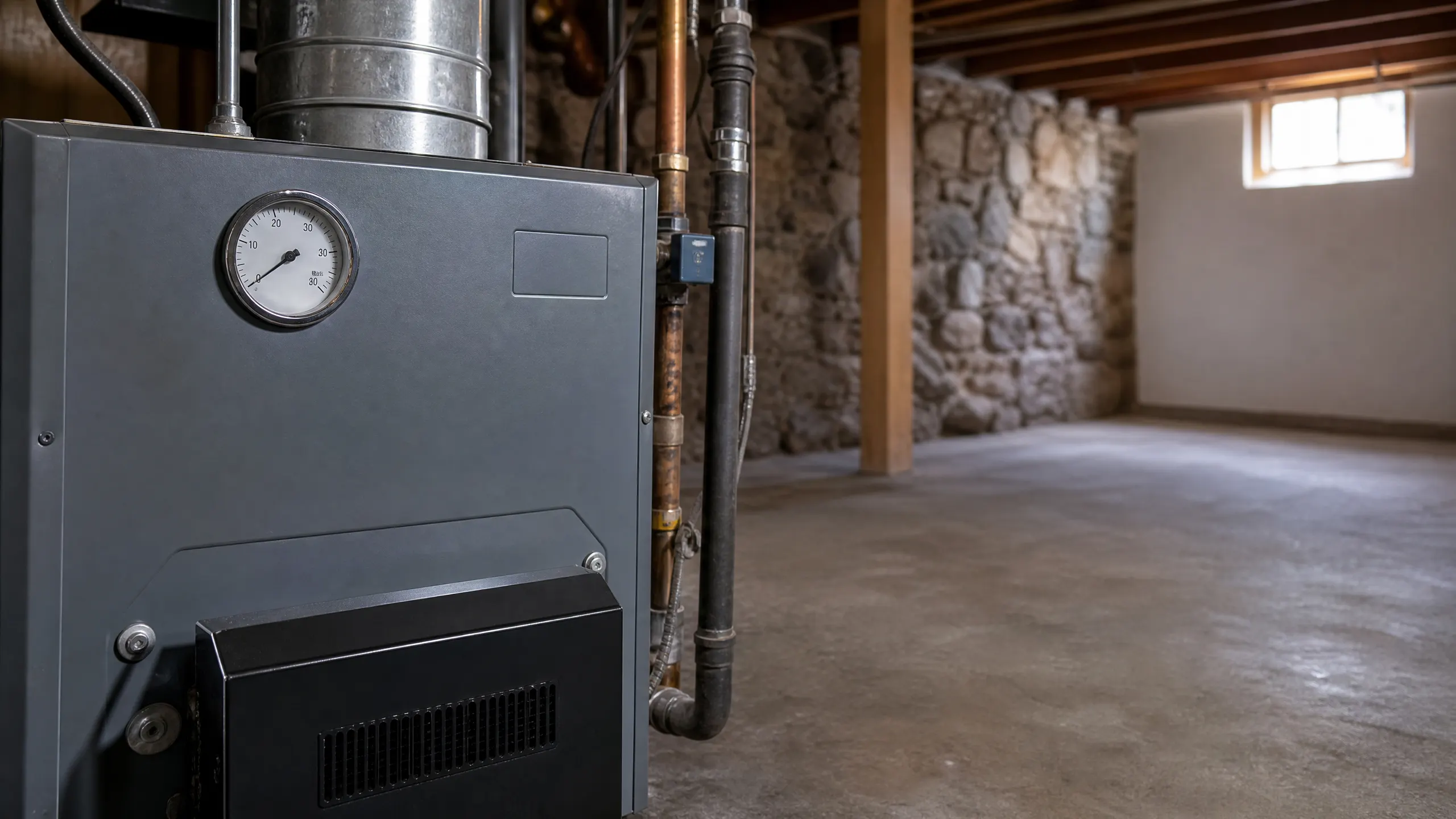




A gray metal boiler with a pressure gauge and piping installed in an unfinished stone-walled basement.

Boiler Repair in Portsmouth, NH

Tell us about the job

Takes about a minute. No obligation.

RepairBoilerRockingham County, NH
Step 1 of 2

What ZIP code is the job in?

Rockingham County saw 66 winter storms between 2015 and 2024, more than any other kind of severe weather tracked here. Heavy snow and ice put weight and moisture where a boiler's vents and flue need to breathe. Ice can also back up around an outdoor vent termination and block it outright. A boiler that still fires after a storm can still have a blocked vent, a tripped pressure switch, or water getting where it shouldn't. If the power went out, check that the boiler actually restarted and is holding pressure once it's back. Worth a look from someone licensed before you count on it through the next one.

Boilers here start running in October.

September is the month to get a weak one looked at, before the first cold week finds the problem for you.

Eight months of heat a year wears a boiler down early

Heat runs October through May
Winter nights average 18°F
66 winter storms from 2015 to 2024

A boiler doesn't take wind or hail the way an outdoor AC unit does, since it sits inside. What it takes is the power going out from under it. New Hampshire saw 22% of households lose power for a day or more in 2024, and Rockingham County has had its share of damaging wind on top of its winter storms. A boiler that loses power mid-cycle doesn't always come back cleanly. Check that the pilot is lit again if yours has one, and that the system is actually firing and building pressure, not just that the lights are on in the house.

Repair it

If your system came with a newer house, it likely has plenty of life left. Repair is usually the right call.

Find a contractor
A man in a dark long-sleeve shirt and brown work pants, seen from behind, carries a worn canvas tool bag as he steps up porch stairs toward a navy blue front door of a light gray clapboard house, with a potted shrub beside the entry.

What you can check yourself

Look at the pressure gauge first. Most boilers want it somewhere around the middle of the dial, and a needle sitting low or at zero explains a lot of problems right there. Check that the thermostat is calling for heat and set above room temperature. If your boiler has a sight glass or a reset button, look for a lit pilot or standing flame through the viewing window. Walk outside and check the vent pipe for anything blocking it, including snow, ice, or a bird's nest. None of this takes tools, and all of it is safe to look at with the unit running.
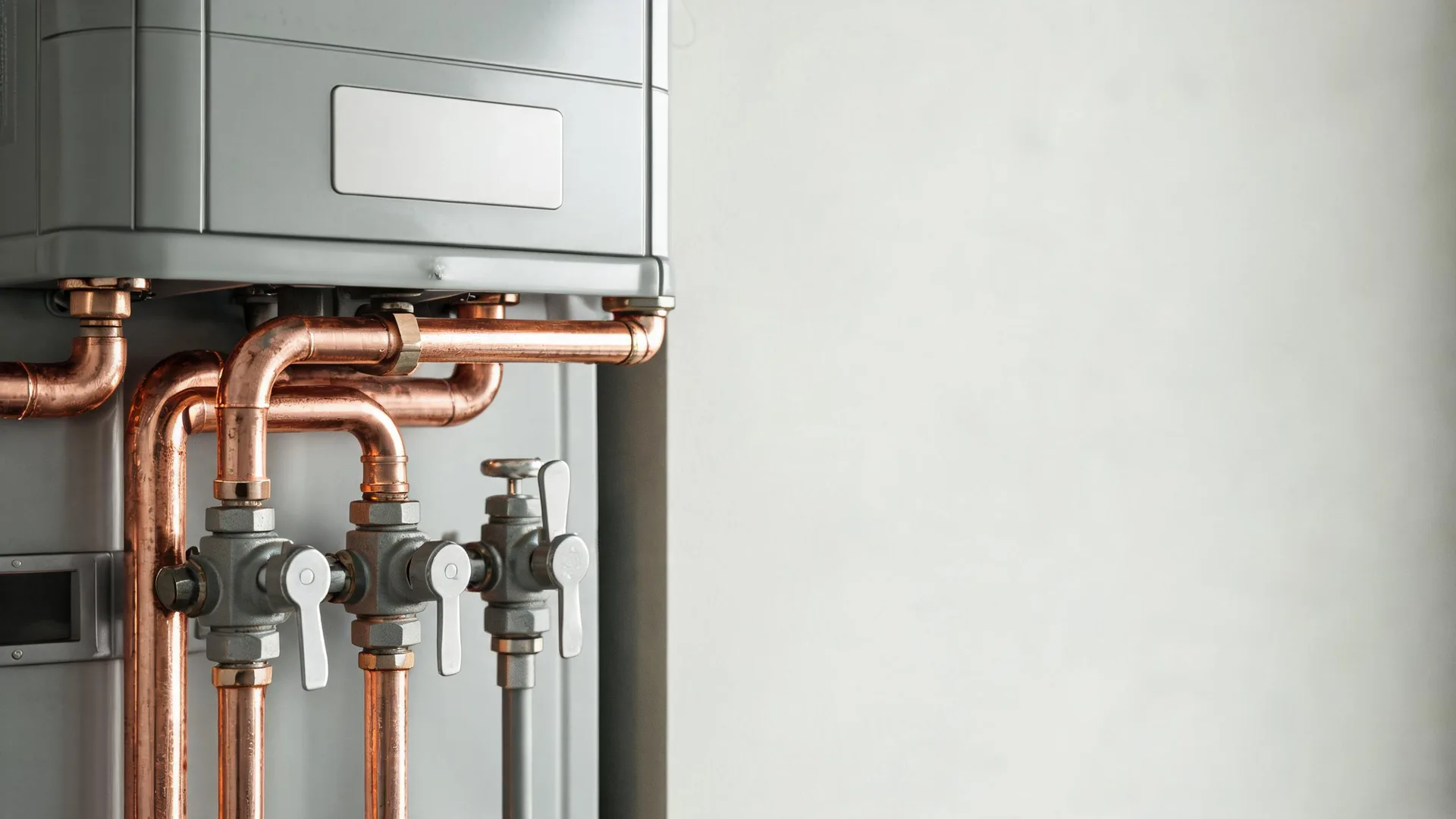
What to leave alone

Don't open the boiler's cabinet or touch anything near the gas valve or burner assembly. If you smell gas, that's not a repair call, that's a reason to leave the house and call the gas company first. A pressure relief valve that's dripping or a radiator that won't get hot on one floor but works on another points to something inside the system, not something you can bleed or reset yourself. Pressing a reset button more than once without knowing why it tripped just hides the reason it shut off.

A boiler that's losing pressure or short cycling keeps doing that job worse the longer it runs, not better. Low water pressure means less water carrying heat away from the heat exchanger, and a heat exchanger that keeps firing without enough flow around it can crack. A pump pushing water through air instead of a full system wears out faster than one doing its normal job. Soot building up on a burner from bad combustion doesn't clean itself off between cycles, it just builds. None of this fixes itself by waiting it out. Every cycle the boiler runs in that condition is another cycle working against the part that's already failing.

Age alone doesn't tell you whether to fix a boiler or replace it. A furnace that's cracked a heat exchanger or a boiler leaking from the block is done, no matter how new it is. One that's tripping on a bad pressure switch or a failed igniter is usually worth repairing, even if it's old, because those parts don't cost much to swap and don't mean the rest of the unit is failing with them. What matters more is the pattern. A single breakdown is a repair. The same boiler calling for service every season, each time for something different, is telling you the whole system is wearing out at once, not just the one part in front of you. A tech who's inside the cabinet can tell you which kind of problem you've got. Guessing from the thermostat can't.