





Two white multi-story colonial houses with lit windows and black shutters photographed at night, fronted by a stone wall.

Furnace Repair in Berlin, NH

Tell us about the job

Takes about a minute. No obligation.

RepairFurnace or heatingCoos County, NH
Step 1 of 2

What ZIP code is the job in?

Your furnace in Berlin runs about ten months a year, from September through June. That's most of the calendar, not just a cold snap in January. Overnight lows average 8°F across December, January and February, so when it does run, it's working against real cold, not mild weather. A system that cycles on that often, for that many months, wears parts down sooner than the same furnace would in a milder state. The igniter, the blower motor, the heat exchanger, all of it sees more hours than it would almost anywhere else. If something's acting up, that kind of use is usually why.

10 months
September through June, your furnace is on duty
8°F
the average winter night it heats against
93 winter storms
in ten years, the nights a failure hurts most
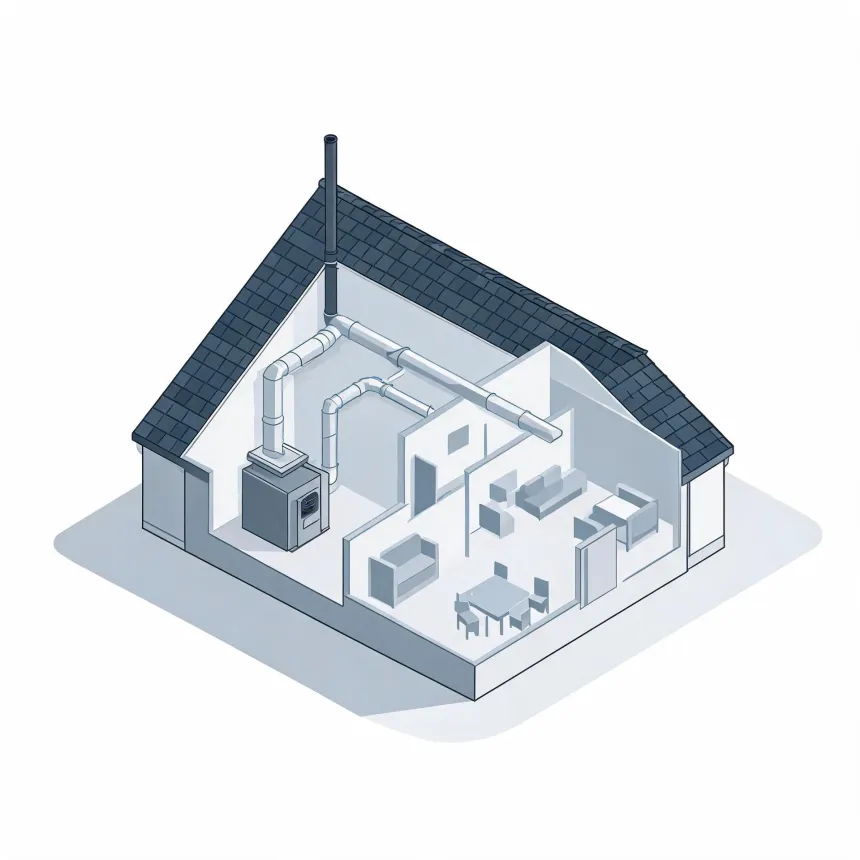
Isometric cutaway illustration of a house with a shingled gable roof, showing a gray furnace unit connected to overhead ductwork and a chimney flue, with simplified furniture in the rooms below.
Your furnace works hardest from November through April.

NOAA nClimDiv, 1991–2020 normals

Half the homes in Coos County were built in 1969 or earlier.

If your furnace came with a house that old, ask how much life it has left before paying for a big repair.

Coos County sees storms most places don't, and this furnace can't take a day off when one knocks out power.

184 severe weather events from 2015 to 2024
22% of homes statewide lost power a day or more in 2024
62 damaging wind events from 2015 to 2024

August is worth a call before the weather turns, not after. Heat starts running here in September and keeps going through June, and the first cold snap is when a furnace finds out what's wrong with it. A part that was already weak all summer will usually fail in those first few weeks, right when the load hits it hard. Catching that in August means a repair done on your schedule. Wait until the season's already started and it means a repair done on the furnace's schedule, likely on a cold night.

A furnace running badly here costs you every month it runs

Fuel oil in New Hampshire ran $24.23 per million Btu in 2024, and this furnace runs most of the year. A furnace that's short-cycling, struggling to ignite, or not holding its temperature is burning that fuel without heating the house to match. The longer a bad part sits, the more it costs before the season lets up.

Find a contractor
A man in a cap, gray jacket and tan cargo pants, seen from behind, carries a worn canvas duffel bag up steps toward a dark navy front door, with a potted shrub beside the entry.
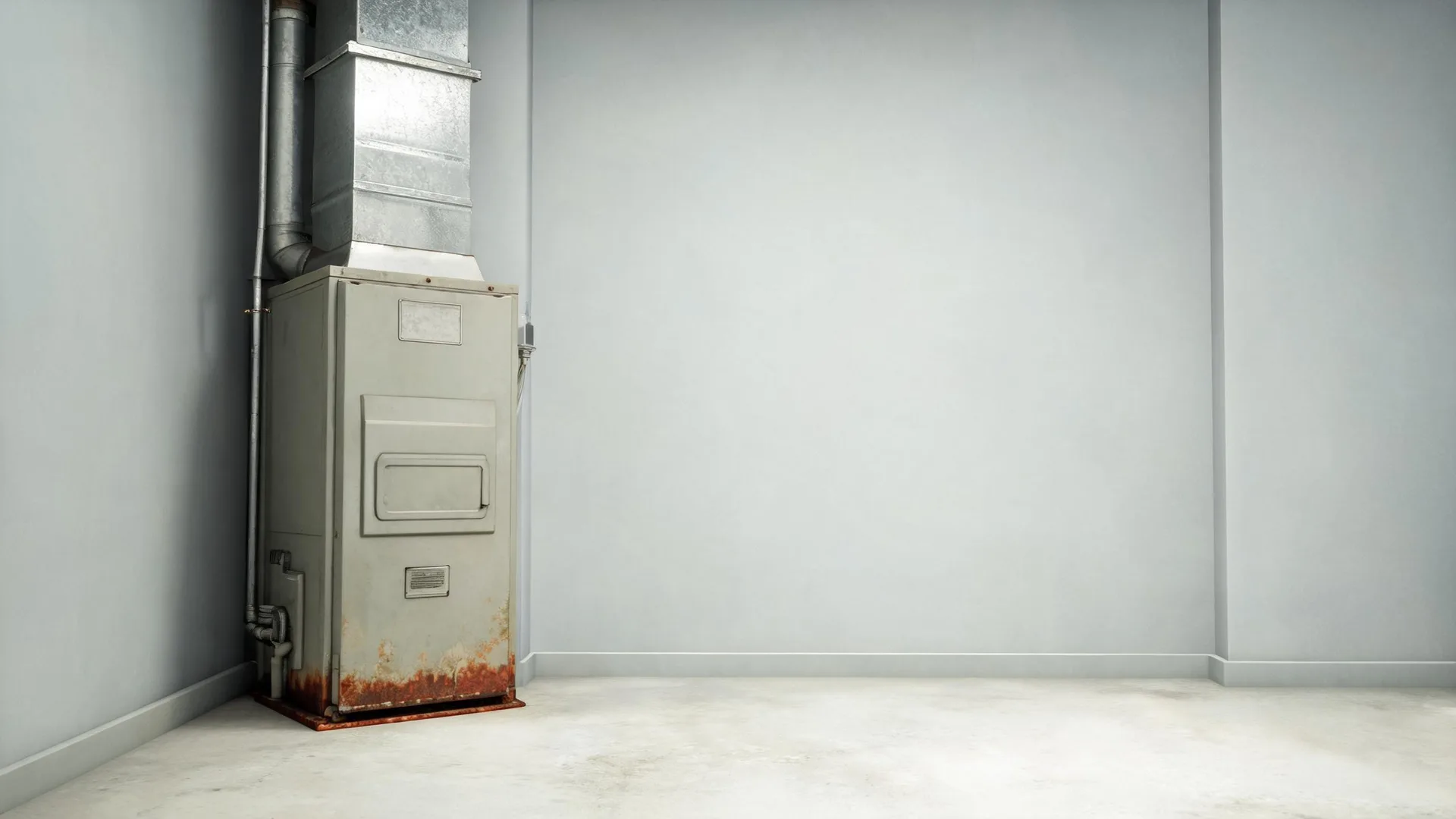
A gray gas furnace with attached ductwork and piping installed in an unfinished concrete basement.

It's running most of the year. Find out why it's struggling.

Ten months of runtime a year doesn't leave much room for a bad part to sit. If your furnace is acting up now, it's not a fluke, and it won't fix itself before September. Get it looked at and let someone who knows the system tell you what's actually worn, rather than guessing from a noise or a smell.

A small fault doesn't stay small

A cracked heat exchanger or a weak igniter doesn't hold steady once the furnace keeps cycling on it. Every start puts the same strain on the part that's already failing, so a hairline crack spreads and a flame sensor coated with residue gets worse at reading the flame. What would have been a simple swap turns into a bigger repair because the part kept working past the point it should have stopped.
Running rough changes what a tech finds

A furnace that limps along while something's wrong isn't holding steady, it's drifting further from where it started. Soot builds on a sensor that's already struggling to ignite clean. A blower motor bearing that's starting to go wears faster carrying the same load over and over. The longer it runs in that state, the more a tech is diagnosing a system that's moved past the original problem.

Before you call, a few things are worth a look. Check the thermostat is set to heat and the setting is above room temperature, not just on. Go to the furnace and make sure the switch on or near it, the one that looks like a light switch, is flipped on. If it's a gas furnace, check that the gas valve is open. Pull the air filter and look at it. If it's gray and packed with dust, swap it. A choked filter cuts off airflow, and a furnace will shut itself down rather than run without it. If the furnace isn't responding at all, check the breaker panel for one that's tripped. None of this takes tools or know-how, and it rules out the causes that have nothing to do with worn parts.

A furnace rarely fails all at once. One part wears down, that part causes a symptom, and the symptom is what gets noticed. So the real question isn't whether the furnace is broken, it's whether the part behind it is cheap and easy to reach or buried deep in the system. An igniter or a flame sensor is a small job, a tech swaps it and the furnace runs like nothing happened. A cracked heat exchanger is a different conversation, because that's the part keeping combustion gas out of the air you breathe, and once it's cracked the furnace shouldn't keep running on it. Age matters less than what's actually failed and whether that same kind of failure is likely to turn up in another part soon after. A furnace that keeps coming back for repairs is telling you something a single fix can't answer.