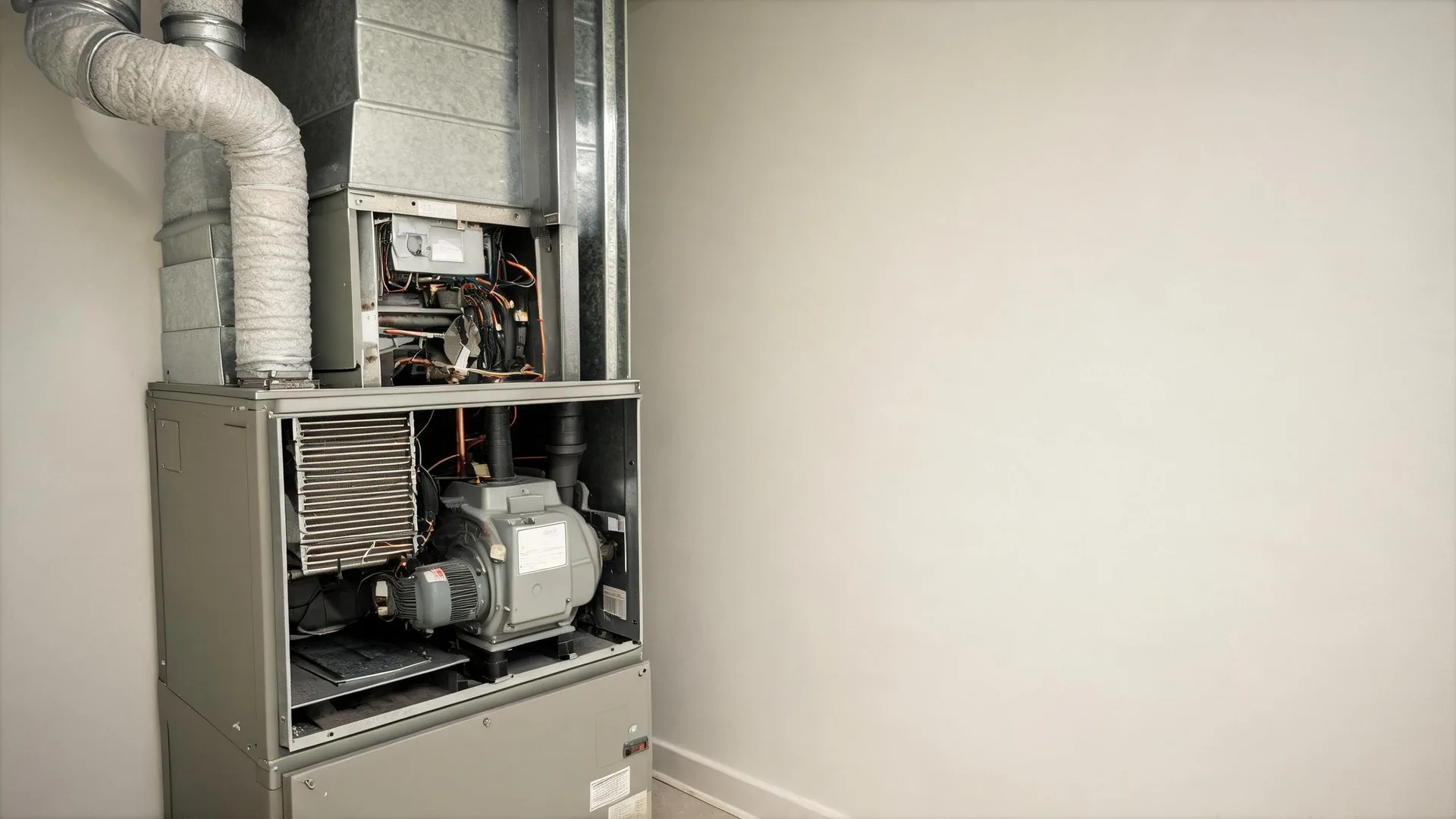
Nine months of heat a year
Furnaces in Sullivan County run from September through May. Overnight lows average 13°F through December, January and February, so the furnace is working hardest in the stretch when it's already logged months of runtime.
Takes about a minute. No obligation.
Furnaces in Sullivan County run from September through May. Overnight lows average 13°F through December, January and February, so the furnace is working hardest in the stretch when it's already logged months of runtime.
A furnace with that little time off wears sooner than one that gets to rest most of the year. Find the real cause before swapping a part, or the same failure comes back in a few months.

NOAA nClimDiv, 1991–2020 normals
Oil runs $24.23 per million Btu in New Hampshire.
A furnace that's short-cycling or running long burns through that faster, so a bad part costs you every week it stays broken.




Half the homes in Sullivan County went up in 1974 or earlier, half after. That split doesn't point to one likely cause here. An older furnace and a newer one fail for the same reasons. A cracked igniter. A flame sensor coated with residue. A blower motor on its way out. What matters more than the age of the house is the age of the furnace in it, and whether it's the one the house came with. Check the install date if you have it. That tells a repair tech more than the year the house was built ever will.
A furnace running nine months a year with lows near 13°F doesn't get much chance to rest. Have a tech find out what's actually failing before anything gets replaced, so the same repair doesn't show up again in a few months.
Find a contractorMost furnace failures trace back to a handful of parts, and they fail for ordinary reasons. The igniter cracks from repeated heating and cooling cycles. The flame sensor builds up a film of residue until it can't tell the burner is lit. The blower motor wears out its bearings from spinning hour after hour. A clogged filter starves the system of airflow, which makes the heat exchanger run hotter than it should and can trip the limit switch. None of these show up because a system is old. They show up because a part has done its job enough times that it stops doing it well. Catching the early signs, a furnace that delays before igniting, short cycles, or blows cooler air than it used to, means a smaller repair instead of a breakdown on a cold night.
Look at the filter first and replace it if it's gray or caked with dust. Check that the thermostat is set to heat and the batteries aren't dead. Go to the furnace and make sure the switch on or near it, the one that looks like a light switch, is flipped on. Check the breaker it runs on. If it's a gas furnace, make sure the gas valve is open.
Don't take the burner compartment apart or touch the flame sensor and igniter yourself. If the furnace trips its switch repeatedly, smells like gas, or the air coming out is cold, turn it off and call instead of resetting it again. Resetting a system that keeps shutting down on its own usually just delays the same call.
A furnace usually tells you something is wrong before it quits outright. It delays before the burner catches, or it tries to light and fails. It runs a short burst of heat, shuts off, then kicks back on a few minutes later instead of holding a cycle. The air coming out of the vents feels lukewarm instead of hot, which often means the burner is struggling or the blower is pushing air faster than the heat exchanger can warm it. Sometimes it's a sound instead of a feel, a rattle from the blower wheel or a scraping that wasn't there before. Any of these is worth a call before the furnace stops lighting altogether.
A diagnostic visit starts with questions. A tech wants to know what the furnace was doing, when it started, and whether it has happened before. Those answers narrow things down before any panel comes off. Then comes a visual check of the burner, the igniter, and the flame sensor, looking for scorch marks, corrosion, or a flame burning the wrong color. After that it is testing, not guessing. Voltage gets checked at the igniter. The flame sensor gets tested for resistance. The blower motor gets checked for amp draw, since a motor pulling too much current is wearing out even if it still runs. Airflow gets checked too, because a weak return or a blocked duct can look like a failing heat exchanger. The goal is finding the one part actually causing the problem, not swapping parts until something works.