A two-story red brick house with black shutters and a dark roof stands on a mown lawn behind a dry-stacked stone retaining wall, framed by large deciduous trees under an overcast sky.

Furnace Repair in Portsmouth, NH

Tell us about the job

Takes about a minute. No obligation.

RepairFurnace or heatingRockingham County, NH
Step 1 of 2

What ZIP code is the job in?

Short cycling wears out the parts that start it

A furnace that fires up, runs a few minutes, and shuts off again is working against a flame sensor or limit switch that's already struggling. Each short cycle puts another strain on the ignition system. Left alone, the part that's failing now is often the part that fails for good next.

A burner smell or odd sound means a call now, not later

A gas smell, a burning dust smell that doesn't clear, or a new rattle or screech from the blower are not wait and see signs. These point to something at the burner or blower that needs a tech's eyes before the furnace runs again.

8 months
October through May, your furnace is on duty
18°F
the average winter night it heats against
66 winter storms
in ten years, the nights a failure hurts most
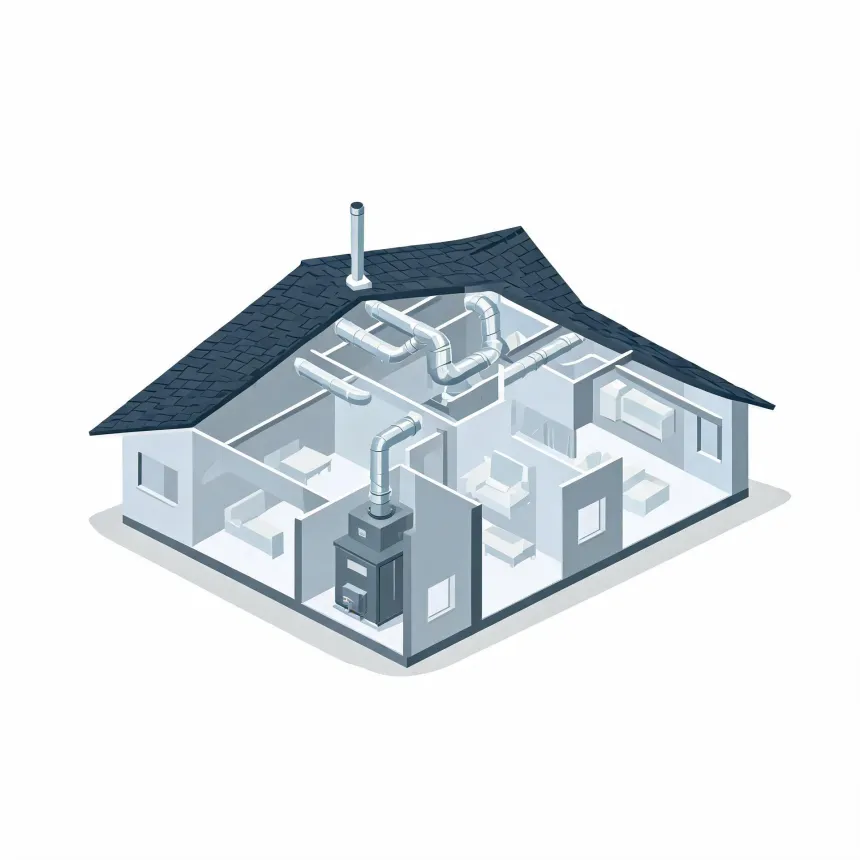
Isometric cutaway illustration of a single-story house showing interior rooms with furniture, a metal ductwork network, and a furnace unit connected to a vertical flue through the dark shingled roof.
Your furnace works hardest from November through March.

NOAA nClimDiv, 1991–2020 normals

Furnaces in Portsmouth start their work in October.

A furnace that sat idle since spring is most likely to show its weak spot in the first cold weeks.

Heating with oil here costs more than almost anywhere else, so a furnace running wrong runs up the bill every day it's not fixed

Heat runs October through May
Winter nights average 18°F
66 winter storms from 2015 to 2024

Furnaces in Rockingham County run about eight months a year, October through May. That's most of the calendar, not just a cold snap in January. Overnight lows average 18°F through December, January and February, so the burner is firing for long stretches, night after night, to hold a house at temperature. That kind of runtime wears on an igniter or a blower motor faster than it would with less work to do. When a furnace here is acting up, it's usually because something that wears out from long hours has started to go. Getting it looked at properly matters more than a quick reset, because a part on its way out now will keep failing until it's actually replaced.

Half the homes in Rockingham County were built in 1983 or later. Repair likely makes sense.

If your furnace came with a newer house, it's probably not old enough to be worn out, just acting up. A repair gets it back to doing its job.

Find a contractor
A man in a cap, gray long-sleeved shirt and brown work pants walks up concrete steps toward a dark blue front door, carrying a worn canvas tool bag beside a potted shrub.
A gray residential gas furnace installed in an unfinished basement, surrounded by ductwork, a metal flue pipe, and a gas supply line.

The parts that wear are the parts that work every cycle

Most furnace failures trace back to a handful of parts, and they're the ones that work every time the burner fires. The igniter takes a new jolt of current each cycle, and after enough cycles the element cracks or just stops glowing hot enough to light the gas. The flame sensor sits in the burner flame itself, and over time it builds up a film that keeps it from telling the control board a flame is there, so the furnace shuts itself down as a safety measure. Blower motor bearings wear from spinning hour after hour, and you'll hear that before anything else, a grinding or squealing that gets worse over a few days. Capacitors that kick the blower motor into motion weaken with age and heat, until one day the motor hums but won't turn over. None of these fail because a furnace is old. They fail because they've done their job a certain number of times, and a furnace running long hours gets there faster than one that barely gets used.

What you can check yourself

Look at the thermostat first. Make sure it's set to heat and the set point is actually above room temperature, since a bumped switch or dead thermostat battery can look exactly like a furnace problem. Check the air filter next. A filter clogged with dust chokes off airflow, and some furnaces will shut down on purpose rather than run with the air blocked. Then check the furnace switch, the one that looks like a light switch near the unit, and make sure it hasn't been flipped off. Last, check the breaker box. A tripped breaker will kill the furnace with no warning at all.

What to leave alone

Don't open the burner compartment or go near the gas valve. If you smell gas, that's not a troubleshooting step, that's a reason to get everyone out and call for help. Don't keep resetting a furnace that shuts itself off after a few minutes of running. That shutdown is the control board protecting the house from a flame it can't verify or a limit it can't meet, and forcing it to keep trying just stresses the ignition parts further. A furnace that won't stay running needs a tech to find out why, not another reset.

A furnace that's struggling doesn't fail cleanly. It fails a little more each time it runs. A cracked heat exchanger gets another cycle of heating and cooling while the furnace keeps firing, and that's how a hairline crack turns into one that leaks exhaust into the air supply. A flame sensor coated with just enough film to hesitate will coat over fully if it keeps sensing flame through more cycles of soot. A blower motor running on a weak capacitor draws more current trying to start, and that extra draw is what burns a motor out instead of just wearing it slowly. The part doesn't rest between calls for heat. It either gets fixed or it gets closer to the cycle where it doesn't come back on at all.

A diagnostic visit starts before any panel comes off. A tech runs the thermostat through a call for heat and watches what the furnace actually does, how long it takes to fire, whether it stays lit or trips off on its own. That tells them where to look. Taking the burner cover off comes next, checking the flame itself, its color and shape, since a flame that's burning wrong points to different parts than one that won't stay lit at all. The flame sensor and igniter get checked directly, often pulled and tested rather than judged by eye. Airflow gets checked too, because a blower not moving enough air can make a furnace shut itself down even when the ignition side is fine. By the time a tech says what's wrong, they've watched the furnace fail the way it's been failing for the owner, not guessed at it from a cold unit.