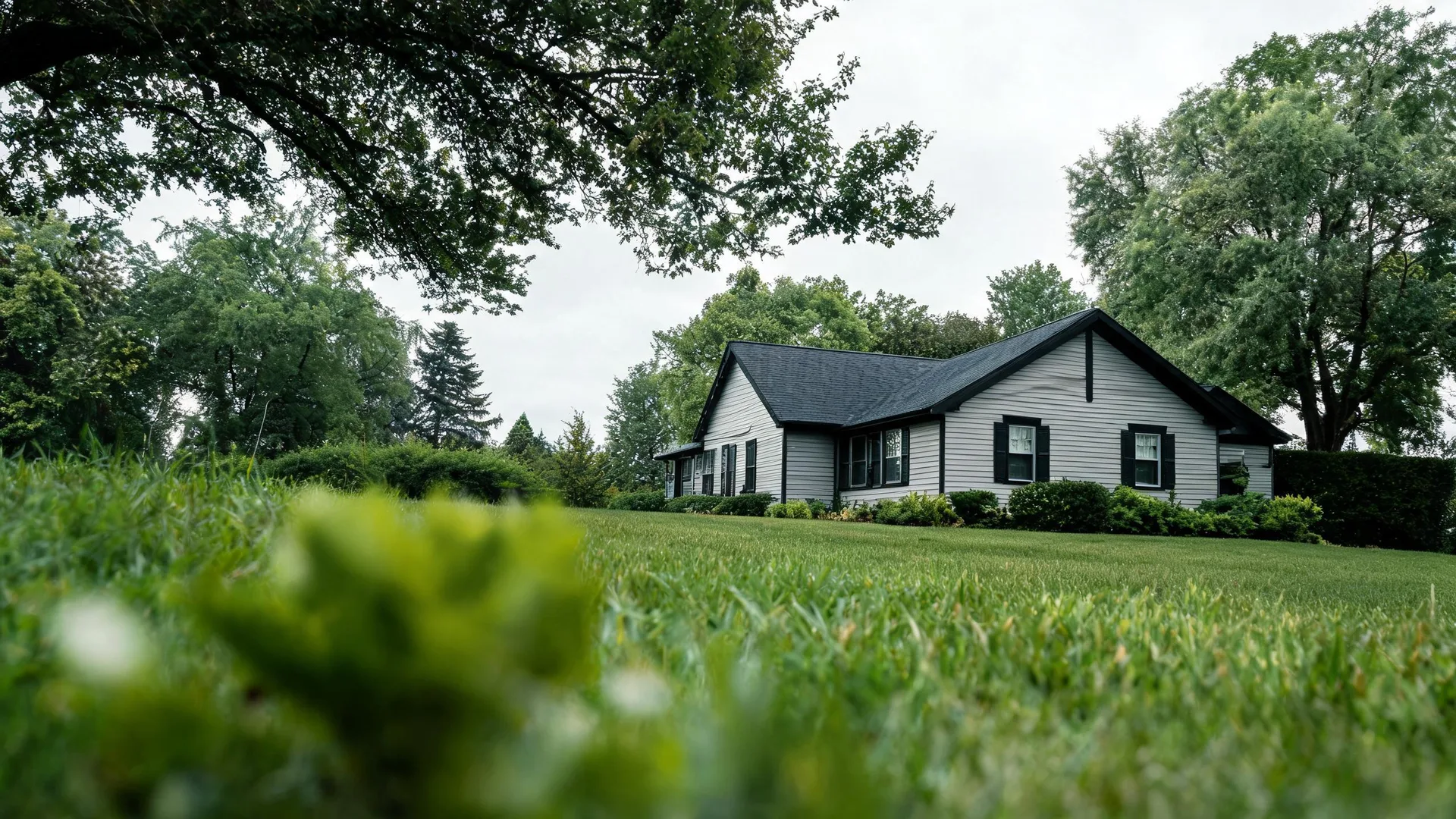




A single-story light gray house with dark shingled roof and black shutters, viewed from a low angle across a green lawn with blurred shrubs in the foreground and trees under an overcast sky.

Mini Split Installation in Berlin, NH

Tell us about the job

Takes about a minute. No obligation.

New system or replacementMini-splitCoos County, NH
Step 1 of 2

What ZIP code is the job in?

Ask what size unit each quote is based on, not just a price. A contractor should size the system to the room, the windows and how the space gets used, not hand you the same number for every house. Ask how many indoor heads the outdoor unit can run, and whether it still puts out heat once the temperature drops well below freezing, since not every heat pump holds its output in deep cold. Ask where the line set and the condensate drain will run, because that path affects how much drilling and wall penetration the job needs. If you're comparing bids, make sure they're sizing the same rooms the same way before you set the numbers side by side.

10 months
September through June, your system heats
8°F
the average winter night it heats against
73°F
the average summer afternoon it cools against
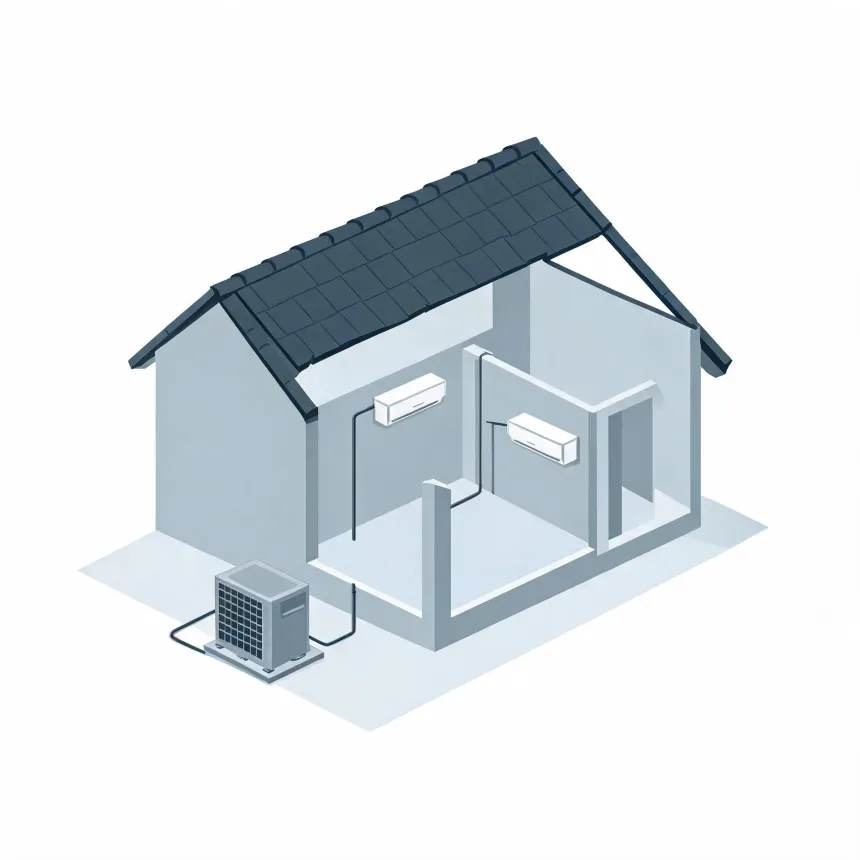
Isometric illustration of a cutaway house with a dark tiled gable roof, showing two wall-mounted indoor split air conditioning units connected by lines to an outdoor condenser unit on the ground outside.

Summers in Berlin top out around 73 degrees, and most months don't call for cooling at all.

A mini split here spends its life on heat, not air conditioning, so that's the job to size it for.

Nothing about Berlin calls for an oversized system

Power costs 23.4 cents a kWh statewide
Summer afternoons average 73°F
62 damaging wind events from 2015 to 2024

An outdoor unit here spends almost no time on cooling and the rest of the year leaning on heat. That lopsided workload is exactly why the equipment doesn't need to be the top of the line. Skip the highest SEER2 rating on the sheet and put the money toward a unit that holds its heat output when it's cold out, since that's the job it's actually going to do. Reliable and well matched beats top-tier when one side of the system barely gets used.

No gas line needed, so a mini split fits whatever the rest of the house burns

Most homes in Coos County run on fuel oil or propane because there's no gas line to tie into. A mini split doesn't need one. It runs on electricity, so it installs the same way whether the rest of the house burns oil, propane, or nothing at all.

Find a contractor
A beige split-system air conditioner outdoor condenser unit mounted on metal wall brackets atop a stucco wall.

Older homes need the install planned around them

Half the homes in Coos County were built in 1969 or earlier. A house that old wasn't built with a mini split in mind, so the question isn't just what size unit the room needs. It's where the line set can run and how the wall it has to pass through is built. That's a question for whoever comes out to quote the job, not something to guess at ahead of time.

Sizing comes from a room by room load, not a guess

A contractor works out heat loss for the space being conditioned. Room size, window count, which way it faces, how well it holds heat, all of it feeds into that number. That load, not the size of the house as a whole, decides which indoor head goes where and what the outdoor unit needs to put out. Skip that step and the unit stops matching what the room actually loses.
Oversized is its own problem, not a safety margin

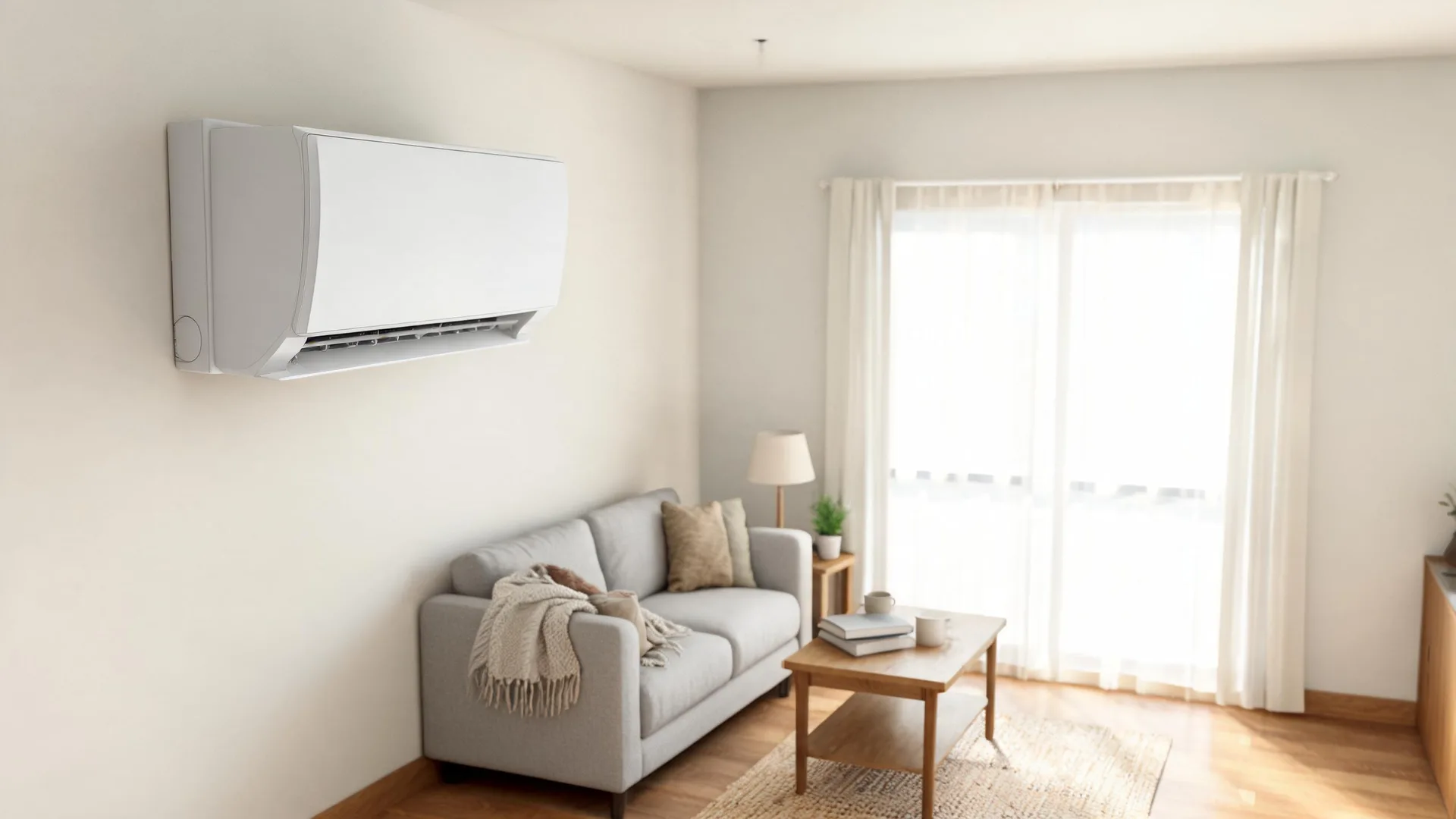
A mini split that's too big for the room cycles on, satisfies the thermostat fast, and shuts off again before it's pulled the moisture out of the air. That short cycling wears on the compressor over time and can leave the room feeling clammy even while it reads warm. Bigger isn't a cushion here. It's a unit working against the room instead of with it.

What drives the cost isn't just the equipment, it's what it takes to get refrigerant from the outdoor unit to each indoor head. Every indoor head needs its own line set run through a wall, and every wall is a different job depending on what it's made of and what's behind it. More indoor heads means more line sets, more penetrations, more labor, even before the outdoor unit gets bigger to handle them. The outdoor unit itself is sized to the combined load of every room it serves, so a house with more heads costs more in equipment than one with fewer, apart from any labor at all. Where the outdoor unit can sit matters too. A long run between it and the indoor heads takes more refrigerant line and more time than a short one. None of this is padding. It's the actual work of getting the system into the house and running the way it's supposed to.

Install day starts outside, with the contractor picking a spot for the outdoor unit that gives it clear airflow on all sides and keeps it off the ground on a pad or brackets, away from where snow and roof runoff pile up. Inside, each indoor head gets mounted high on a wall, on a bracket set level so the condensate drains the way it's supposed to. The line set and a drain line run from each indoor head to the outdoor unit through a hole drilled in the wall, usually the shortest straight path that avoids framing and wiring. Once the lines are connected, the system gets evacuated with a vacuum pump to pull out air and moisture before refrigerant ever goes in, since either one left in the lines can damage the compressor down the road. After that the refrigerant charge gets checked against what the line length calls for, the electrical connections get made, and the contractor runs the system through a cycle in both heating and cooling to confirm every head is pulling its weight before calling the job done.