




A dark, minimalist bedroom featuring a sleeping cat on a grey-quilted bed, a wall-mounted air-conditioning unit, warm cove ceiling lighting, and a pendant lamp illuminating the bedside table.

Mini Split Installation in Claremont, NH

Tell us about the job

Takes about a minute. No obligation.

New system or replacementMini-splitSullivan County, NH
Step 1 of 2

What ZIP code is the job in?

Fuel oil heats close to half the homes in Sullivan County, and LP gas heats another 28 percent. A mini split doesn't compete with either one. Most homes here use it alongside the furnace, running the heat pump in fall and spring when the load is light, and letting the furnace carry the coldest stretch of winter. It also gives you cooling that an oil or propane system never did. If you're adding one room or a space the furnace doesn't reach well, like a finished basement or an addition, a mini split handles that without touching the ductwork you already have.

9 months
September through May, your system heats
1 months
July through July, it cools
13°F
the average winter night it heats against
77°F
the average summer afternoon it cools against
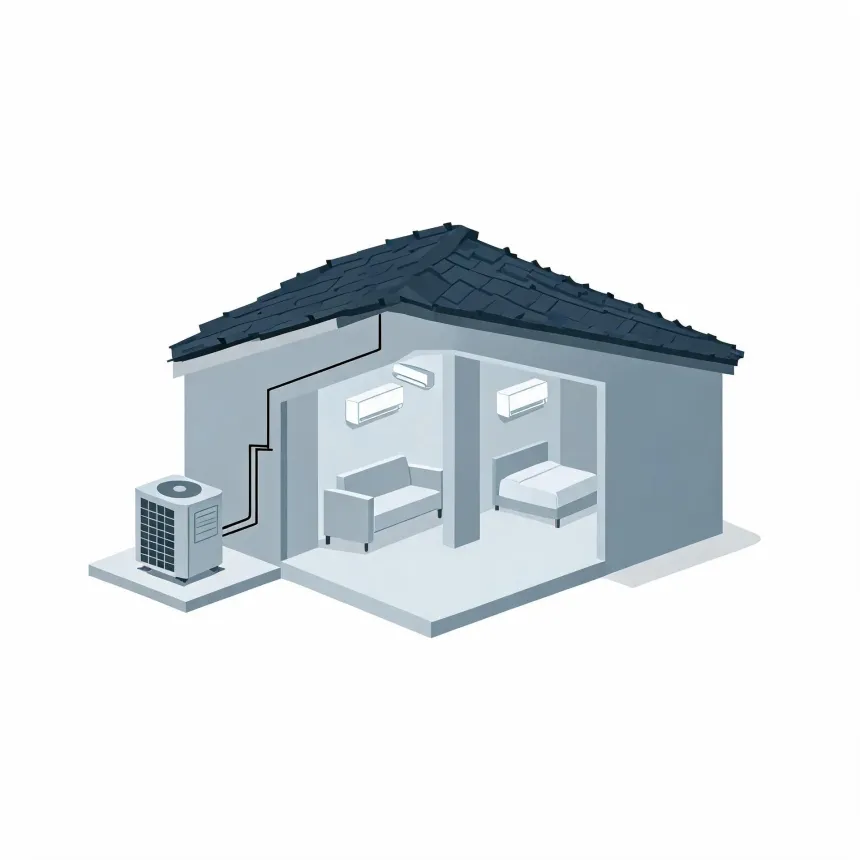
Isometric illustration of a cutaway single-story house with a dark shingled roof, showing three wall-mounted indoor air conditioning units in two rooms connected by lines to an outdoor condenser unit on a pad outside.
Your system heats September through May and cools July through July.

NOAA nClimDiv, 1991–2020 normals

Electricity in New Hampshire ran 23.40 cents per kilowatt-hour in 2024.

A mini split sized right for the room keeps that cost down, so there's no reason to size up.

Nothing here calls for going bigger than the room needs

Half the homes here were built by 1974
Cooling runs July through July
Summer afternoons average 77°F
One month of cooling a yearClaremont's afternoon highs average 77°F in June, July and August, and July is the only month homes here run cooling at all.

Claremont sits in climate zone 6A, which means cold winters and a long stretch of them. Any mini split installed here has to meet the federal minimum for a split-system heat pump. That standard covers cooling and heating both, and it applies whether the system is ducted or ductless. A mini split doesn't get a looser rule just because it's ductless. A unit sized right for the room and built to this minimum will heat and cool it properly through the full range of weather here, from the coldest months to the hottest. A system that meets this standard may also qualify for the federal tax credit available on heat pumps.

Get it in by June, before July's heat arrives

Cooling here only runs in July. June is the month to get a mini split in, while there's no rush and no heat to work around. Installed before summer, it's set and tested before you need it, not while the room is already warm.

Find a contractor
A white outdoor air conditioner condenser unit mounted on metal wall brackets against gray horizontal siding, with a blue sky and white clouds behind it.

Light work, most of the year

July is the only month the compressor runs for cooling. The rest of the year it's heating, through a long cold season rather than short bursts against a hard summer. Afternoon highs here only average 77°F even at the peak of summer, so the cooling side is never working against much. A mini split sized right for the room isn't fighting heavy loads in either direction. That's less for a well-installed system to work against from day one.

The room decides the size, not the brochure

A contractor sizes a mini split by working out how much heat the room loses in winter and gains in summer. That means measuring the room, counting windows and checking what's on the other side of each wall. Square footage alone doesn't answer it. A room with a lot of glass or an uninsulated wall above it needs more capacity than one the same size without those things.
Oversizing is the mistake to watch for

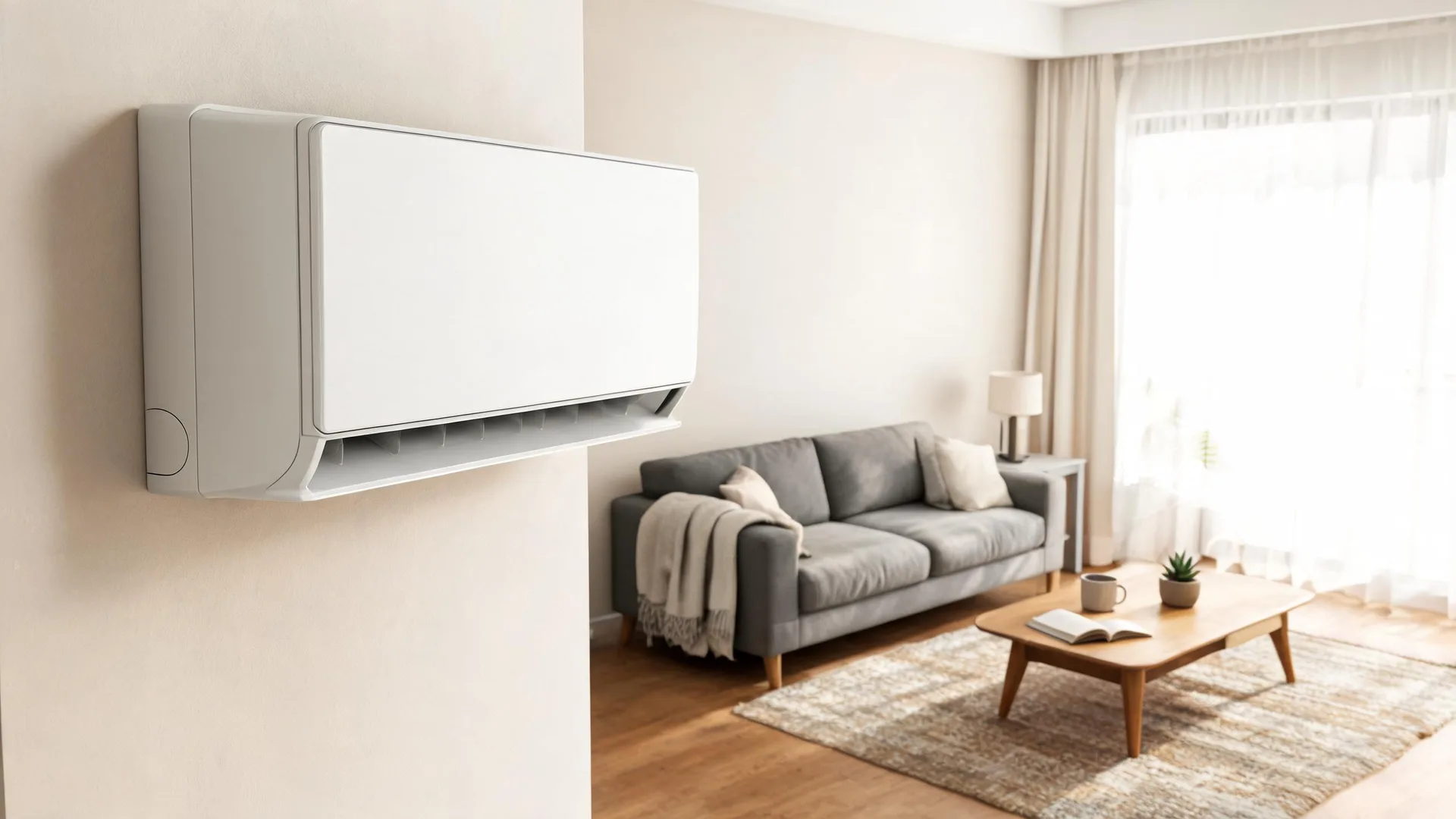
A unit too big for the room cools or heats it fast, then shuts off before it's pulled the moisture out of the air or settled the temperature evenly. That short cycling is hard on the compressor and leaves the room feeling clammy even when the thermostat reads right. Bigger isn't a safety margin here. It's the thing a correct sizing job is meant to avoid.

What drives the price of an install is mostly what's hidden before the unit goes on the wall. A straight line set run through one exterior wall, with the condenser sitting close by on the other side, is the easiest version of this job. Add distance between the indoor head and the outdoor unit, or a wall the lines have to route around instead of through, and both material and labor go up. Electrical matters too. A mini split needs its own dedicated circuit, and if the panel doesn't have room for one, that's a separate piece of work before the system itself gets touched. Multi-zone systems add cost per head, since each indoor unit needs its own line set and mounting even though they share one outdoor condenser. None of that shows up in the price of the equipment itself. It shows up in what the room and the wall between them require.

Installation starts outside, with the condenser. It needs a pad or wall bracket, clearance on all sides, and a path for the refrigerant lines and wiring back to the indoor head. That line set gets run through a wall, usually with a small hole drilled right where the indoor unit will hang. The indoor head goes up on a mounting plate, leveled, before the lines connect to it. Once both ends are in place, the lines get purged of air and moisture and pressure tested, then charged with refrigerant to the weight the system calls for. The last step is running it in both modes and checking the temperature split at the head, not just listening for it to turn on. A system that passes that check is one that's actually ready for the room, not just plugged in.