






A two-story red brick house with black shutters and a dark roof stands behind a mowed lawn framed by large deciduous trees, viewed over a dry-stacked stone wall in the foreground under an overcast sky.

Mini Split Installation in Manchester, NH

Tell us about the job

Takes about a minute. No obligation.

New system or replacementMini-splitHillsborough County, NH
Step 1 of 2

What ZIP code is the job in?

Manchester sits in climate zone 5A, a cool zone where heating carries more of the load than cooling. That shapes what can legally go in. A ductless mini-split counts as a split-system heat pump under federal rules, so any unit built from 2023 onward has to hit at least 14.3 SEER2 for cooling and 7.5 HSPF2 for heating. There's no lower bar for ductless systems specifically. Whatever gets installed, it has to clear that same line.

8 months
October through May, your system heats
2 months
July through August, it cools
16°F
the average winter night it heats against
79°F
the average summer afternoon it cools against
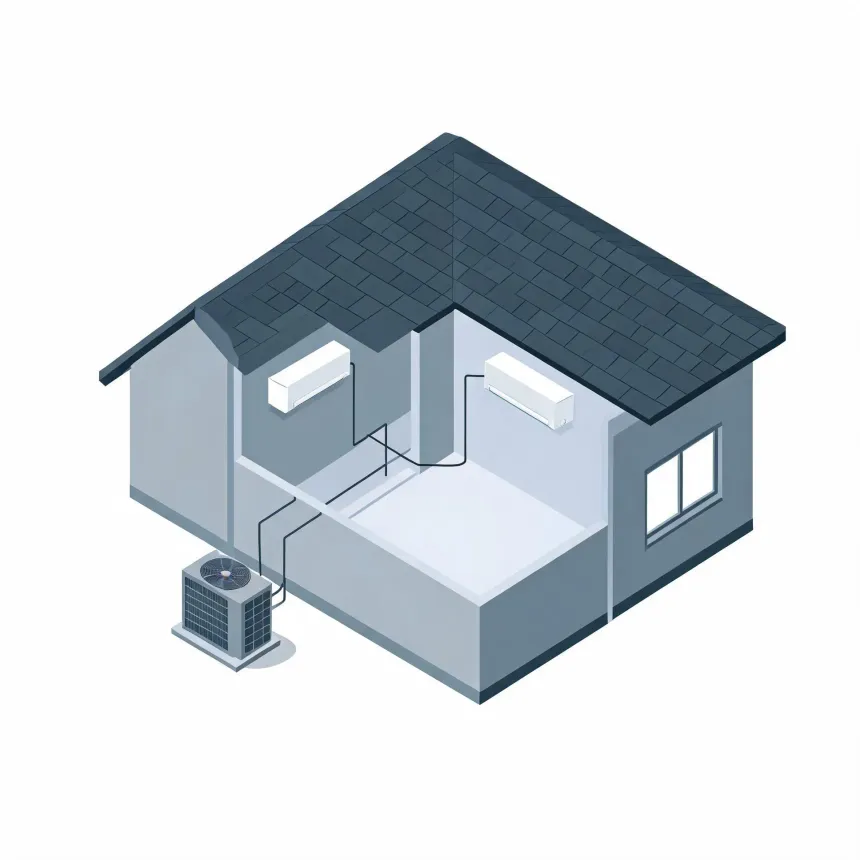
Isometric illustration of a cutaway gray house with a dark shingled roof, showing two wall-mounted indoor air conditioning units connected by lines to an outdoor condenser unit on the ground outside.
Your system heats October through May and cools July through August.

NOAA nClimDiv, 1991–2020 normals

SEER2 grades cooling and HSPF2 grades heating, and they come from separate tests.

A system can rate well on one and just meet the floor on the other, so check how it heats, not just how it cools.

Most of Hillsborough County heats with gas, and that's worth knowing before you go ductless

38.4% of homes heat with gas
Cooling runs July through August
Summer afternoons average 79°F
Homes here span decades, the standard system still fitsHalf the homes in Hillsborough County were built in 1978 or earlier, half in 1978 or later

Cooling here only runs from July through August. Installing before June gives the crew room to size the unit and run the line set without rushing to beat the first hot week. Wait until July and you're adding a system while it's already needed, which narrows your options if something about the install needs a second look. A mini-split going in now has the whole spring to get checked over before it has to do any real work.

Meet the standard here

A new system here has to meet this region's minimum efficiency, which limits what can go in.

Find a contractor
A man in a dark long-sleeved shirt and tan work pants, seen from behind, climbs porch steps toward a navy front door while carrying a canvas tool bag.
A white mini-split air conditioner outdoor condenser unit mounted on metal brackets against a beige stucco exterior wall, with a blue sky and scattered clouds in the background.

Two months of cooling, a lot more time sitting idle

Cooling runs about two months here, July and August, with afternoon highs averaging 79°F. A mini-split spends most of the year doing nothing on the cooling side. Heating is the bigger job in this zone, and that's the load worth asking a contractor about. A light duty cycle like this means less wear on the compressor, so a repair is usually worth making rather than a sign to replace the whole system. Age and neglect wear a unit down here faster than the summer does.

Ask how it performs at low outdoor temperatures

Every heat pump loses capacity as it gets colder outside, but not at the same rate. Ask for the capacity at low temperature, not just the rating at mild conditions. A unit that drops off hard right when it's needed most will lean on backup heat more than one built to hold its output.
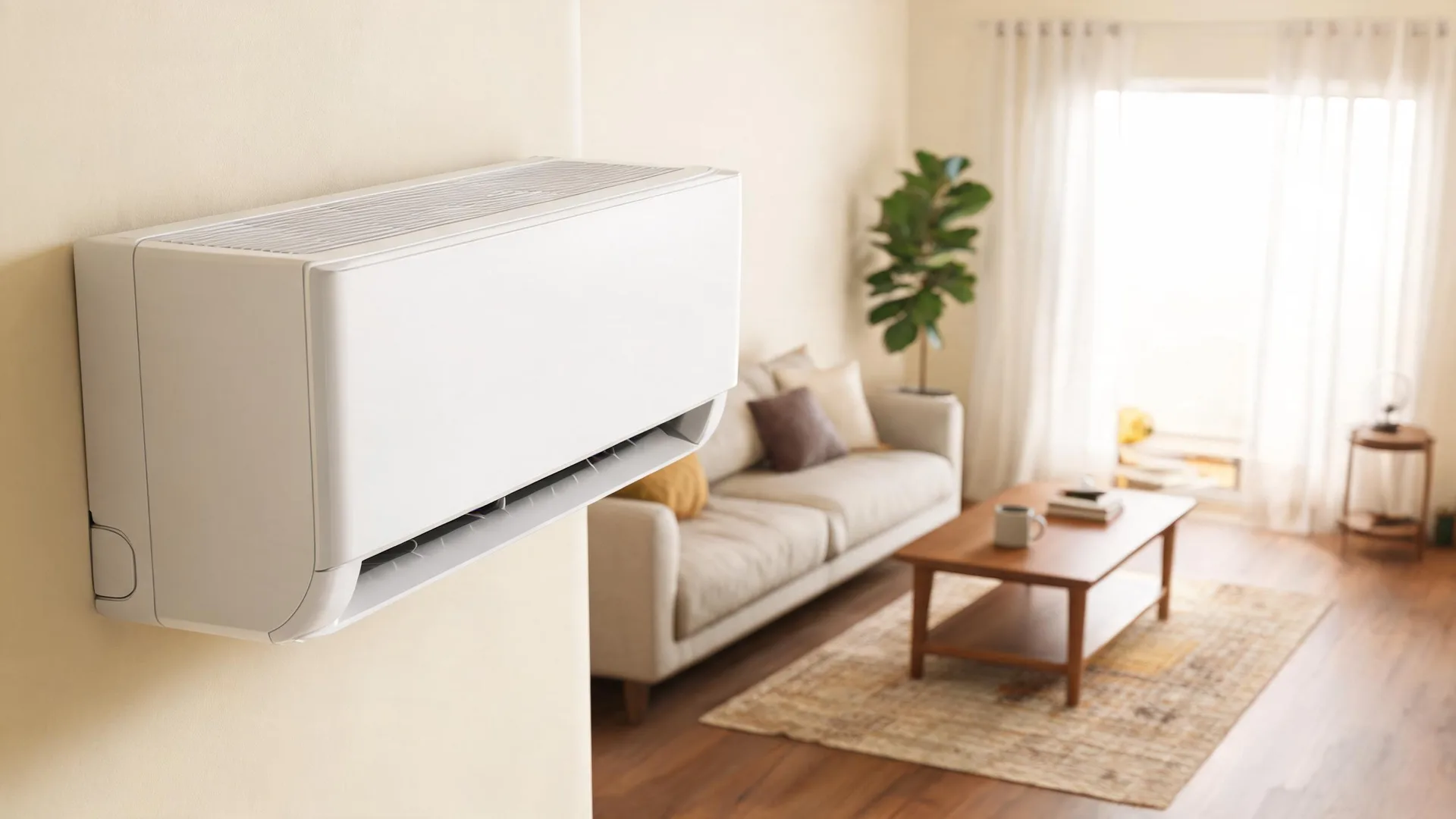
Ask how the indoor and outdoor units were matched

The indoor head and outdoor condenser are sold separately and sized to work as a pair. A mismatched pair can short cycle, run louder, or fail to hit the heating or cooling output printed on the spec sheet. The contractor should be able to say why this particular pairing was chosen for the space it's heating and cooling.

If a furnace, boiler or central AC is coming out to make room for the mini-split, someone has to deal with it. A gas furnace gets disconnected from the gas line and vent before it's hauled out, and that line has to be capped off properly, not just shut at the valve. A central AC system holds refrigerant, and that has to be recovered into a tank rather than vented, which is the law regardless of who does the work. Ductwork sometimes stays in place even after the equipment it served is gone, especially if there's any chance of adding ducted equipment later. None of this is hard, but it's work, and it's worth asking who's responsible for it and where the old unit actually ends up.

Installation day starts with where the indoor head goes and where the outdoor unit sits, and both get decided before anyone picks up a drill. The installer finds a wall stud pattern that gives the indoor unit a clear shot of the room, away from direct sun on the thermostat sensor and clear of furniture that blocks airflow. A small hole gets drilled through the wall for the conduit, the line set carrying refrigerant, the power wire and the condensate drain all bundled together. Outside, the condenser sits on a pad or wall brackets, far enough off the ground that snow or debris won't block it. Once both units are mounted, the line set gets connected, the system gets pulled down to a vacuum to clear out air and moisture, then charged with refrigerant and tested for leaks before anyone calls it done. A mini-split doesn't need ductwork, so most of the day goes into this precision work rather than tearing into walls.