





White colonial houses with lit windows photographed at dusk along a tree-lined residential street.

Furnace Installation in Concord, NH

Tell us about the job

Takes about a minute. No obligation.

New system or replacementFurnace or heatingMerrimack County, NH
Step 1 of 2

What ZIP code is the job in?

Fuel oil ran $24.23 per million Btu in New Hampshire last year. That number is why the furnace you pick matters more here than somewhere with cheaper energy. An oil furnace burning fuel at a lower efficiency rating wastes more of every gallon, and at that price the waste shows up fast. A higher efficiency furnace gets more heat out of the same gallon of oil. If your current furnace is old, ask what AFUE rating it carries, and compare that to what a new one offers before you decide what to install.

9 months
September through May, your furnace is on duty
14°F
the average winter night it heats against
80% AFUE
the federal minimum any new unit must meet
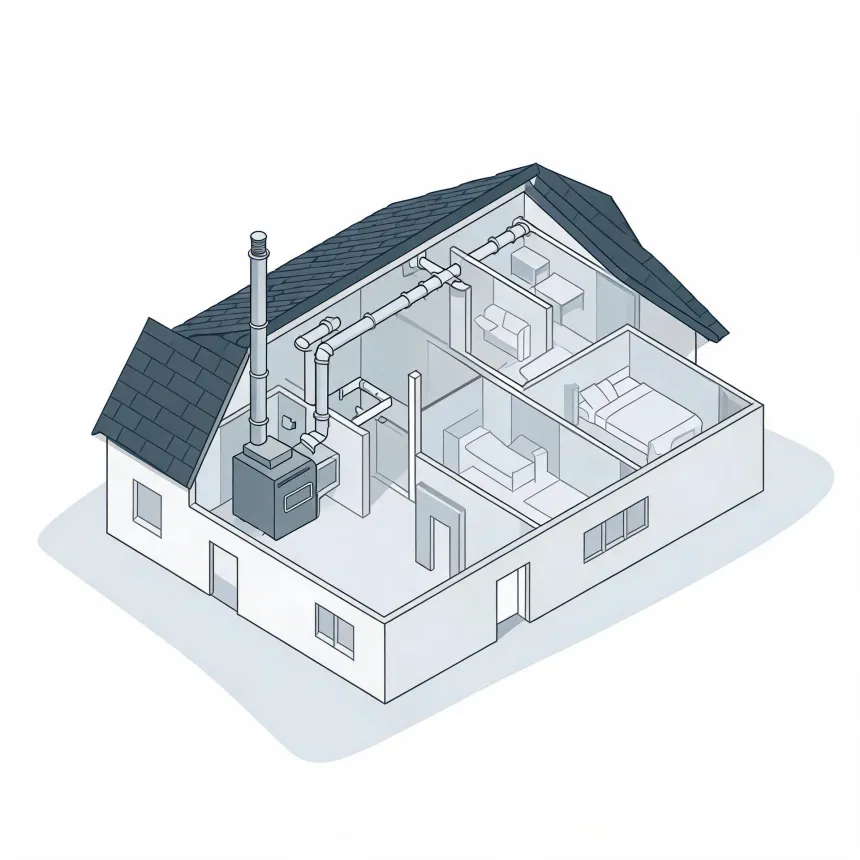
Isometric line illustration of a cutaway house showing interior rooms with furniture and a furnace with ducting and a flue pipe extending through the roof.
Your furnace works hardest from November through March.

NOAA nClimDiv, 1991–2020 normals

Half the homes in Merrimack County were built in 1977 or earlier, half in 1977 or later.

Either way, a standard size furnace sized to your house is the right call, nothing bigger.

Nine months of heat, down to 14 below zero, puts a real load on this furnace

Heat runs September through May
Winter nights average 14°F
Climate zone 5A
Get it installed before SeptemberHeat runs September through May here. August is the month to get it done.

Oil heats more homes in Merrimack County than gas, electric, and propane combined with gas alone. Gas reaches a quarter of homes here, propane under a fifth, electric heat fewer still. If your house already has an oil furnace and an oil tank, replacing it with another oil furnace is usually the straightforward path. The gas line, the tank, the venting are already there, and swapping systems doesn't mean rebuilding what feeds them. Changing fuels is a bigger job, with new lines or a new tank to account for. Worth asking what you have before you ask what you want.

Plan for the outage, not just the cold

Merrimack County sees severe weather often, winter storms most of all, and 22% of New Hampshire homes lost power for a day or more last year. For a furnace, that means where the outdoor venting sits and how the system handles an outage matter as much as the AFUE rating. Ask your contractor what happens to your heat when the power goes out before you settle on a system.

Find a contractor
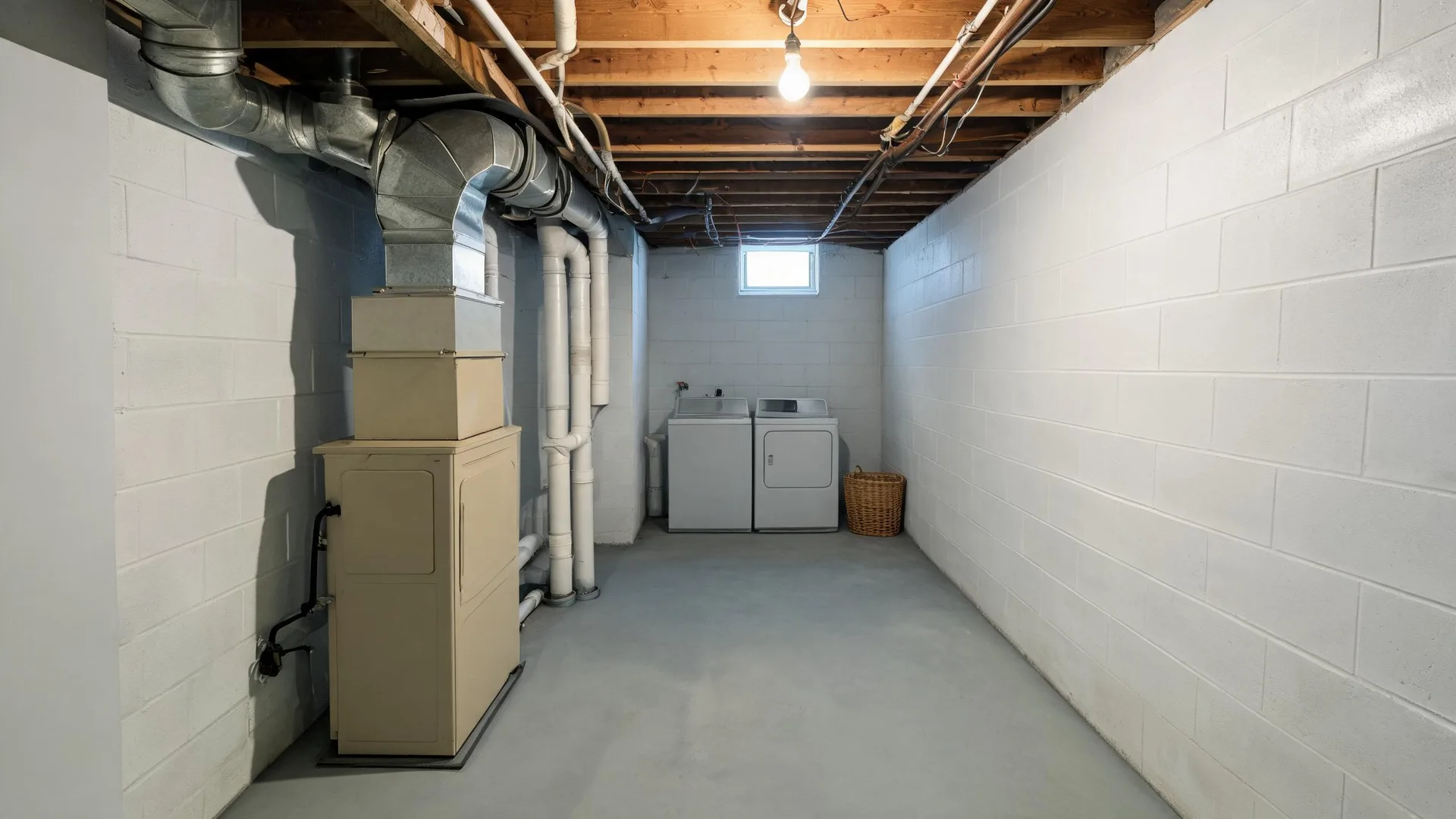
A gas furnace with attached ductwork, gas piping, and condensate lines installed in a concrete-block basement.

Nine months of runtime means size it right, not big

A furnace sized to this house, not oversized for it, is what holds up under nine months of runtime. A unit that's too big cycles on and off more, and every start and stop wears the igniter and the blower motor a little more than the last. Ask what load calculation the contractor used for your house, not just the square footage. That number, done right, is what keeps this furnace from working harder than it has to for nine months straight.

A furnace too big short-cycles

An oversized furnace heats the house fast, shuts off, then has to start again soon after because it never ran long enough to warm things evenly. Each start pulls more current through the igniter and the blower motor than a steady run does. Over many winters that adds up to parts wearing out before they should.
Sizing is a room by room count

A contractor works out the right size by going through the house, the windows, the walls, the ceiling height, how much of the place is finished space, and adding up how much heat escapes from each part. Square footage alone leaves out too much. Houses that look alike from the outside can need different size furnaces depending on what the walls and windows are doing.

The furnace itself is only part of what you're paying for. Ductwork is the other side of it. If the trunk lines and branches already match what the new furnace needs, installation goes faster. If the ducts are undersized or leaking at the joints, a contractor has to address that too, or the new furnace won't heat evenly no matter how well it's sized. Venting matters as much as duct work. A higher efficiency furnace vents differently than an older one, sometimes through a wall instead of a chimney, and that can mean new venting materials and a different path out of the house. Electrical work adds to the job when the new furnace needs a dedicated circuit the old one didn't. None of this shows up until a contractor is standing in the basement looking at what's actually there.

Install day starts with the old furnace coming out, and that alone takes a few hours once the gas or oil line is shut off and the ductwork is disconnected. The new unit gets set, leveled, and connected to the supply and return trunks before anyone worries about venting. Venting and gas or oil line work come next, and if the new furnace needs a different path out of the house than the old one did, this is where that extra time goes. Electrical hookup follows, tying the furnace into its circuit and the thermostat wiring. Once everything is connected, the contractor fires it up and checks the heat exchanger, the flame or ignition, and the airflow at the vents before calling it done. A straightforward swap, same fuel and same venting, wraps up faster than a job where the venting or ductwork has to change along with the furnace.