



A two-story red brick house with black shutters and a dark roof stands on a mown lawn behind a dry-stacked stone retaining wall, framed by large deciduous trees under an overcast sky.

Furnace Installation in Manchester, NH

Tell us about the job

Takes about a minute. No obligation.

New system or replacementFurnace or heatingHillsborough County, NH
Step 1 of 2

What ZIP code is the job in?

Utility gas heats more homes in Hillsborough County than any other fuel, close to four in ten. Fuel oil comes next at close to three in ten, with bottled or tank gas and electricity making up the rest. If your furnace already runs on gas, replacing it with another gas furnace is usually the straightforward path. The gas line, the venting and the clearances are already sized for that fuel, and a licensed contractor can confirm what's there before swapping anything in.

8 months
October through May, your furnace is on duty
16°F
the average winter night it heats against
80% AFUE
the federal minimum any new unit must meet
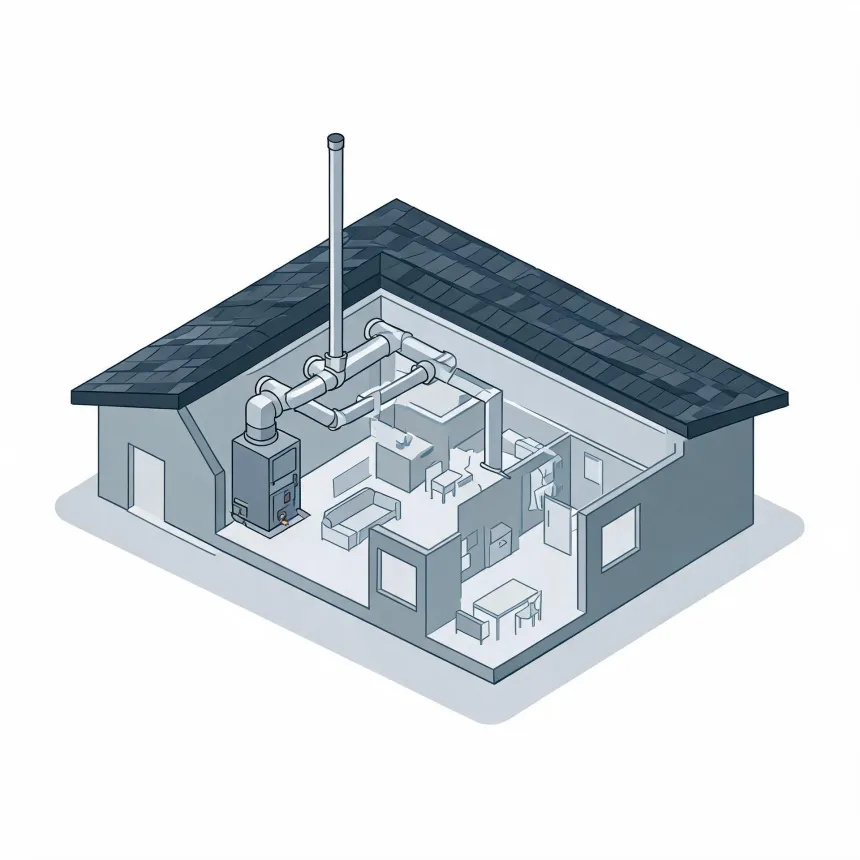
Isometric cutaway illustration of a single-story house showing interior rooms with furniture, a furnace unit with connected ductwork and a tall vertical flue pipe extending above the dark shingled roof.
Your furnace works hardest from November through March.

NOAA nClimDiv, 1991–2020 normals

Furnaces in Hillsborough County run from October through May, with overnight lows averaging 16°F in the dead of winter.

A new furnace has to be sized for eight months of heat and real cold, not just the day it's installed.

Gas here runs $18.09 per million Btu, and this furnace will burn it from October to May

Heat runs October through May
Winter nights average 16°F
72 winter storms from 2015 to 2024

Hillsborough County sits in zone 5A, a cool climate where heating carries most of the load. Any furnace installed here has to meet the federal minimum for non-weatherized gas furnaces, 80.0 percent AFUE. That floor is set to rise for furnaces built after a certain date, climbing to 95.0 percent. A furnace built to today's minimum is a legal install, but it burns more gas doing the same job as one built to the higher standard. A federal tax credit is available for furnaces that clear the higher efficiency bar, which can offset some of that gap. A licensed contractor can walk through what each option costs to run through a winter here.

Replace it in September, before heat season starts

Heat starts here in October and runs through May. Putting in a new furnace in September means it's done before the first cold night, not during one.

Find a contractor
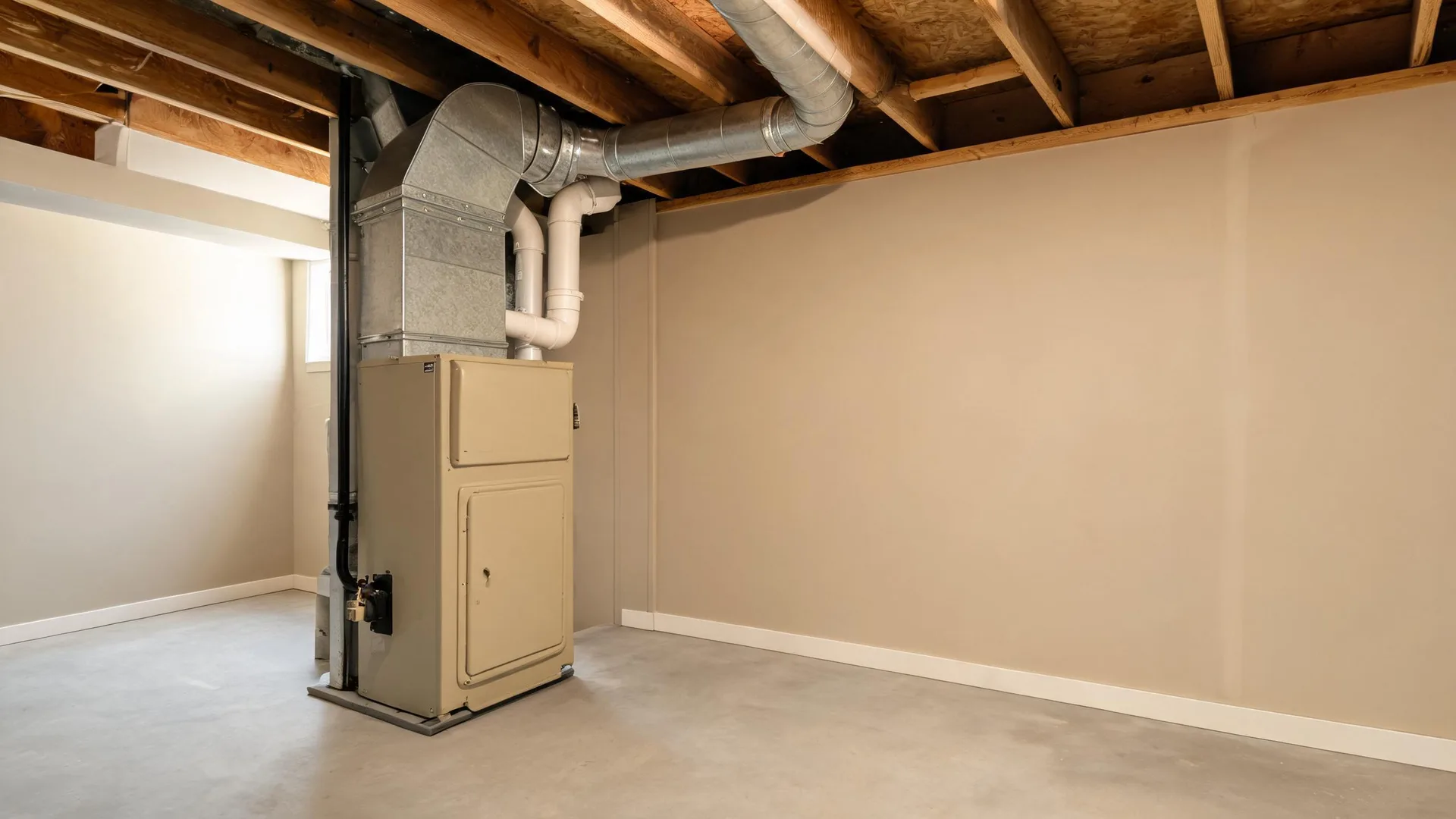
A gray residential gas furnace installed in an unfinished basement, surrounded by ductwork, a metal flue pipe, and a gas supply line.

The age of the house doesn't change the size of the furnace

Half the homes in Hillsborough County were built in 1978 or earlier. Half were built in 1978 or later. That split doesn't change what furnace goes in. A standard size, matched to the house and its ductwork, does the job whether the place is older or newer. A standard efficiency rating does too. What decides the size is the square footage and the layout a contractor measures on site, not the year the home went up.

The furnace itself is one line item

Size and efficiency tier set the equipment cost, but that's only part of the bid. Ductwork that needs modifying, a vent that has to be resized, or a gas line that needs upsizing all add work beyond unboxing a new furnace. A contractor who looks at the ductwork and venting before quoting will catch this. One who prices off square footage alone often doesn't.

Moving up an efficiency tier changes the venting

A standard furnace vents through metal flue pipe into a chimney. A high-efficiency furnace condenses, and that moisture means it vents through plastic pipe out a sidewall instead. Stepping up a tier isn't just a different furnace bolted into the same spot. It can mean new venting, a new termination point outside, and a condensate line to drain the moisture that furnace produces. That's labor the standard swap doesn't need.

An unfinished basement containing a forced-air furnace with metal ductwork, exposed wooden ceiling joists, a hanging Edison bulb, and bare concrete floors.

A high-efficiency gas furnace would save about $130 a year to run in Hillsborough County compared with a gas furnace.

  • A high-efficiency gas furnace$620 a year
  • A gas furnace$750 a year

Estimates for a typical Hillsborough County home, from EIA household energy data, New Hampshire fuel prices and NOAA climate normals. Your home will differ.

The old furnace gets disconnected first. The gas line gets capped, the flue pipe comes out, and the return and supply ducts get opened up where they meet the cabinet. With it out of the way, the contractor can see the floor underneath and check the ductwork and gas line before anything new goes in. The new furnace gets set, leveled, and tied into the duct trunk, the gas line, and either the chimney flue or a sidewall vent depending on which tier is going in. Electrical runs to a nearby switch, and the thermostat wire lands on the control board. Before anything gets closed up, the contractor checks gas pressure, confirms the vent pipe is pitched and sealed right, and runs the system through a full cycle to watch it fire, ramp up, and shut off the way it should. Airflow at the registers gets checked last, because a furnace moving the right amount of air is what actually keeps the rooms warm.