





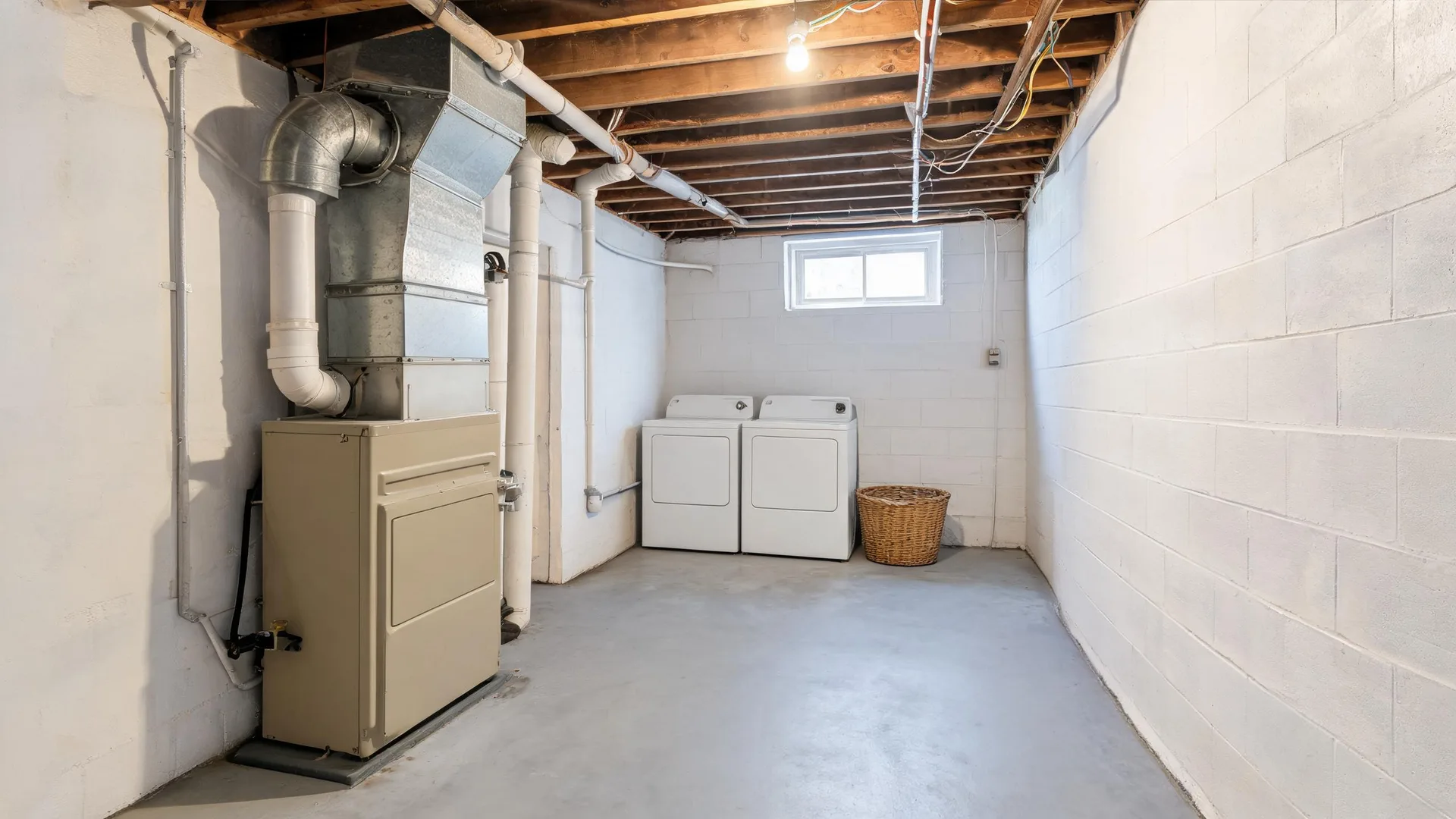
An unfinished basement featuring exposed ceiling joists, a metal HVAC unit with round ductwork, a hanging light bulb, and scattered boxes and debris along the left wall.

Furnace Installation in Portsmouth, NH

Tell us about the job

Takes about a minute. No obligation.

New system or replacementFurnace or heatingRockingham County, NH
Step 1 of 2

What ZIP code is the job in?

Fuel oil ran $24.23 per million Btu in New Hampshire last year. That's the number a furnace works against, every time it cycles on. An old furnace loses a good share of that oil as heat going straight up the flue instead of into the house. A new one keeps more of what you pay for. Ask about the AFUE rating when you compare furnaces, since that figure tells you how much of each dollar of fuel ends up as heat in your rooms instead of exhaust.

8 months
October through May, your furnace is on duty
18°F
the average winter night it heats against
80% AFUE
the federal minimum any new unit must meet
Isometric cutaway illustration of a single-story house with a dark shingled roof, showing interior rooms with furniture, ductwork, a flue pipe, and a furnace unit.
Your furnace works hardest from November through March.

NOAA nClimDiv, 1991–2020 normals

Furnaces in Portsmouth run from October through May, eight months out of the year.

A furnace built for a mild climate will fall behind here, so size it for what this winter actually demands.

Eight months of heat starts in October. Have the new furnace in before it does.

Heat runs October through May
Winter nights average 18°F
66 winter storms from 2015 to 2024

When you compare bids, ask what AFUE rating each furnace carries, not just the price to install it. That number tells you how much of each oil dollar heats your rooms and how much goes up the flue. A higher rated furnace costs more to install but less to run, and here that gap shows up on every bill through the winter. If a contractor quotes a price without mentioning AFUE, ask for the number before you decide anything.

Replacing an oil furnace with another one is the straightforward path here

Most homes in Rockingham County heat with fuel oil, and yours likely does too if you're replacing what's already here. Staying with oil keeps the install simpler, since the tank and lines are already in place. What changes is the AFUE rating on the new furnace, and that's worth settling before anything else.

Find a contractor
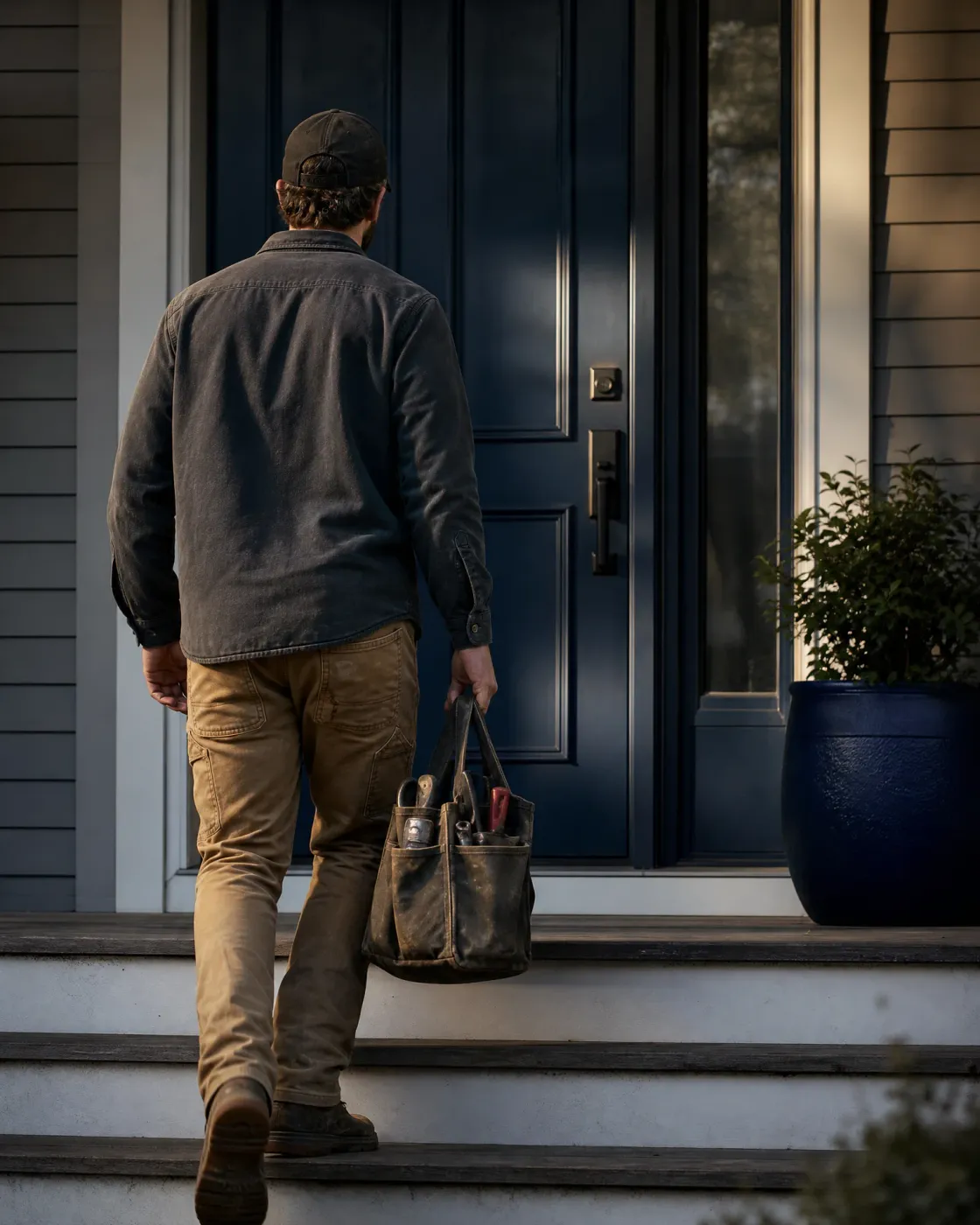
A man in a cap, dark shirt and tan pants carries a worn canvas tool bag up concrete steps toward a dark blue front door with a sidelight window and a large planter beside it.
A gray residential gas furnace installed in an unfinished basement, connected to sheet-metal ductwork and PVC pipes.

Built for 18 degrees, not just a mild evening

Eighteen degrees is the average overnight low here through December, January and February. That's where a new furnace has to hold its own, night after night, for eight months straight. A furnace sized for this load will run long steady cycles through the worst of it instead of straining to catch up. Get the sizing right now, before the first cold night, and you won't be the one finding out it was wrong.

Ask how they sized it, not just what size they picked

A furnace should be sized by a load calculation that looks at the house itself, its square footage, windows, insulation, and layout. If a contractor quotes a size based on what's already installed or a quick walk-through, ask them to walk you through the numbers instead. A furnace sized wrong runs badly for as long as you own it, either short-cycling because it's too big or straining because it's too small.
Ask what happens to the venting

A new furnace with a higher AFUE rating often vents differently than the one it replaces, sometimes through a sidewall instead of a chimney. That changes where the pipe runs and what it's made of. If the contractor hasn't looked at how your current system vents and whether the new one matches, ask before you sign anything. Venting done wrong is a safety problem, not just an inconvenience.

The furnace itself is only part of what you're paying for. Ductwork matters just as much. If the trunk lines and branches were sized for the old furnace, a new one with different airflow can end up fighting them, and no furnace runs well against ducts that are too small or leaky. Venting adds its own cost too, especially if the new furnace needs a different path out of the house than the old one used. Labor accounts for a real share of the bid, since swapping a furnace means disconnecting gas or oil lines, electrical, and ductwork, then tying all of it back in correctly. And the furnace itself isn't one price. Higher AFUE models cost more upfront because they carry more parts to capture that extra heat, like a second heat exchanger. A contractor who walks through all of this with you before quoting is pricing the job you actually have, not just the box going into your basement.

Installation day starts with the old furnace coming out, not the new one going in. The tech disconnects the oil or gas line, the electrical, and the ductwork, then clears the unit out before anything new goes in its place. Once the space is open, they'll check the flue or vent pipe and run new venting if the new furnace needs it. Setting the furnace itself and leveling it only takes a part of the day. The rest goes to tying in the duct connections, running the gas or oil line back, wiring the thermostat, and testing the ignition and burners before they close anything up. A tech will also check the airflow across the heat exchanger and measure the temperature rise, since a furnace running outside its rated range won't last. Before they leave, they should walk you through the thermostat and show you where the filter goes, because a furnace with no airflow behind it struggles no matter how well it was installed.